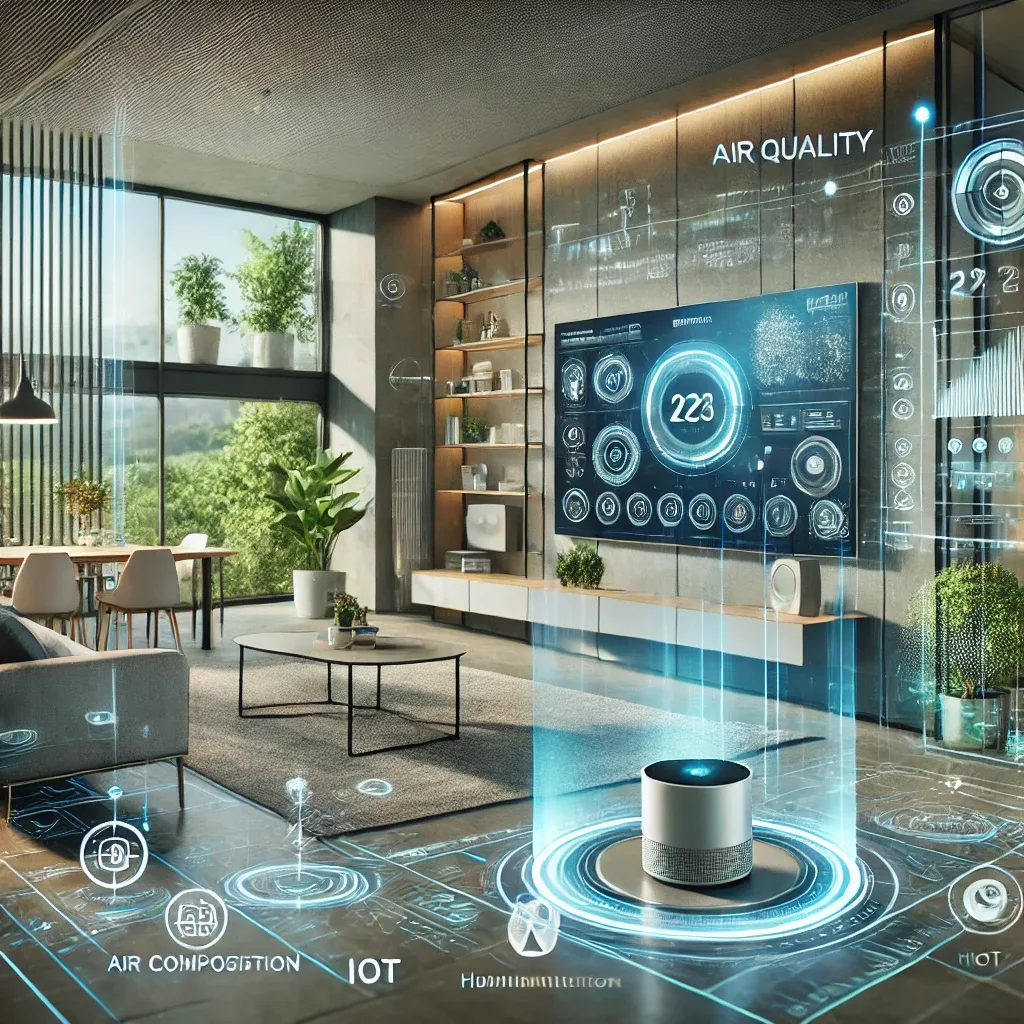
IoT Turns Your Home Into Its Own Health Guardian
In the past, a home was simply a shelter with no awareness of its own air quality. IoT transforms homes into systems that sense, analyze, and respond autonomously. Sensors measure PM2.5, CO2, VOC, temperature, and humidity every minute, sending data to Home Assistant, which activates purifiers, ventilation fans, or AC as configured — alerting residents via app or LINE immediately, without waiting until discomfort is felt.
IoT Air Purifiers
IoT air purifiers integrated with Home Assistant operate via automation: when PM2.5 rises, the purifier activates or increases speed automatically, controllable via mobile app from anywhere. Operation history is recorded to identify patterns — for example, if air quality typically worsens in early evening when doors open, the system pre-activates purifiers in advance. Select CADR at least 2.5x room floor area and HEPA H13 filters for maximum effectiveness.
Whole-Home Ventilation
Smart ventilation reduces accumulated moisture, odors, and toxins, lowers allergen levels, saves energy by operating only when needed, and supplements purifiers in spaces the purifier cannot reach. Configure automations to open exhaust fans when CO2 exceeds 800 ppm or VOC exceeds 300 ppb, and close when values return to normal.
Smart Curtains and Temperature Control
Smart curtains regulate light and indoor temperature. When outdoor PM2.5 sensors detect high levels, curtains automatically close to reduce dust infiltration through window gaps, connected via Zigbee or Wi-Fi and controlled through the app and automations. Smart AC adjusts temperature based on actual environmental conditions and lifestyle patterns — preset to cool down 30 minutes before sleep or warm up before waking, saving energy and increasing comfort.
Benefits and Selection Factors
Using IoT for home air management delivers 5 benefits: reduced risk of respiratory disease and allergies; real-time monitoring that detects problems before they are felt; automatic operation requiring no manual attention; energy savings; and improved long-term quality of life. When purchasing, verify IoT and Home Assistant support via local API rather than cloud-only, appropriate CADR for room size, verifiable sensor accuracy, supplemental ventilation capability, and stable power source options for outages.
Getting Started Intelligently
You do not need to replace everything at once. Start with a single air quality sensor to understand your home's actual conditions. Then add a smart purifier, and gradually expand with ventilation systems and smart curtains. Learn from the Thai HA community, consult specialists, and test automations in one room before scaling to the whole home.