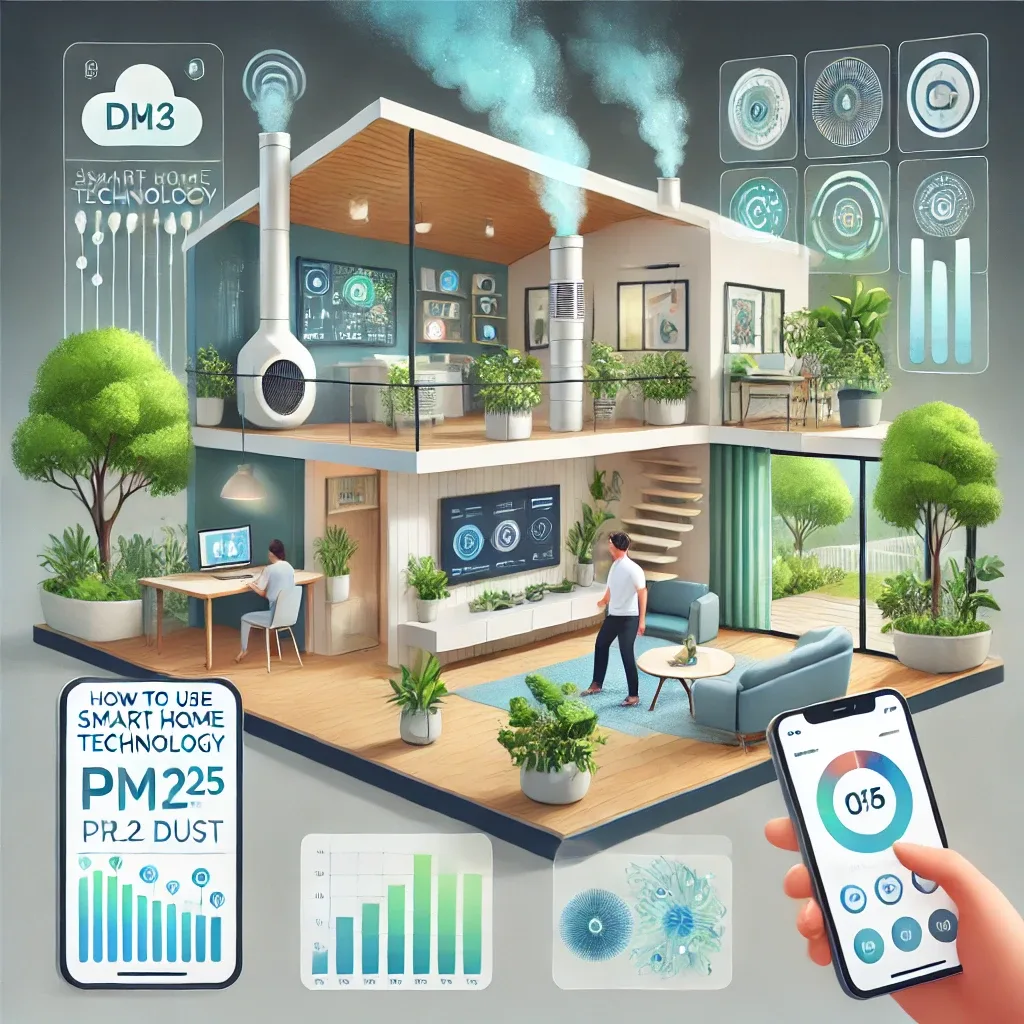
What Is PM2.5 and Why Are Bangkok Homes Particularly at Risk?
PM2.5 refers to particles smaller than 2.5 microns originating from combustion, traffic, construction, and biomass burning. Bangkok regularly exceeds WHO standards (15 μg/m³) from November through March, with peak values sometimes exceeding 100 μg/m³ in some areas. Homes also have indoor PM2.5 sources including cooking, cigarette smoke, spray painting, and dust infiltrating through imperfectly sealed windows and doors.
Five Smart Home Technologies for Managing Indoor PM2.5
Technology 1 — AI-powered smart air purifiers: Modern purifiers use AI to adjust operating modes based on real-time PM2.5 readings — Eco Mode below 12 μg/m³, Standard at 12-25, High at 25-35, and Turbo above 35 — saving energy and extending filter life compared to continuous fixed-speed operation.
Technology 2 — Multi-zone IoT sensors: Installing sensors in every main room reveals which zones have the highest readings. Home Assistant then prioritizes purifier activation for the highest-PM2.5 room first, distributing filtration effort where it is most needed.
Technology 3 — Smart ERV/HRV ventilation: Energy Recovery Ventilators filter outdoor air before bringing it inside and activate automatically only when outdoor PM2.5 is below 25 μg/m³, using data from AQICN or AirVisual APIs to determine outdoor conditions in real time.
Technology 4 — Real-time LINE/Telegram alerts: HA automations send alerts when any parameter exceeds standards, including a 1-4 hour trend graph to help occupants decide whether to stay home or modify plans based on air quality forecasts.
Technology 5 — AI pattern analysis and predictive prevention: Using HA with Node-RED or AppDaemon, the system learns daily PM2.5 patterns — for example, Bangkok's 7-9 AM traffic peak consistently elevates PM2.5 — and pre-activates purifiers before readings cross threshold values.
Measurable Benefits of a Complete Smart System
Homes using comprehensive smart PM2.5 management consistently achieve four measurable outcomes: sustained indoor PM2.5 below 15 μg/m³; energy savings of 20-35% from AI operating only when needed; convenient monitoring and control from anywhere via smartphone; and 30-90 days of historical data for trend analysis and continuous system optimization.