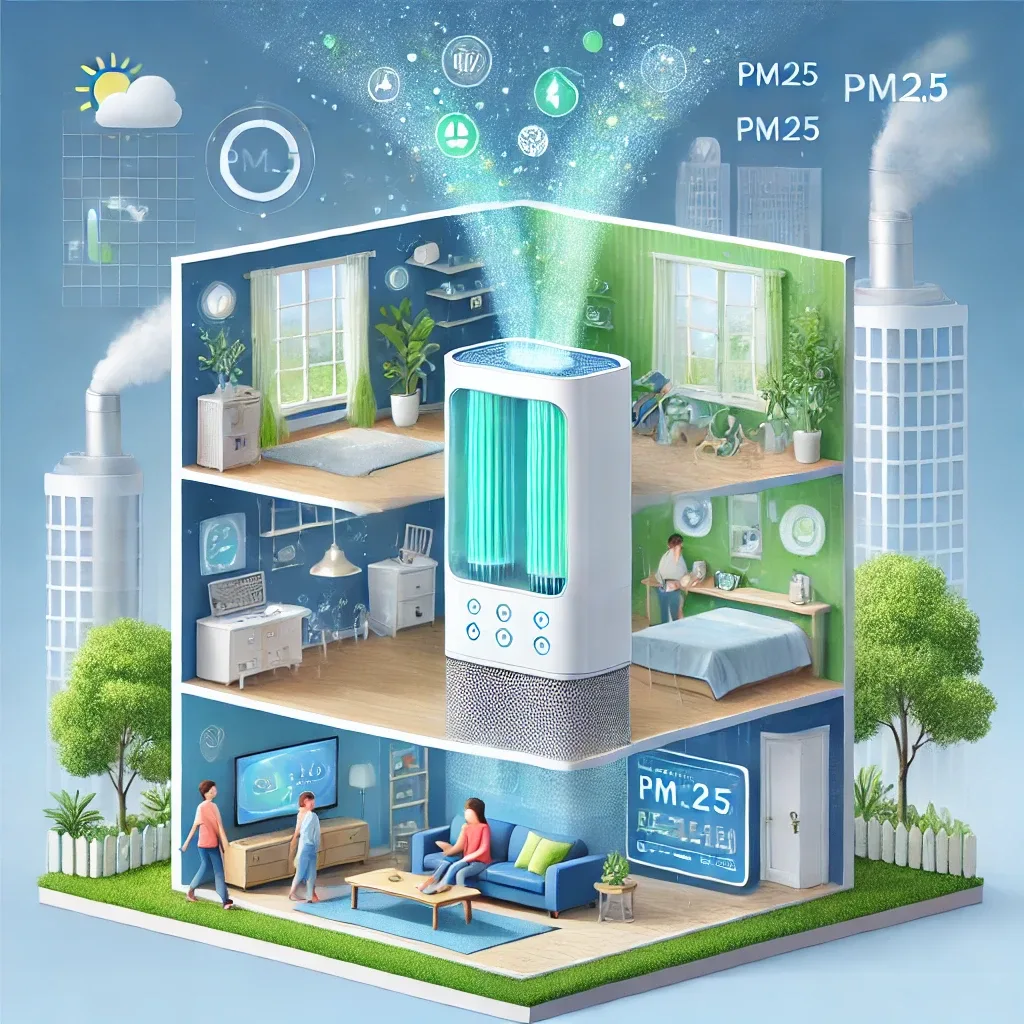
Why PM2.5 Is a Serious Health Threat
PM2.5 particles are smaller than 1/30th of a human hair, allowing them to pass through respiratory membranes directly into lung alveoli and the bloodstream. Health impacts span four major systems: respiratory (COPD, asthma, bronchitis); cardiovascular (ischemic heart disease, stroke, hypertension); neurological, particularly in children where prolonged PM2.5 exposure may impair brain development; and long-term lung cancer risk. The WHO reduced its safety standard to 15 μg/m³ (24-hour average) in 2021, down from the previous 25 μg/m³ guideline.
What Is an Intelligent Air Filtration System?
Smart air filtration systems combine advanced filtration technology with IoT-based automatic control. Core components include a pre-filter capturing coarse dust, HEPA H13 filtering particles down to 0.3 microns at 99.97% efficiency, a Carbon filter absorbing VOCs, odors, and chemical vapors, built-in PM2.5/CO2 sensors transmitting data every 30-60 seconds, and a Smart Module connecting via Wi-Fi or MQTT for remote control.
How Home Assistant Integration Changes Everything
Integrating with Home Assistant transforms the filtration system into part of a Smart Home Ecosystem working alongside other devices. Powerful automation examples include: activate full-power purification when PM2.5 exceeds 35 μg/m³ and reduce to Low when it drops below 15; simultaneously activate ventilation when CO2 exceeds 800 ppm; automatically power off when no one is home using Presence Detection; and send LINE alerts when filters reach 20% of their estimated remaining life.
Measurable Results from Smart Systems
Data from Bangkok residential smart filtration installations show clear measurable outcomes: indoor PM2.5 drops from 40-60 μg/m³ during high-season peaks to below 15 μg/m³ within 30-45 minutes of activation; energy savings of 20-30% compared to always-on operation; and significant reduction in allergy and asthma symptoms in households with affected family members.
Choosing the Right System and Maintenance
Selecting an appropriate system requires considering whole-home versus room-by-room coverage, initial budget and ongoing filter costs, and Home Assistant or MQTT support for maximum automation capability. For maintenance, check airflow resistance readings in the app every 3 months, replace HEPA filters when the app signals based on actual usage hours, and clean the pre-filter every 2-4 weeks depending on local air quality conditions.