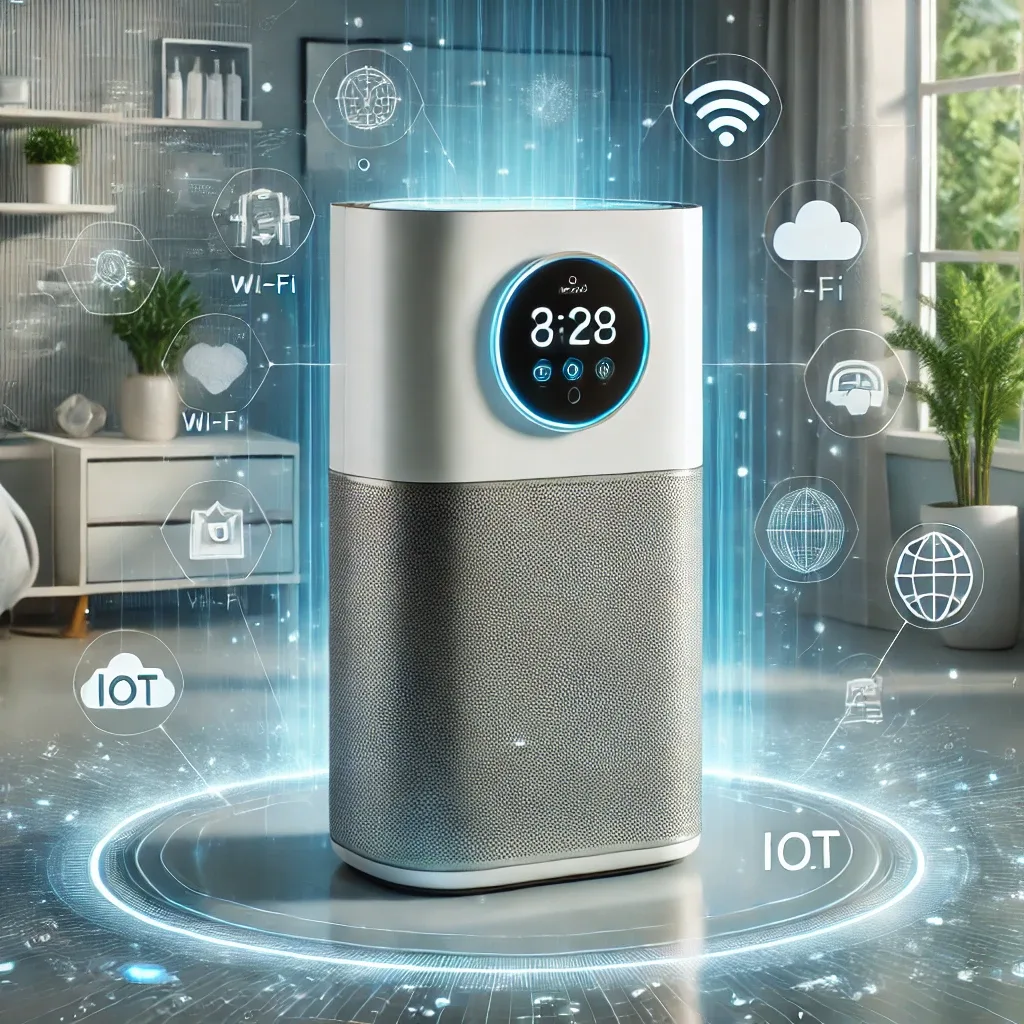
What Is the HappySmart IoT Smart Air Purification System?
The HappySmart IoT system is a comprehensive air quality solution designed for Bangkok homes and offices. It integrates pollution sensors, HEPA H13 filtration, automatic control logic, and smartphone notifications into a single unified platform. Unlike conventional purifiers, HappySmart makes autonomous decisions based on real-time measured values rather than simply running on a fixed schedule.
Core System Features
HappySmart sensors measure four key parameters: PM2.5/PM10 particulate matter, CO2 carbon dioxide concentration, TVOC volatile organic compounds, and O2 oxygen levels — transmitting data every 60 seconds to the HappySmart app and any connected Smart Home platform.
Control options include smartphone commands (iOS and Android), Home Assistant integration, and MQTT Local for advanced users. The HEPA H13 filter captures 99.97% of airborne particles, with a Carbon Filter absorbing odors and VOCs. Auto Mode dynamically adjusts fan speed based on current PM2.5 readings without manual intervention.
Measurable Benefits
HappySmart IoT users consistently report improvements across five areas: reduced long-term respiratory disease risk as PM2.5 remains below 15 μg/m³ consistently; decreased allergy and asthma symptoms as TVOC and particulates are efficiently removed; improved indoor air freshness from Carbon filtration; energy savings compared to continuously running units, since the system operates only when needed; and the convenience of monitoring and control from anywhere via smartphone.
Installation and Setup Process
Installing a HappySmart system follows five steps: (1) position the unit in an appropriate location — room center or near pollution sources, at least 30 cm from walls; (2) download the HappySmart app and connect to Wi-Fi; (3) configure Auto Mode and set threshold values such as maximum power when PM2.5 exceeds 35 μg/m³; (4) monitor real-time air quality via app or Smart Home dashboard; (5) replace filters on schedule, typically every 6-12 months depending on usage and local air quality conditions.
The Future of IoT Air Quality Management
The HappySmart team is actively developing AI-powered predictive air quality trend analysis, integration with Smart City APIs for outdoor PM2.5 data feeds, and deeper connectivity with broader Smart Home ecosystems — making automated, precise air quality management increasingly accessible for Thai homes.