Why Indoor Air Quality Matters
Urban Thais spend over 90% of their time indoors, yet indoor air can be 2-5x more polluted than outside. PM2.5 dust, dust mites, mold, furniture chemicals, and CO2 from breathing accumulate silently, affecting respiratory health, sleep quality, and concentration over time. Smart home technology provides measurable solutions that manage these threats automatically.
Smart Air Purifiers
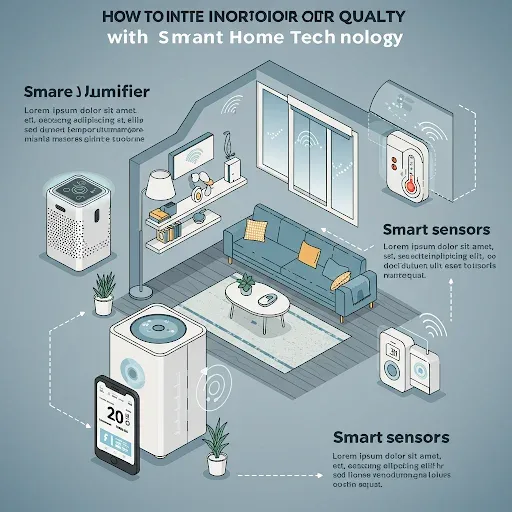
Modern smart purifiers have built-in PM2.5 sensors that automatically adjust fan speed based on real dust readings. They support app control, voice commands via Bluetooth, and scheduling. HEPA H13 filters capture 99.97% of particles ≥0.3 microns, while activated carbon removes VOCs and odors. Recommended options include Philips Series 3000i, Dyson Purifier Cool, Blueair Classic 480i, and Xiaomi Mi Air Purifier 4 — all compatible with Mi Home and Home Assistant. Choose a CADR rating at least 2.5x your room's floor area in square meters.
Air Quality Sensors
Install sensors measuring PM2.5, PM10, CO2, and VOC at room center or near entry points, at 1-1.5 meters height. Connect via Wi-Fi, Bluetooth, or Zigbee to your app or Home Assistant for real-time readings and automated alerts. When values exceed thresholds, the system automatically activates your purifier or ventilation — no waiting until you feel unwell.
Smart Ventilation
Smart ventilation checks outdoor air quality before drawing fresh air inside. When outdoor PM2.5 is below 25 μg/m³, the system opens ventilation to reduce CO2 and odors. When it exceeds 35 μg/m³, fans close and the purifier ramps up instead. Integration with IQAir or AQICN APIs pulls outdoor readings automatically, saving energy while maintaining indoor quality.
Humidity Control and Lighting
Humidity between 40-60% RH creates conditions where mold, dust mites, and bacteria struggle to survive. Smart humidifiers and dehumidifiers automatically maintain your target range. Combined with smart AC that adjusts temperature based on actual occupancy, these systems reduce mold formation and improve breathing comfort. Indoor plants such as aloe vera, peace lily, and snake plant absorb VOCs naturally as a complement to technology. Smart irrigation ensures plants stay healthy without requiring attention.
Getting Started in 3 Steps
Step 1: Install air quality sensors to understand your home's actual conditions. Step 2: Add a smart purifier with Wi-Fi and Home Assistant support. Step 3: Configure automations so the purifier activates based on sensor readings and sends LINE Notify alerts when values exceed thresholds. With these three steps, your home manages its own air quality without requiring your attention.