Why Indoor PM2.5 is More Dangerous Than You Think
PM2.5 particles are smaller than 2.5 microns — 20 times finer than a human hair. When inhaled, they bypass nasal hairs and mucous membranes, entering lung alveoli and the bloodstream directly. Long-term accumulation leads to asthma, bronchitis, ischemic heart disease, and increased lung cancer risk. Indoor PM2.5 sources include cooking, opening doors to polluted outdoor air, dirty AC filters, and settled floor dust. These five smart home systems address every source.
Method 1: HEPA H13 Smart Air Purifier
Choose models with HEPA H13 filters capturing 99.97% of particles ≥0.3 microns, plus activated carbon for VOC and odor removal. CADR should be at least 2.5x the room area (e.g., a 30 sqm room needs CADR ≥75 m³/h). Connect via Wi-Fi to Home Assistant and automate: full power when PM2.5 >75, normal when >35, off when below 25. Replace HEPA every 6-12 months, carbon every 3-6 months, and clean the pre-filter every 2 weeks.
Method 2: Smart AC with Air Filtration
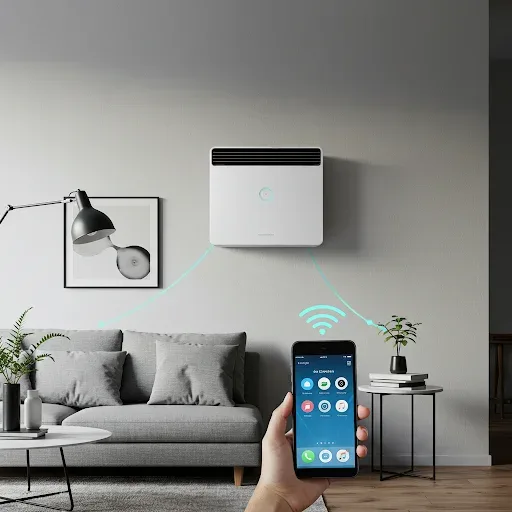
Newer models from Daikin, Mitsubishi Electric, and LG include built-in HEPA, nano-platinum, or plasma ionizer filters. Connect via Wi-Fi to Home Assistant to activate turbo fan mode when sensor PM2.5 exceeds thresholds and pre-cool 30 minutes before bedtime. Inverter technology saves 20-40% electricity versus conventional AC. Clean the filter every 2 weeks and deep clean every 3-6 months.
Method 3: Smart Ventilation
An ERV or exhaust fan connected to HA opens to admit outdoor air only when outdoor PM2.5 is below 25 μg/m³ and indoor CO2 exceeds 800 ppm. When outdoor PM2.5 rises above 35 μg/m³, ventilation closes and the purifier ramps up instead. This reduces CO2 and odors without adding outdoor dust — saving energy by operating only when needed.
Method 4: Smart Humidity Control
Smart humidifiers or dehumidifiers automatically maintain 40-60% RH. Below 40%, nasal membranes dry out and dust stays airborne longer. Above 60%, mold and dust mites thrive rapidly. Connect to HA via humidity sensors from Aqara or Xiaomi to automate device control without manual adjustment.
Method 5: HEPA Robot Vacuum
Floor dust is a PM2.5 source when disturbed. Smart robot vacuums such as iRobot Roomba j9+, Roborock S8 Max, or Ecovacs Deebot X2 Omni with HEPA filters capture PM2.5 before it becomes airborne. Schedule daily operation during unoccupied hours, connect to your app and HA for real-time status monitoring. Combining all five methods through Home Assistant keeps indoor PM2.5 below 15 μg/m³ even on heavily polluted outdoor days.