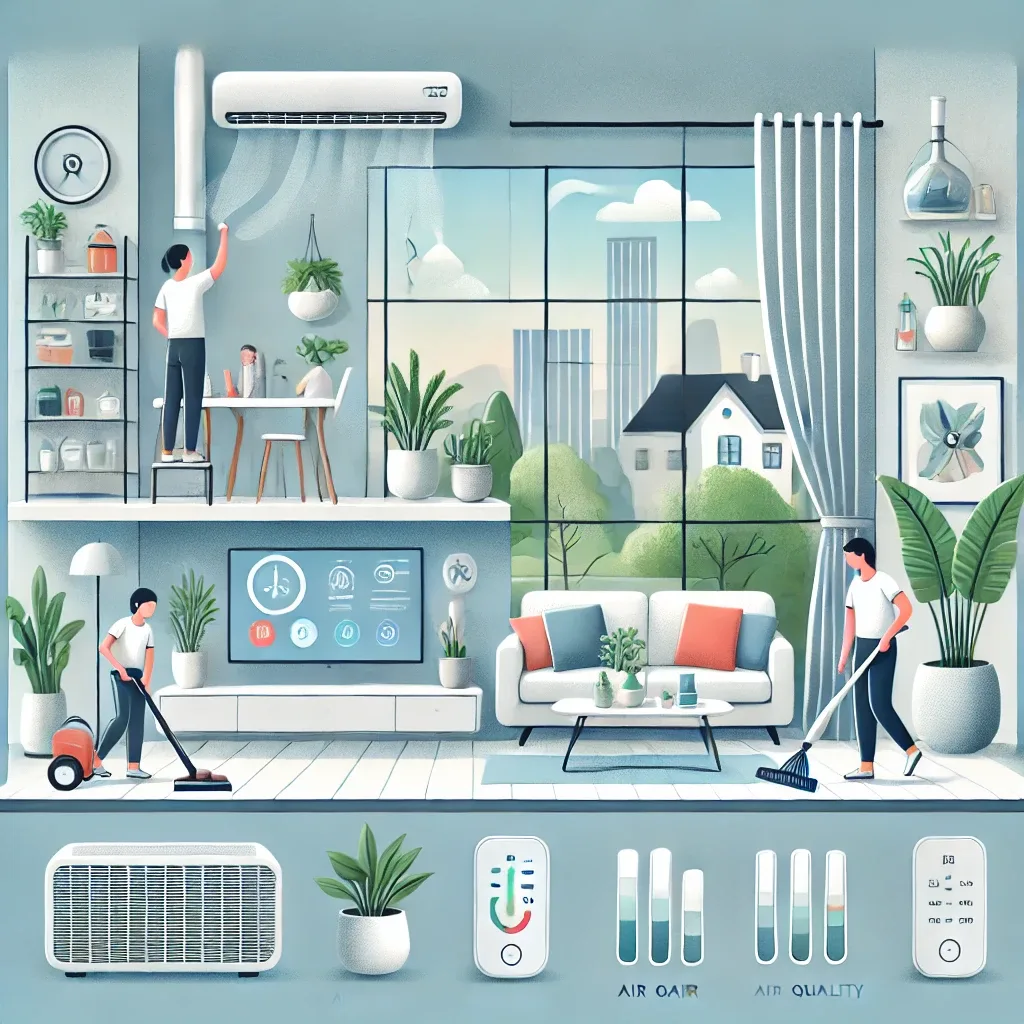
Why Home is Not Safe Enough for Allergy Patients
Allergy patients often assume staying indoors is safer than being outside, but homes contain multiple simultaneous allergens: dust mites in bedding and carpets, mold in bathrooms and kitchens, pet dander, pollen seeping in from outside, and VOCs from new furniture or fresh paint. These trigger sneezing, nasal congestion, itchy eyes, wheezing, and in severe cases, breathing difficulty. Smart home systems manage all these allergen sources comprehensively and automatically.
Smart Air Purifiers for Allergy Patients
Choose purifiers with HEPA H13 or higher filters to simultaneously capture pollen, dust mites, mold spores, and PM2.5. Built-in PM2.5 sensors detect in real time and auto-adjust filtration levels. Control via app and voice through Google Assistant or Alexa. Set automations to run the purifier at full power for 30 minutes before bedtime and throughout the night in Auto mode so the bedroom air is cleanest during rest.
Real-Time Air Quality Sensors
Sensors measuring PM2.5, CO2, and VOC send LINE Notify alerts when values exceed set thresholds. Allergy patients should set their PM2.5 alert threshold at 25 μg/m³ — stricter than the standard 35 — to respond before symptoms flare. Historical data from Home Assistant identifies which times of day high pollution correlates with symptom episodes, allowing more accurate Automation scheduling.
Smart Ventilation and AC
The smart home system always checks outdoor PM2.5 before opening for fresh air. When outdoor pollen or dust levels are high, curtains and ventilation automatically close. Smart AC with built-in 3-layer filtration includes a pre-filter for large dust, HEPA for fine particles and dust mites, and activated carbon for odors and chemicals. HA automations connect sensors to all devices for seamless, hands-free responses.
Humidity Control to Reduce Dust Mites and Mold
Dust mites thrive at 70-80% RH; mold requires 65% RH or above. Maintaining indoor humidity at 40-50% RH with a smart dehumidifier connected to HA reduces dust mite populations by 60-70%. In Bangkok where natural humidity is high, a humidifier is only needed during periods when AC runs continuously and dries the air. Integrating all systems through HA helps allergy patients achieve measurably reduced symptoms within 4-6 weeks.