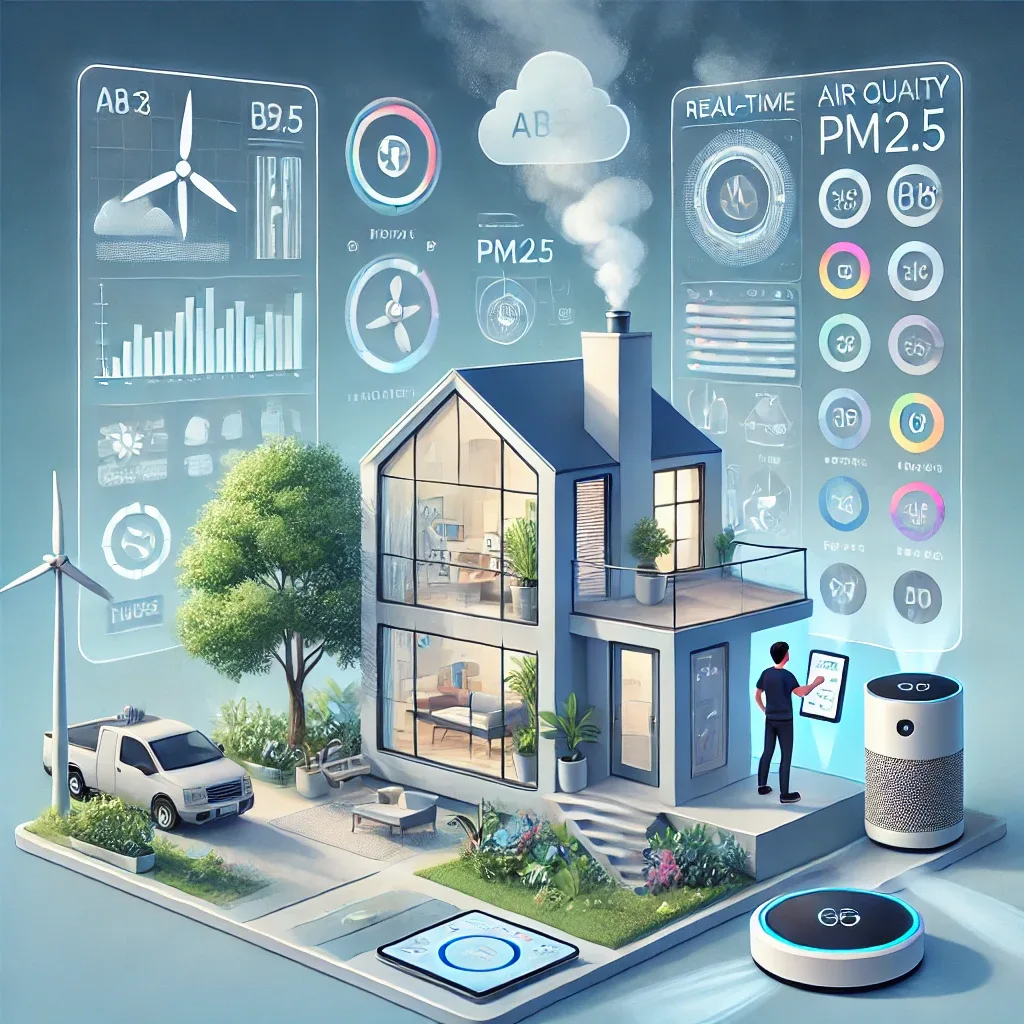
What is PM2.5 and How Does It Harm Health
PM2.5 refers to particles with a diameter of 2.5 microns or less — 20-30 times finer than a human hair. These particles evade the natural filtration systems of the nose, throat, and bronchi, reaching lung alveoli directly. Respiratory impacts include asthma, bronchitis, emphysema, and lung cancer. PM2.5 also enters the bloodstream, affecting the heart and causing ischemic heart disease and stroke. Research links PM2.5 to Parkinson's and Alzheimer's disease via the olfactory nerve. High-risk groups include young children, pregnant women, the elderly, and those with existing conditions.
Real-Time PM2.5 Sensors
Smart PM2.5 sensors send readings to Home Assistant every 60 seconds, triggering app and LINE Notify alerts when values exceed thresholds. Connect to IFTTT or Node-RED to command multiple devices simultaneously. Data is logged in InfluxDB for weekly pattern analysis to identify peak PM2.5 hours, allowing proactive Automation scheduling.
Smart HEPA+UV-C Air Purifiers
New IoT purifiers combine HEPA H13 for particles ≥0.3 microns, activated carbon for VOCs, UV-C to kill bacteria, viruses, and mold spores (in enclosed filter chambers away from direct user contact), and plasma ionizers to clump dust particles and cause them to settle. Connect to Home Assistant via Wi-Fi or MQTT. Automate: full power when PM2.5 >75, medium when >35, off when <25.
Positive Pressure Ventilation
A Positive Pressure Ventilation system pushes fresh air into the home through HEPA filters first, creating positive indoor pressure that naturally expels old air through gaps — reducing PM2.5 infiltration from outside. Control via HA: open when outdoor PM2.5 <25 and indoor CO2 >800; close when outdoor PM2.5 >35. Use with outdoor air quality data from the AQICN public API.
AI and Smart City Futures
From 2026 onward, AI in Home Assistant will analyze air quality patterns and adjust Automations without additional programming. Integration with Smart City data — such as real-time AQI from nearby monitoring stations via public APIs — lets home systems react before incoming dust arrives. Community IoT sensor networks sharing data create Air Quality Maps more accurate than official monitoring stations, shifting PM2.5 protection from reactive to proactive.