The PM2.5 Era and Why Intelligence Matters
PM2.5 particles measure 2.5 micrometers or less — 30 times finer than a hair — bypassing nasal filtration and embedding directly in the deepest lung tissue. The reason a smart system outperforms a conventional purifier is that indoor PM2.5 changes minute by minute with household activity. Five minutes of stir-frying can drive PM2.5 from 10 to 150 μg/m³. A fixed-speed purifier has no way to respond. A system with real-time sensors and AI detects the spike and increases fan speed before the cook finishes chopping.
Core Technologies in a Smart Air Filtration System
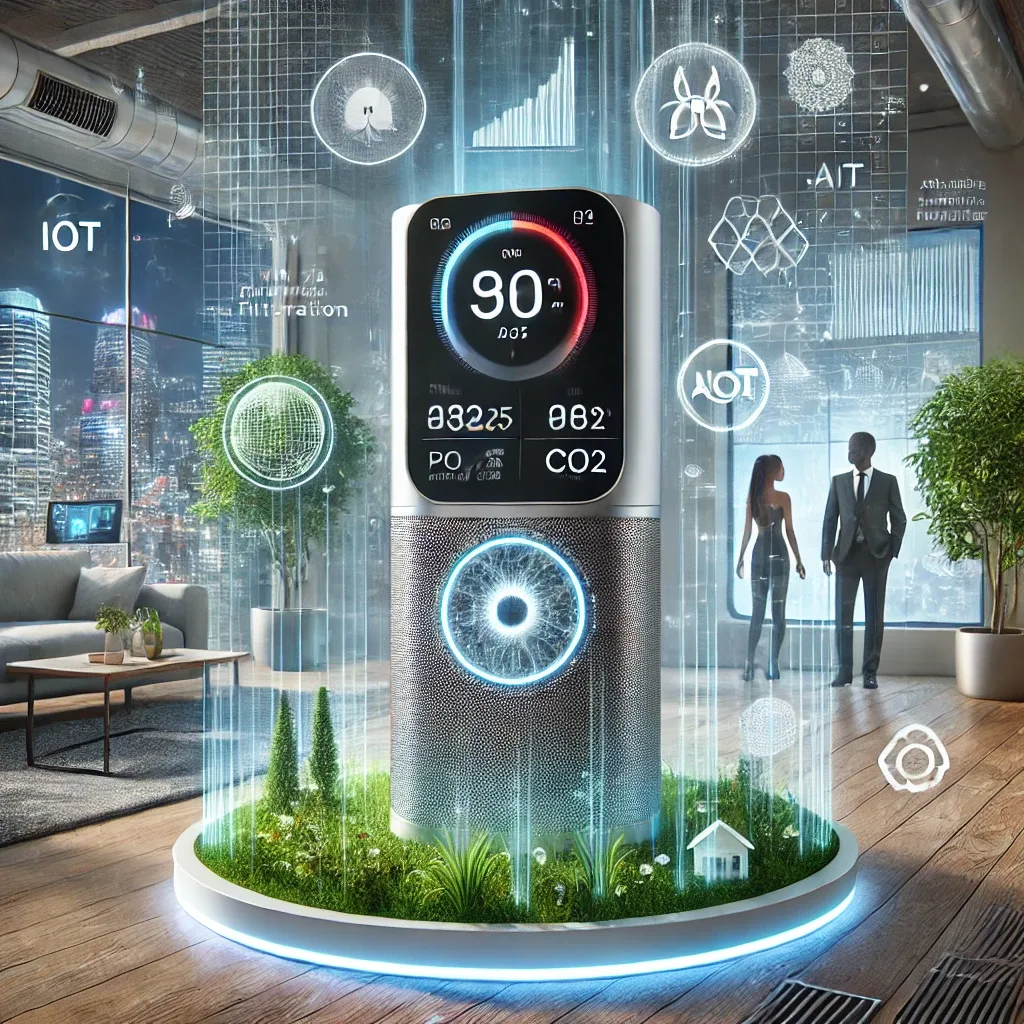
A complete smart filtration system uses five technology layers. Layer 1 — HEPA H13/H14: filters 99.97–99.995% of particles at 0.3 μm, covering PM2.5, PM10, pollen, and most pathogens. Layer 2 — Activated Carbon: adsorbs VOCs, formaldehyde from furniture, cigarette smoke, and odors that HEPA cannot capture. Layer 3 — UV-C Light (optional): ultraviolet light neutralizes bacteria and viruses that survive filtration, with proven efficacy against influenza, COVID-19, and mold spores. Layer 4 — Ionizer (optional): releases negative ions that cause dust particles to clump and settle, reducing airborne PM2.5; select certified models to avoid Ozone generation above safe thresholds. Layer 5 — Sensors and AI: measures PM2.5, CO2, and humidity in real time every minute, feeding an AI system that learns household patterns and pre-adjusts purification before readings spike.
Measurable Benefits of Smart Air Filtration
A well-designed system should deliver: indoor PM2.5 consistently below 15 μg/m³ on days when outdoor levels reach 100 μg/m³; reduced allergy and asthma symptoms for residents within 2–4 weeks; improved sleep quality as cleaner air increases cerebral oxygen; over 50% reduction in dust accumulation on furniture; and 20–35% energy savings versus always-on fixed-speed operation.
How to Choose a Smart Air Filtration System
Five selection criteria: CADR ≥ room area × 2.5 for adequate sizing; HEPA H13 or higher plus activated carbon filtration; Sleep mode noise below 35 dB; Wi-Fi or Zigbee connectivity for Smart Home integration; and reasonably priced replacement filter cartridges for sustainable long-term ownership. Philips Series 3000i/4000i suits bedrooms; Dyson TP09 suits living rooms; Blueair Blue 3210 suits home offices. HappySmart Air Pro and Air Max are OEM models with native Home Assistant support.
Maintenance for Peak Performance
Pre-filter: clean every two weeks. HEPA filter: replace every 6–12 months based on device alerts. Carbon filter: replace every 3–6 months in homes with strong odors or high VOC readings. UV-C lamp: replace every 12–18 months. Exterior chassis: wipe monthly. Smart systems that alert based on actual runtime hours prevent the most common cause of declining performance — delayed filter replacement.