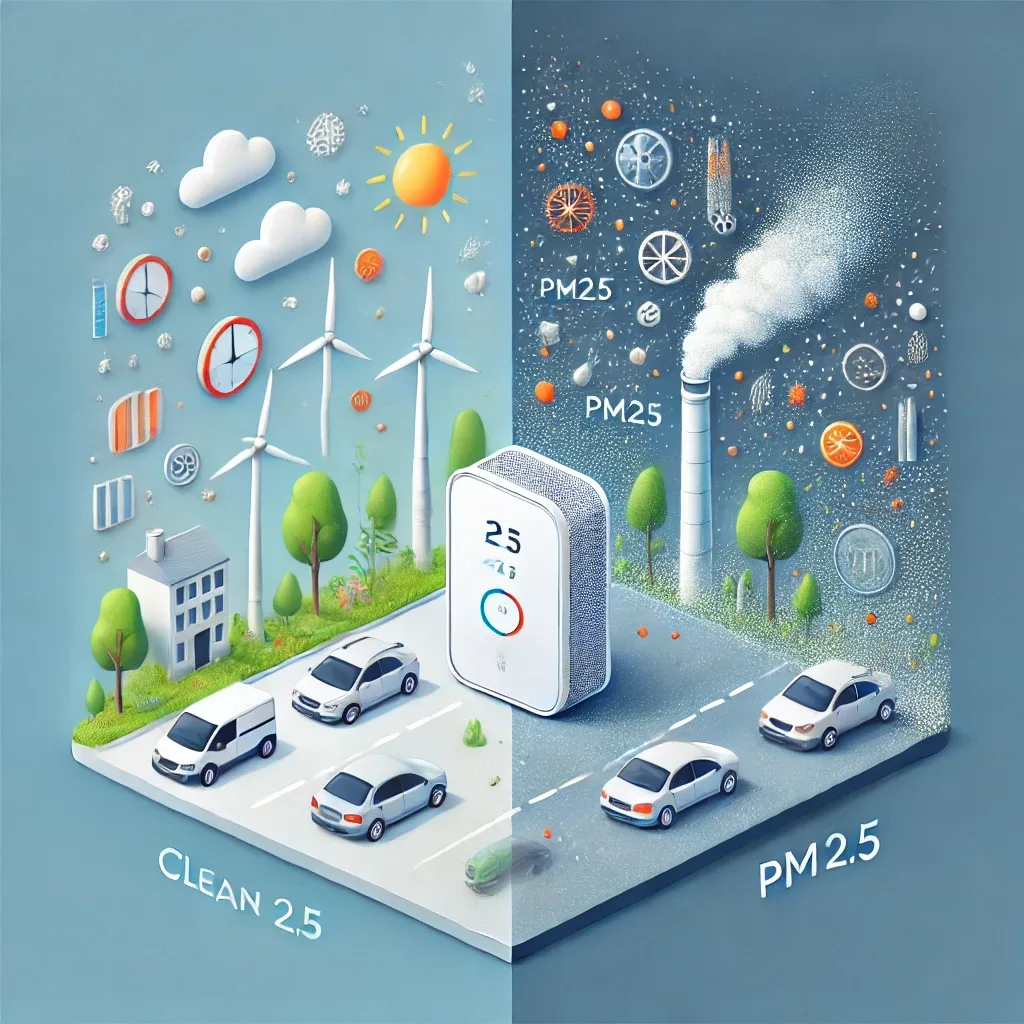
What Is PM2.5 and Where Does It Come From?
PM2.5 refers to particulate matter with a diameter of 2.5 micrometers or less — 30 times finer than a human hair, invisible to the naked eye, and small enough to pass directly through nasal hairs. Primary sources include vehicle and factory exhaust, open burning, construction dust, and indoor activities such as high-heat cooking, burning incense, and mosquito coils. The WHO recommends a 24-hour average of no more than 15 μg/m³. During pollution crises in Bangkok and Chiang Mai, readings regularly reach 100–200 μg/m³.
Effects on the Respiratory System
PM2.5 is the leading cause of respiratory disease. When inhaled, particles embed deep in the alveoli of the lungs, triggering chronic inflammation that leads to asthma, emphysema, and chronic obstructive pulmonary disease (COPD). Long-term exposure significantly increases lung cancer risk by inducing cellular-level changes. The resulting immune compromise also makes the respiratory tract more vulnerable to viral and bacterial infections.
Effects on the Heart, Blood Vessels, and Brain
PM2.5 does not stop at the lungs. The smallest particles cross into the bloodstream directly, inflaming blood vessel walls and increasing the risk of coronary heart disease, stroke, and hypertension. Research also links long-term PM2.5 exposure to Parkinson's disease and Alzheimer's, as particles travel via the olfactory nerve directly into the brain — bypassing the blood-brain barrier.
Effects on Vulnerable Groups
Young children: exposure during development leads to incomplete lung formation and substantially elevated lifetime asthma risk. Pregnant women: associated with premature birth and low birth weight. Mental health: chronic inflammation driven by long-term pollution exposure increases risk of depression and anxiety by affecting central nervous system function. The elderly: weakened immune systems amplify the damage of PM2.5 exposure compared to younger adults.
Prevention with Smart Air Filtration
The most effective in-home protection combines three elements. First, a HEPA H13 purifier — filtering 99.97% of particles at 0.3 μm — paired with activated carbon, adjusting fan speed automatically based on live PM2.5 readings every minute. Second, real-time sensors that alert when indoor or outdoor readings exceed WHO guidelines. Third, Home Assistant automation that simultaneously closes windows, activates the purifier at high speed, and sends LINE Notify alerts to all household members when pollution spikes. Complement the system with simple behavioral measures: no burning indoors, HEPA vacuum cleaners, and N95 masks when venturing out on high-AQI days.