What Is PM2.5?
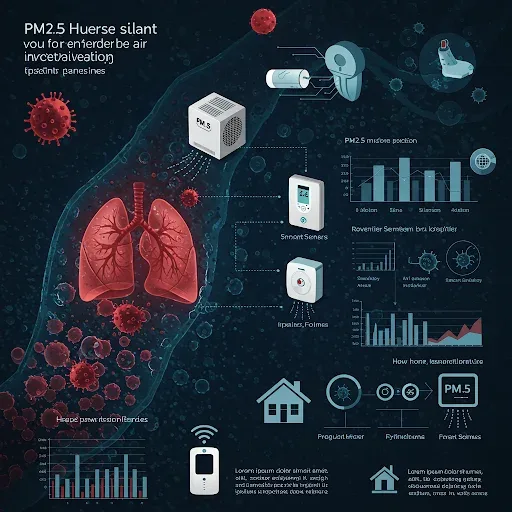
PM2.5 stands for Particulate Matter with a diameter of 2.5 micrometers or less — roughly 20 times smaller than a human hair. These particles remain suspended in air for extended periods, penetrating through door gaps, window frames, and even porous walls. Primary sources include fossil fuel combustion, open burning, construction dust, and indoor activities such as cooking and burning incense or candles.
Health Impacts Across Every Body System
Once inhaled, PM2.5 bypasses the respiratory tract's natural defenses and enters the bloodstream directly. Respiratory system: irritation, asthma exacerbation, and chronic obstructive pulmonary disease (COPD). Cardiovascular system: elevated risk of heart disease and stroke. Neurological system: particles travel via the olfactory nerve into the brain, linking to cognitive decline. Immune system: suppression leading to increased infection susceptibility. Skin: inflammation and premature aging. Pregnancy: increased risk of low birth weight and preterm delivery. High-risk groups include young children, the elderly, cardiac patients, those with lung disease, and immunocompromised individuals.
Everyday Sources of PM2.5
Outdoor sources include vehicle and factory emissions, agricultural burning, and construction dust. Indoor sources include high-heat cooking, burning candles or incense, certain air fresheners, and pet dander. The WHO guideline is a 24-hour average of no more than 15 μg/m³. During pollution peaks in Bangkok, outdoor readings can reach 70–120 μg/m³.
Smart Home Solutions for PM2.5 Prevention
An effective Smart Home setup covers four pillars. First, smart air purifiers with HEPA H13 and activated carbon filters that activate automatically when PM2.5 exceeds thresholds (CADR should equal floor area in sqm × 2.5). Second, PM2.5, CO2, and VOC sensors that deliver real-time alerts via LINE Notify. Third, smart ventilation systems that adjust airflow based on indoor/outdoor air quality differentials. Fourth, smart ACs with built-in HEPA filtration for combined temperature, humidity, and particle control. A fully integrated system is expected to maintain indoor PM2.5 below 15 μg/m³ even when outdoor levels reach 80 μg/m³.
Non-Tech Habits That Amplify Results
Smart technology works best when combined with simple behavioral changes. Avoid burning materials indoors, including incense and scented candles. Use a vacuum cleaner with a HEPA filter. Mop floors with a damp cloth rather than sweeping, which resuspends dust. Remove thick carpets that trap particles. Consider air-purifying plants such as Monstera or Pothos in well-lit areas. Together, these low-cost measures meaningfully reduce baseline particle loads inside the home.