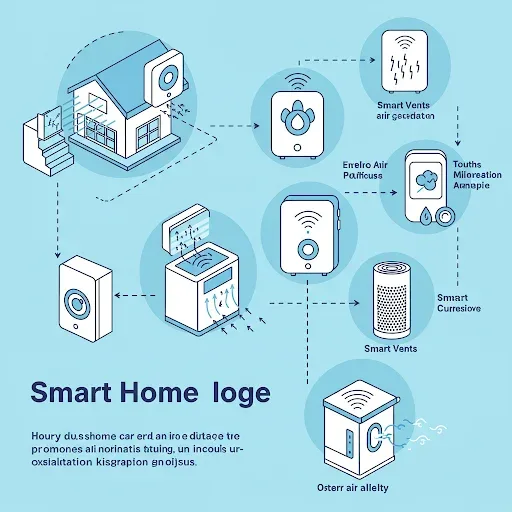
Method 1: Smart Air Purifier
A smart air purifier is the cornerstone of indoor air quality. The system operates in real time, automatically adjusting filtration based on live PM2.5 readings. Essential filtration stages include HEPA H13 for fine particles and activated carbon for gases and odors. App-based control and AI-powered energy optimization round out the feature set. Selection criteria: CADR sized to floor area (CADR ≥ area m² × 2.5), HEPA plus carbon filter combination, Sleep mode noise below 35 dB, and Smart Home connectivity. Maintenance: clean the pre-filter every two weeks; replace the HEPA filter every 6–12 months or when the device alerts you.
Method 2: Smart Ventilation System
Fresh outdoor air is essential, but timing matters. CO2, humidity, and temperature sensors work with Home Assistant automation to open ventilation only when outdoor air quality is favorable. Benefits include prevention of moisture and mold buildup, elimination of stale odors and VOC accumulation, and energy savings from ventilating only when necessary. Smart ventilation types include smart exhaust fans, ERV and HRV whole-home systems, and automated smart windows that open and close based on air quality conditions.
Method 3: Air Quality Sensors
There is no genuine improvement without measurement. A capable sensor must measure PM2.5, PM10, CO2, CO, VOC, humidity, and temperature, deliver real-time threshold alerts, integrate with Smart Home platforms to trigger automations, and log historical data for trend analysis. Key selection criteria: coverage of required parameters, appropriate connectivity (Wi-Fi or Zigbee), flexible alert configuration, readable display, and suitable power supply for the intended location.
Method 4: Smart Humidity Controller
Maintaining 40–60% relative humidity is a frequently overlooked variable. Excess humidity promotes mold, dust mites, and bacteria. Insufficient humidity dries nasal mucous membranes, causes irritation, and impairs the body's natural airborne defense mechanisms. A smart humidity controller automatically adjusts levels, provides app-based remote control, reduces allergy risk year-round, and integrates with Home Assistant to coordinate with purifiers and ventilation as a unified environmental system.
Method 5: Smart Air Conditioner
Modern smart ACs do more than cool — they actively improve overall air quality. Models with built-in HEPA or carbon filters capture dust and odors as they circulate air. Automatic temperature and humidity management, remote app control, and pre-scheduled or sensor-triggered operation make them a central part of the clean-air ecosystem. Running all five methods together through Home Assistant delivers the most complete result: clean air, comfortable temperature, balanced humidity, and the energy to live well every day.