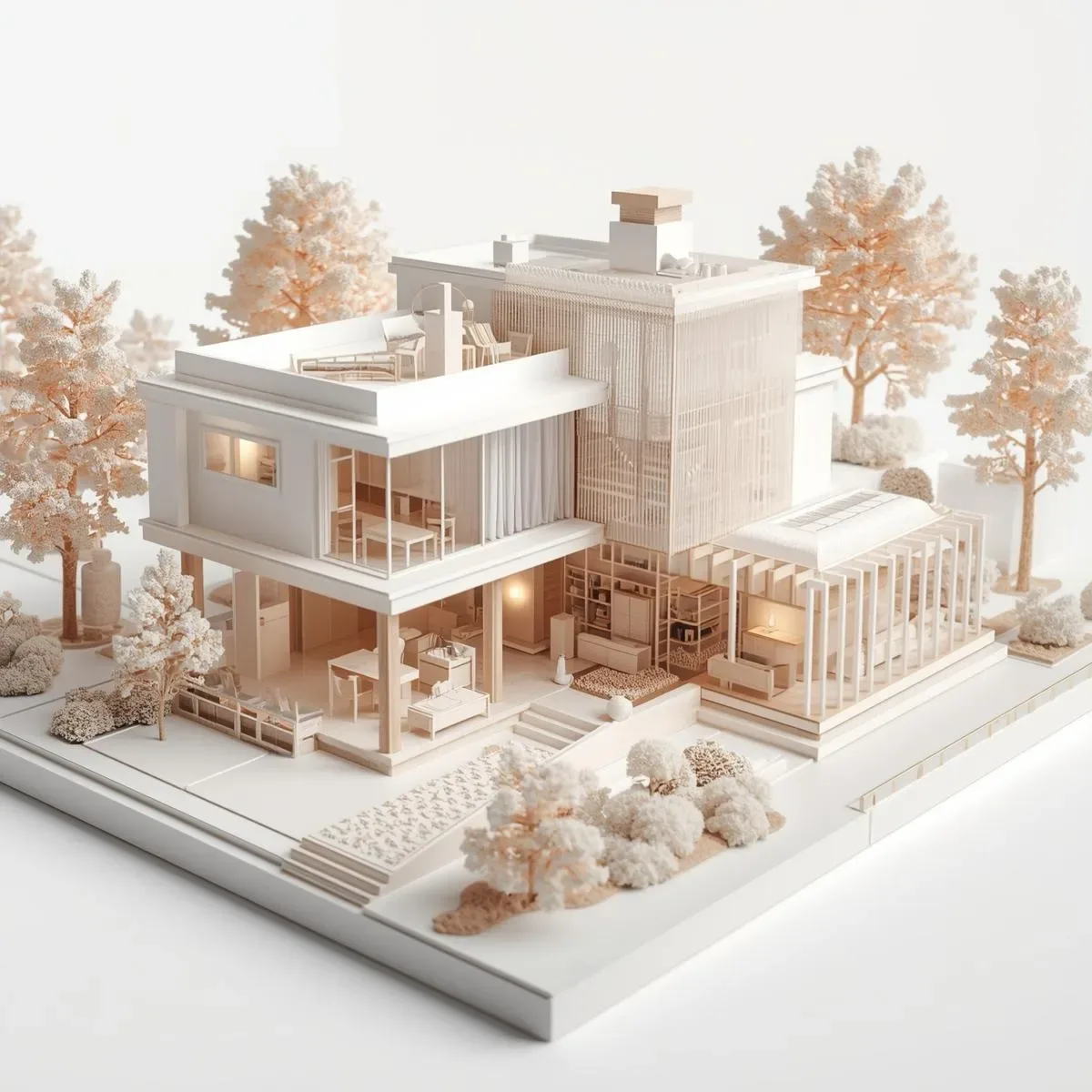
Artificial intelligence is transforming architecture and interior design rapidly—not merely as a rendering assistant but as a design partner capable of processing enormous datasets to find optimal solutions within defined constraints.
Generative Design in Autodesk Forma and Revit: Generative Design employs evolutionary algorithms to produce thousands of design alternatives within minutes. Architects define Parameters including site dimensions, Thai Building Control Act setback requirements, room program and counts, and Performance Goals—solar access to 60% or more of usable area, cross-ventilation potential, and structural efficiency. The AI generates and evaluates thousands of options against these goals simultaneously, presenting a Pareto Frontier of solutions where no further improvement in one metric is possible without degrading another—enabling architects to choose the optimal trade-off rather than guessing.
Automated Code Compliance for Thai Building Regulations: the Building Control Act B.E. 2522 and Ministerial Regulation No. 55 (B.E. 2543) govern setbacks, Floor Area Ratio (FAR), Open Space Ratio (OSR), and building height. BIM plugins such as Speckle or Solibri Model Checker automatically check the BIM model against codified rule sets, generating a Compliance Report that identifies non-compliant elements with specific corrective guidance. This eliminates human error in permit applications and allows architects to iterate toward compliance quickly without manual cross-referencing of regulations.
AI Furniture Layout Optimization: once the BIM floor plan is established, AI tools such as Spacemaker or Interior AI analyze each room’s program (bedroom 15 m², single or double occupancy, work-from-home function) and generate furniture layouts optimized for: circulation paths of 800mm minimum on all sides, natural light access to work surfaces, and sightlines between living and kitchen areas. Systems evaluate 50–200 layout variations and present the top five with explanations of why each configuration performs well—giving interior designers data-backed options rather than relying solely on experience.
AI-Powered MEP Coordination: MEP system clashes are the primary cause of costly construction rework. AI Clash Detection in Autodesk BIM 360 or Navisworks automatically identifies conflicts between HVAC ducts, electrical conduits, and plumbing pipes. Machine learning prioritizes clashes by severity and proposes resolution routing options. Projects using AI clash detection report 40–60% reductions in coordination meeting time and significant reductions in on-site RFIs caused by undiscovered clashes.