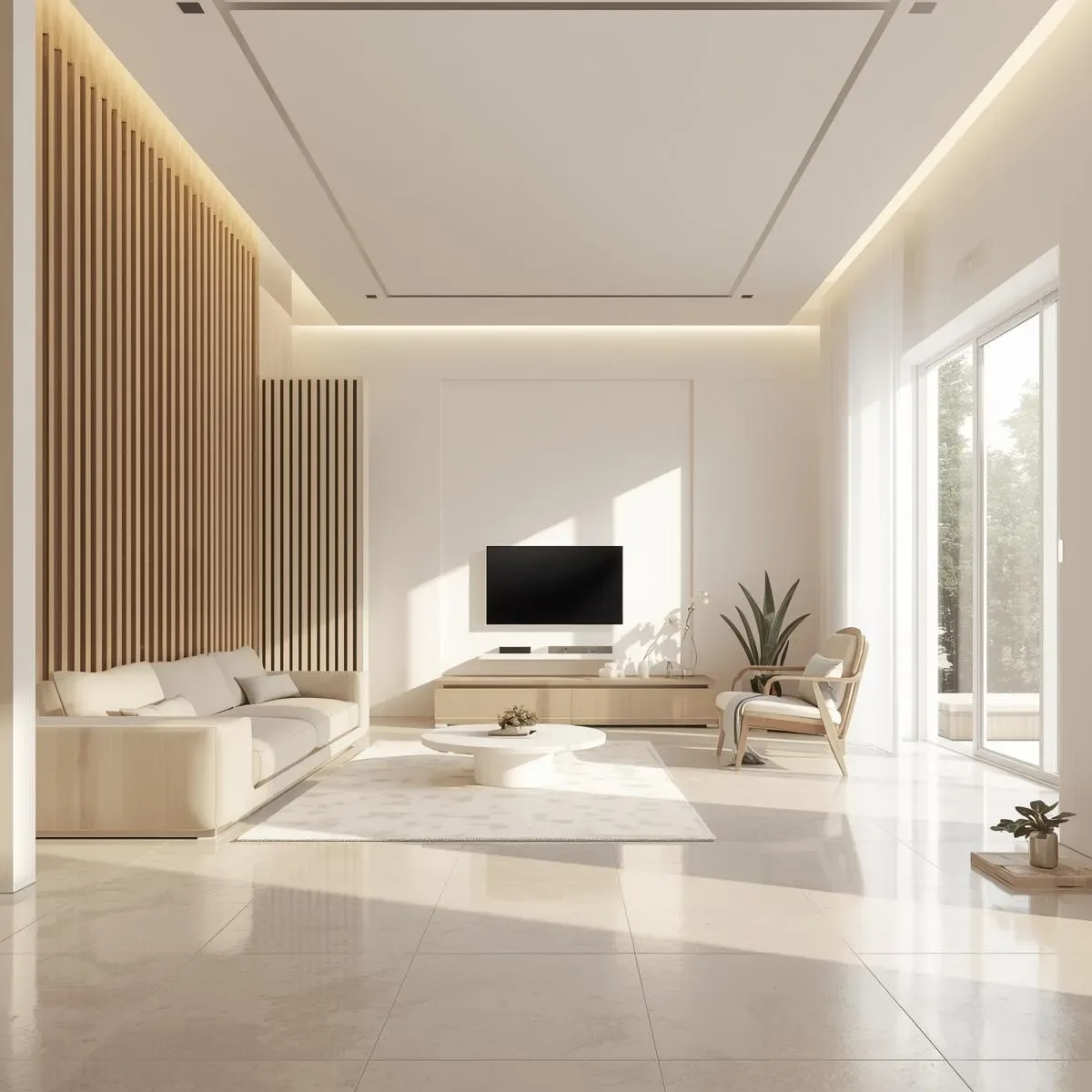
Thai family homes often house three to four generations simultaneously—infants or young children, working-age parents, and aging grandparents. Each group has distinct and sometimes conflicting safety and accessibility requirements. BIM planning combined with IoT automation resolves these tensions by designing the home to adapt intelligently to each resident’s needs.
Child Safety in SmartInterior: electrical outlets are the primary hazard for toddlers. Child-proof covers protect all outlets below 1.0m height. Smart Locks on the front door and pool gate prevent independent child exit. Door Sensors send immediate LINE OA alerts to parents whenever the pool gate opens. PIR presence detection in hazard zones—kitchen and stairway—triggers a Door Chime alert and notifies parents when a child enters unsupervised. Kitchen appliances and induction cooktops operate in Child-safe Mode, auto-shutting off when no adult presence is detected in the room. All zones automatically shift to Child-safe automation when parents are away.
Elderly Accessibility in BIM: 900mm doorways throughout the home, zero-threshold floor transitions at every room boundary, Brushed Gold grab bars in all bathrooms styled as coordinating accessories, stair handrails on both sides, and automatic Night Light illumination along the bedroom-to-bathroom path at all hours. BIM plans all these elements from the initial design stage, including structural provisions for future Home Elevator installation without requiring structural modification later.
Personalized IoT Automation Profiles: Home Assistant manages separate automation profiles for each household member. Child Mode prevents lights from activating outside scheduled hours, caps audio volume after 21:00, and locks the thermostat above 25°C minimum. Senior Mode activates automatic pathway lighting throughout the home, increases Night Light brightness by 30% after 20:00, and notifies the family LINE OA group if movement patterns deviate from the established baseline. Adult Mode provides full system control without restrictions.
Cross-Generational Noise and Schedule Management: noise conflict is the most common friction point in multi-generational Thai homes—children active in the afternoon when grandparents need to rest. Smart Speaker Zones assign independent volume profiles to each room: children’s rooms allow game sounds and music during After School hours, grandparents’ rooms maintain silence at all times, and shared living areas adjust volume automatically based on occupancy detection. All household members’ activity schedules integrate into Home Assistant’s Calendar, enabling automatic Scene adjustments aligned with each generation’s daily rhythm.