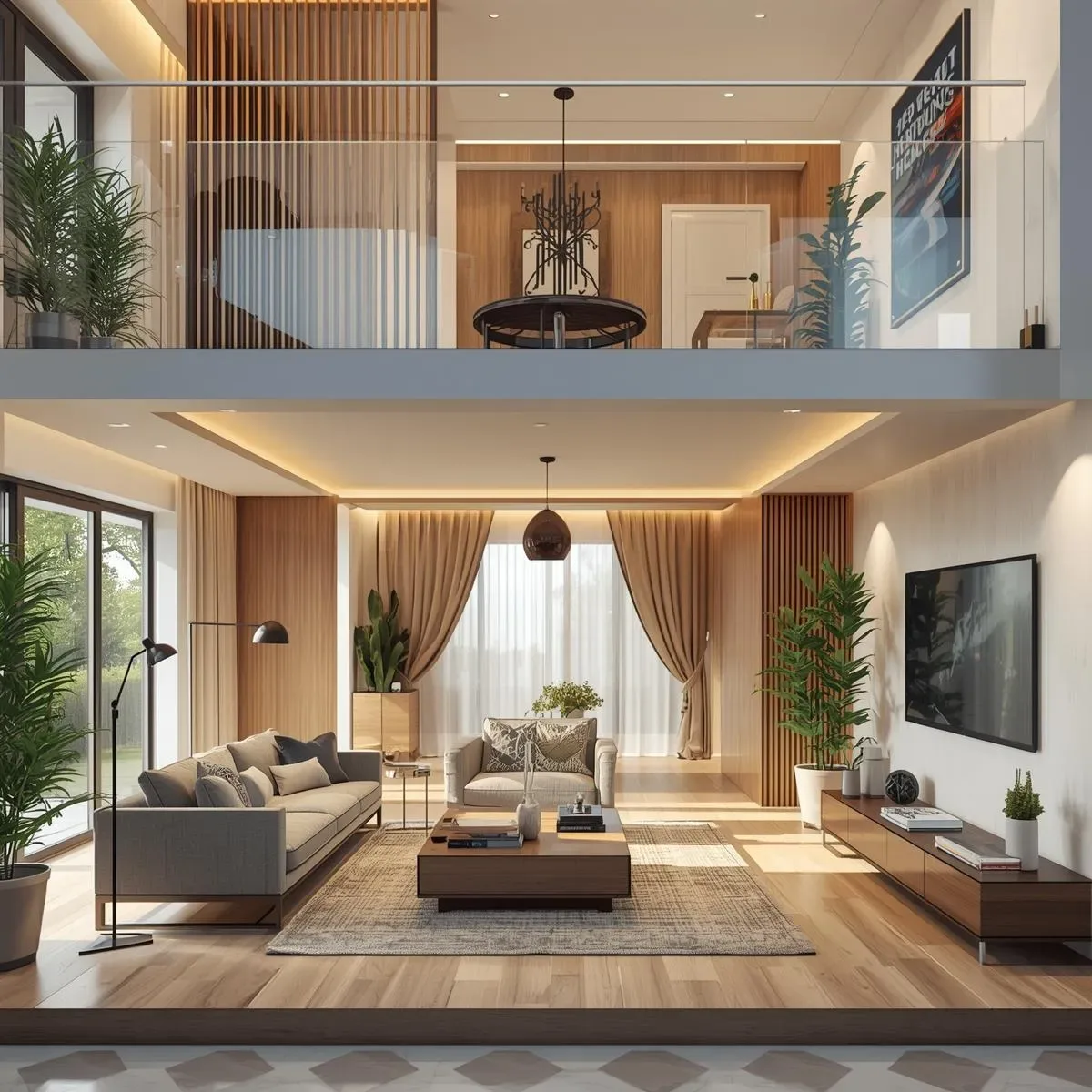
Biophilic design applies evidence-based strategies for reconnecting interior spaces with nature — a connection humans evolved with over millennia but that conventional built environments largely eliminate. Three categories apply directly to Thai smart homes: direct nature elements (living plants, water features, natural light and ventilation, garden views), indirect nature elements (natural materials like bamboo, reclaimed teak, travertine stone, and organic textures and patterns), and spatial conditions (prospect spaces with wide views that reduce cortisol, refuge spaces with low ceilings and enclosure for focus, and natural complexity in form and texture that stimulates without overwhelming). Research evidence shows biophilic environments reduce stress hormones by 13–15%, improve creative problem-solving by 15%, and accelerate recovery from mental fatigue by 3–4 times compared to conventional environments.
IoT integration extends biophilic design from passive aesthetic to active living system. Plant moisture sensors (capacitive soil sensors, THB 200–500 each) connected to Home Assistant trigger automated drip irrigation for living walls and indoor plant collections, maintaining optimal soil moisture at 40–60% volumetric water content without manual intervention. Natural light sensors (TSL2591 or BH1750 lux sensors, THB 150–300 each) control smart blinds in real time to maximize daylight penetration while preventing glare above 2,000 lux on work surfaces — a critical balance for energy efficiency and visual health. Humidity sensors maintain 55–65% RH for living walls, preventing both plant stress and mold risk that Bangkok’s ambient 75% RH would otherwise cause if humidity drifts upward.
The 3D BIM model supports biophilic design at the planning stage. View corridors to garden or sky are modeled to verify sightlines from key furniture positions. Sunlight penetration depth is simulated by season to position living plant walls where natural light levels reach 200–500 lux (sufficient for most tropical indoor plants without grow lights). Natural material selections are documented in the BIM material library with both aesthetic and embodied carbon data, enabling HappySmart clients to choose locally sourced Thai hardwoods, FSC-certified bamboo flooring, and natural stone finishes that connect to regional character while supporting sustainability goals.