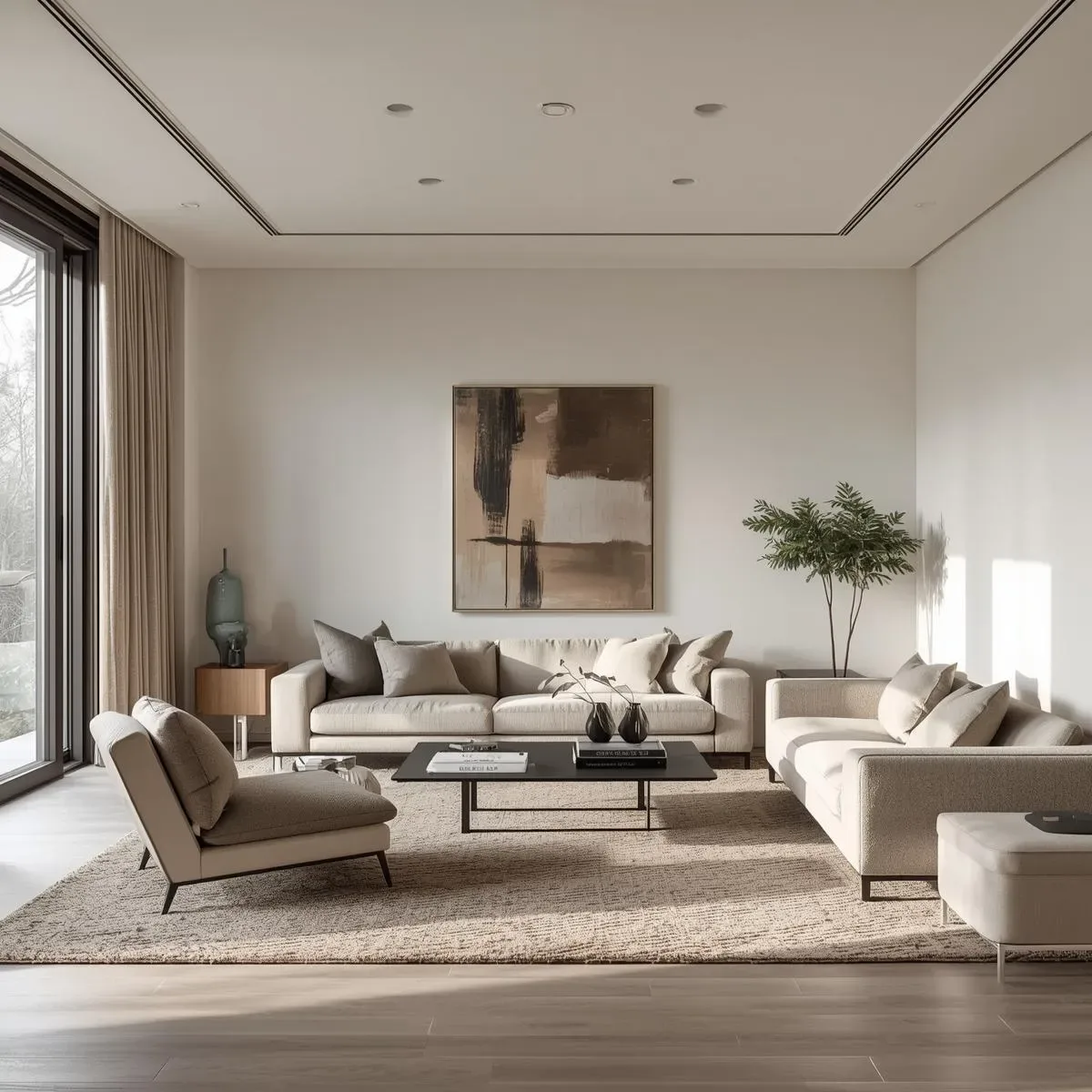
Carbon-aware interior design addresses two distinct carbon budgets: embodied carbon (emissions from material extraction, manufacturing, and construction) and operational carbon (emissions from energy use during occupancy). 3D BIM enables embodied carbon tracking by linking each material specification to its Environmental Product Declaration (EPD) data via tools such as EC3 (Embodied Carbon in Construction Calculator) or OneClick LCA. For a typical 120 sqm Bangkok home, switching from standard reinforced concrete partitions to AAC (Autoclaved Aerated Concrete) blocks reduces embodied carbon by approximately 30–40%, while using low-VOC paints and FSC-certified timber flooring contributes to both carbon reduction and indoor air quality improvements critical for Smart Longevity health.
Operational carbon is tracked and reduced through the IoT layer. Smart energy meters provide real-time kWh consumption per circuit, which is converted to CO2e using Thailand’s national grid emission factor (approximately 0.4932 kg CO2e/kWh, EGAT 2023). Home Assistant’s Energy Dashboard visualizes daily, weekly, and monthly carbon footprint by zone, enabling occupants to identify high-carbon behaviors — leaving HVAC running in unoccupied rooms, overnight standby loads — and set carbon reduction targets alongside cost targets. During Bangkok’s dry season (January–March) when coal-heavy grid mixes increase the emission factor, the system automatically shifts flexible loads like EV charging and dishwasher cycles to solar-generation windows.
HappySmart’s eco-intelligent interior service integrates the embodied carbon model from the 3D design stage with the operational carbon monitoring from the IoT layer, delivering a Carbon Passport document: a lifetime carbon accounting record for the home that tracks cumulative emissions reduction versus a baseline conventional home. For Thai clients interested in sustainable living aligned with Thailand’s NDC targets (40% emission reduction by 2030) and ESG-conscious property valuations, this carbon documentation increasingly adds tangible market value beyond the comfort and energy savings benefits.