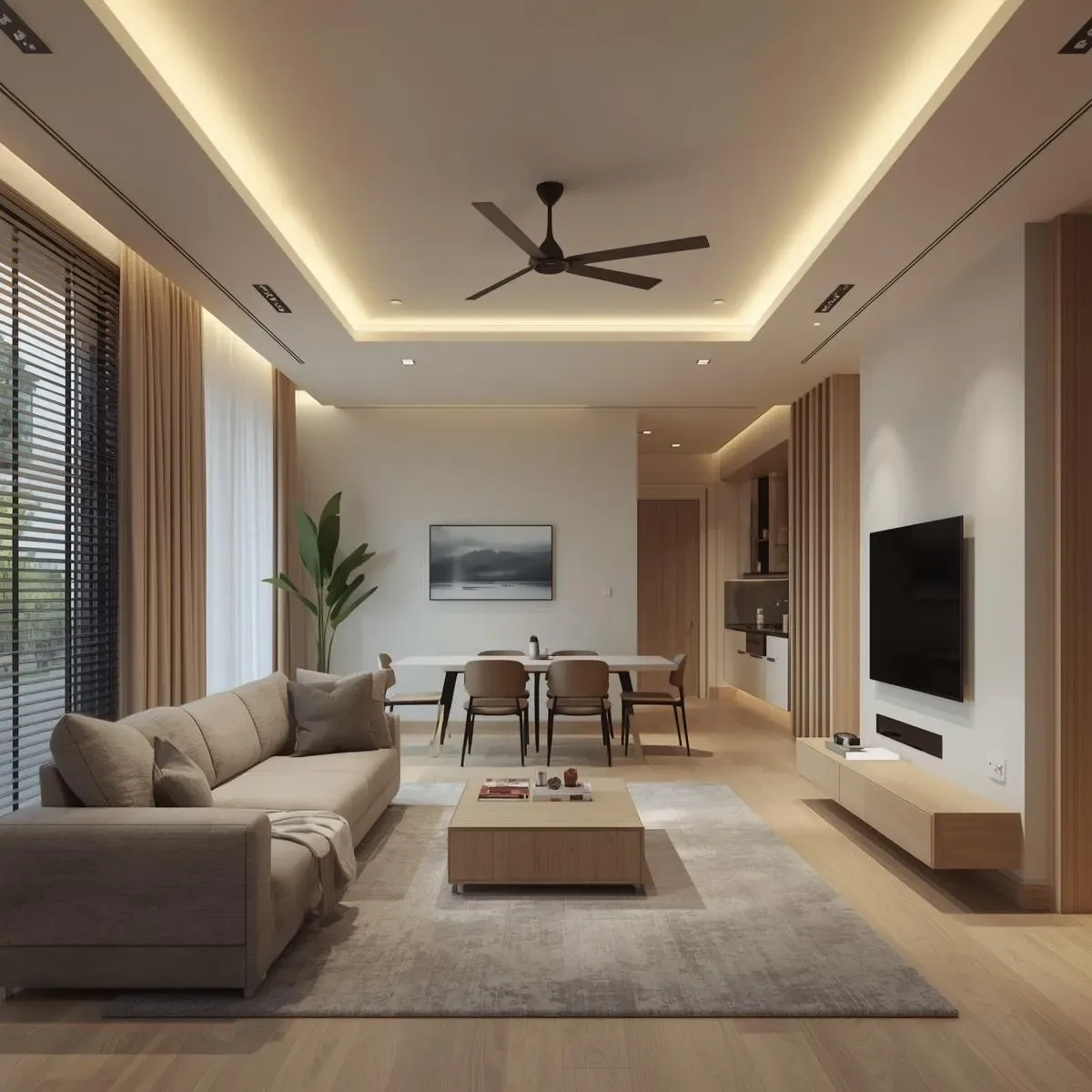
Health and energy monitoring share the same physical infrastructure in a Smart Longevity home — sensors, gateways, wiring — yet historically these systems are designed and installed as separate projects. 3D BIM resolves this by serving as a single integration canvas: health-monitoring sensors (wearable data receivers, indoor air quality monitors for CO2/VOC/PM2.5, thermal comfort sensors for ASHRAE 55 compliance) and energy-monitoring devices (smart meters, CT clamp meters, solar inverter data points) are co-located in the 3D model to optimize cable runs, minimize gateway count, and ensure sensor placement serves both purposes simultaneously.
The dual-purpose data layer creates optimizations unavailable in siloed systems. Elevated CO2 above 1,000 ppm signals high occupancy, allowing the energy system to delay HVAC cycling rather than relying on fixed schedules. A wearable detecting elevated resting heart rate at 23:00 correlates with bedroom temperature above 26°C, triggering an overnight cooling adjustment that improves sleep quality while reducing the next morning’s HVAC recovery load. This cross-domain reasoning is enabled by routing all signals through a unified Home Assistant automation engine where health and energy rules share the same condition evaluator.
For HappySmart’s 3D Model and AI SmartHome clients, dual optimization delivers measurable outcomes: Thai seniors with cardiovascular risk benefit from tighter thermal control (target 24–26°C, RH 50–60%) reducing hypertensive episode frequency, while Smart Longevity households achieve 15–20% greater energy savings than single-purpose systems through cross-domain scheduling. The 3D model’s spatial coordination also prevents the common failure mode of placing health sensors in HVAC supply-air zones where temperature and humidity readings are skewed by cold drafts.