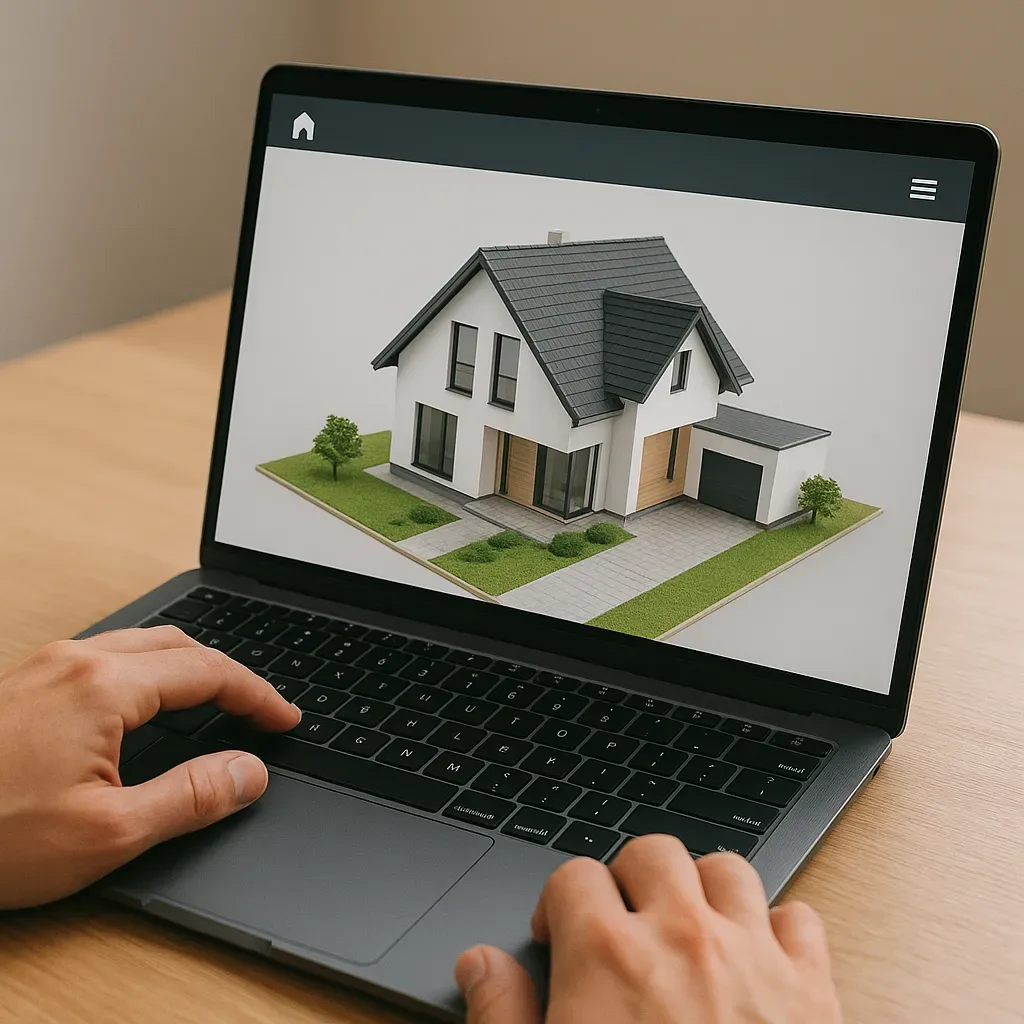
Change Orders: The Hidden Cost in Construction Projects
In a typical Thai home construction project, change orders account for 15-25% of total project value. For the added complexity of smart home integration, this can reach 30-40%.
Primary causes of smart home change orders:
- Client changes mind after seeing physical reality (switch positions, camera angles, sensor placement)
- Clashes between systems (wiring hitting plumbing, ceilings hitting ducts)
- Contractors interpret 2D plans differently from design intent
- Site conditions discovered during construction that 2D drawings don’t show
McKinsey Global Institute (2020): Projects using BIM/3D modeling reduce change orders by 40-60%.
What 3D Models Make Visible for Smart Homes
Visibility that 2D plans cannot provide:
- Sensor positions: Is the corner motion sensor obstructed by the wardrobe? Visible in 3D.
- Cable run distances: Does every CAT6 run from the patch panel stay under 90 meters?
- Smart switch heights: 120cm from floor for adults; 100cm for children and elderly
- Camera coverage angles: Does every camera see its full intended zone without blind spots?
- Clash detection: Does the ERV duct collide with a beam? Does conduit cross the plumbing stack?
BOQ from 3D Models: 25-30% More Accurate
Traditional BOQ estimation in Thailand relies on per-square-meter averages and contractor experience — with typical variance of 25-40%.
3D modeling improves BOQ accuracy because:
- Every cable run is measured from the actual model geometry
- Every device is counted from the model’s BOM (Bill of Materials)
- Labor hours are estimated from actual complexity visible in 3D
Example difference:
- Traditional estimate: house wiring, 12,000 THB
- From 3D model: 347 meters of cable + labor = 15,800 THB (accurate but not cheaper)
- Change order savings from cables not ordered short: 8,000-15,000 THB avoided
Clash Detection: Preventing the Most Expensive Fixes
Finding system clashes before construction saves enormous amounts:
| Problem found in construction | Cost to fix post-construction |
|---|---|
| ERV duct hitting beam | 15,000-30,000 THB (remove + redo) |
| Conduit crossing water pipe | 8,000-20,000 THB |
| Camera blind spot due to column | 5,000-12,000 THB (relocate) |
| Smart switch conflicting with existing switch | 3,000-8,000 THB |
Clash detection software used in Thailand:
- Navisworks (Autodesk) — Industry standard, 45,000 THB/year
- BIM Track — Cloud-based, 15,000-25,000 THB/year
- SketchUp + extensions — For smaller projects at accessible cost
3D Modeling Process for Smart Homes
Phase 1: Schematic (weeks 1-2)
- Floor plan in SketchUp
- Rough device positions marked
- Preliminary BOQ
Phase 2: Design Development (weeks 3-4)
- Full 3D model all floors
- First clash detection run
- Clash resolution + client confirmation
Phase 3: Construction Documentation (weeks 5-6)
- Shop drawings from 3D model
- Final BOQ for bidding
- VR/AR tour for client approval
Phase 4: Construction Monitoring
- Compare as-built to 3D model
- Document all deviations
- Update as-built model
ROI of 3D Modeling Investment
- 3D modeling service cost for smart home: 20,000-80,000 THB
- Change orders avoided: 50,000-200,000 THB
- Net saving: 30,000-120,000 THB
- ROI: 150-300%