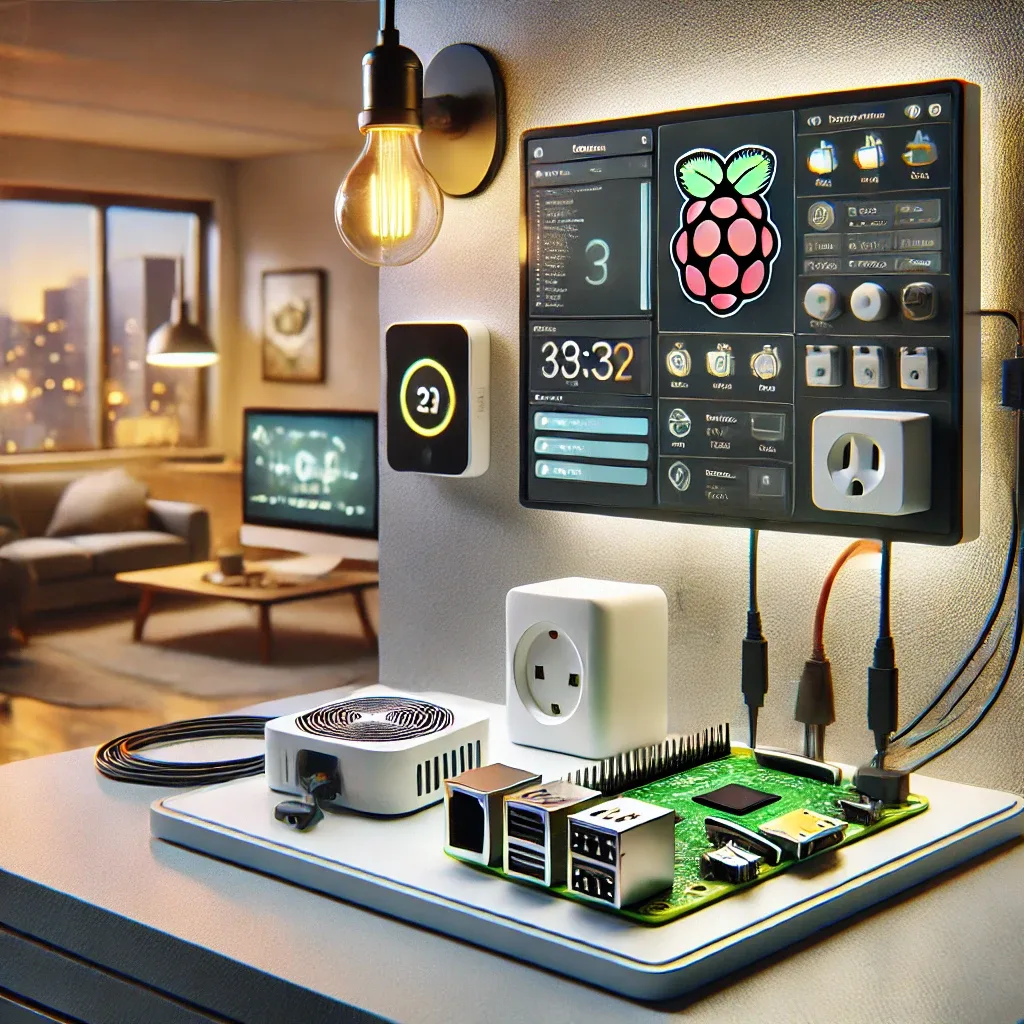
What Is Raspberry Pi in the Smart Home World?
Raspberry Pi is a credit card-sized single-board computer running full Linux. The latest Raspberry Pi 5 uses a BCM2712 Cortex-A76 chip at 2.4 GHz with 4-16 GB RAM and PCIe 2.0 for NVMe SSD expansion, boosting system speed and reliability.
With Home Assistant OS installed, RPi5 becomes a smart home hub supporting over 3,200 integrations, controlling hundreds of devices, and processing everything locally without cloud dependency.
Capability 1 — Smart Lighting via Zigbee
Connect a Zigbee USB dongle (Sonoff Zigbee 3.0 USB, approximately 500 THB) to RPi5 and use the ZHA (Zigbee Home Automation) integration in Home Assistant to control hundreds of smart bulbs, switches, and dimmers simultaneously. Build scenes for room-by-room lighting based on time or Motion Sensors without relying on any single brand's hub.
Capability 2 — Automatic Air Conditioning and Purifier Control
Via IR Blaster or Smart Plug, RPi5 switches air conditioners on and off and adjusts temperature based on schedules or Motion Sensors — air conditioning runs only when someone is actually in the room, saving 20-35% on electricity. Connect Smart Air Purifiers through Mi Home (Xiaomi) or Dyson integrations to automatically adjust fan speed based on real-time PM2.5 sensor data.
Capability 3 — Fresh Air System Control
This is RPi5's most powerful smart home capability. Fresh Air Systems (ERV/HRV/PIV) with Modbus, RS-485, or Wi-Fi APIs connect to Home Assistant and enable automations such as:
- CO2 exceeds 1,000 ppm → increase Fresh Air speed to High
- Outdoor PM2.5 AQI > 150 → close Fresh Air intake, switch to recirculation
- Indoor humidity exceeds 70% → activate humidity exhaust fan
- LINE notification when filter replacement is due
Capability 4 — Processing Data from All Sensors
RPi5 runs InfluxDB and Grafana to record and display sensor data as beautiful dashboards. See weekly PM2.5 trends, power consumption patterns, correlations between outdoor temperature and air conditioning load, and air quality comparisons across rooms.
Capability 5 — CCTV and AI Motion Detection
Running Frigate NVR on RPi5 with a Coral USB Accelerator delivers an AI-powered security camera system that distinguishes between people, vehicles, and animals, dramatically reducing false alarms. It sends images and LINE notifications immediately when an unfamiliar person is detected, supporting dozens of IP cameras simultaneously.
Capability 6 — Integration with Multiple Platforms
Home Assistant on RPi5 connects simultaneously to Google Home, Apple HomeKit, Amazon Alexa, LINE Messaging, and Homebridge. Every household member can use their preferred platform without changing habits.