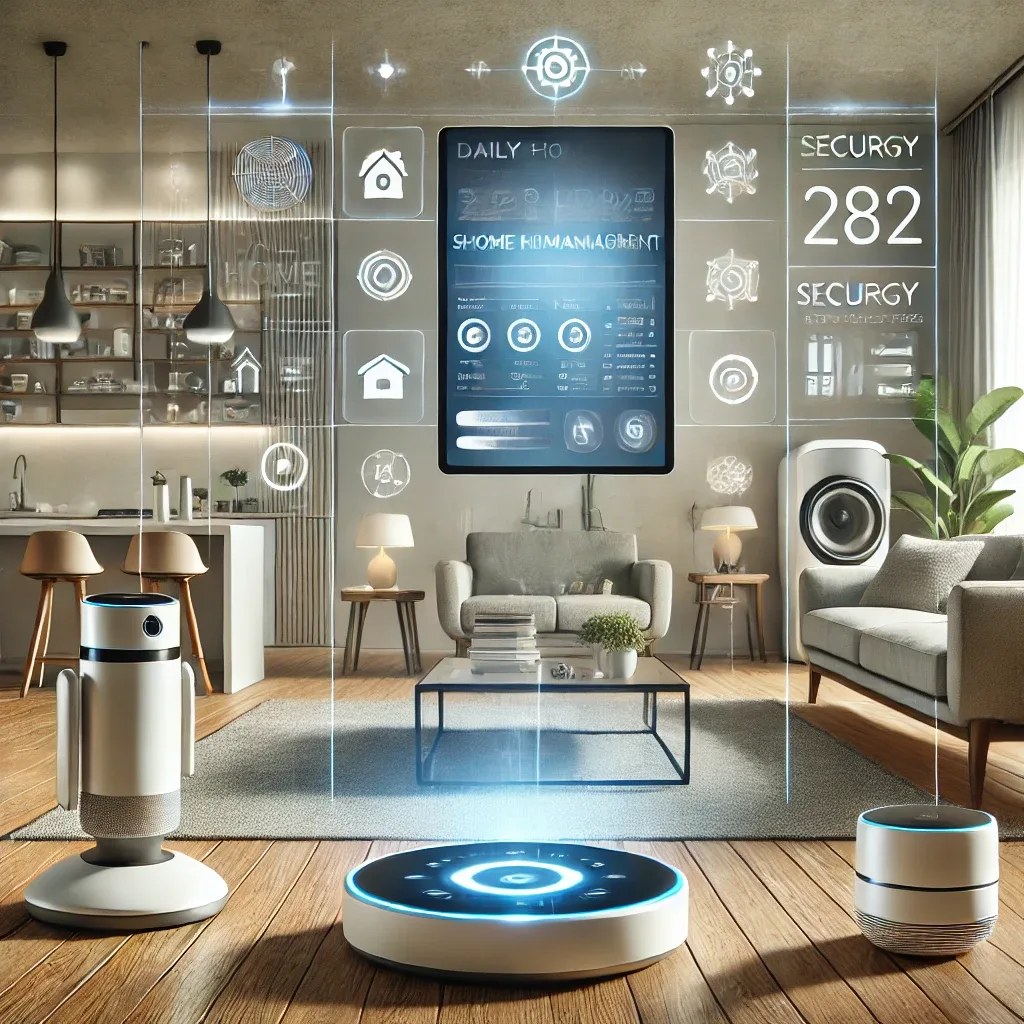
What Is Smart Home from a Home Care Perspective?
Traditional home care depends on time, attention, and manual action — switching lights, adjusting air conditioning, checking security, managing air quality. Smart Home converts these tasks into systems that operate automatically, learn from your habits, and adapt to real conditions.
For Bangkok residents who spend an average of 12-14 hours at home daily, a self-managing home is not a fantasy — it is an investment you can make today.
Dimension 1 — Convenience You Have Never Experienced Before
Voice control through Google Assistant or Apple Siri lets you turn off every light before sleeping without leaving bed. Location-based automation via GPS turns on your air conditioner 30 minutes before you arrive home. Smart Scenes combine Smart Lighting, Fresh Air System, and Smart Lock into single-tap experiences — press 'Sleep' and lights dim, Fresh Air runs quietly, and the door locks automatically.
Dimension 2 — Health Through Intelligent Air Management
This is the most important dimension in an era of increasing urban pollution:
Smart Air Management: Air Quality Sensors connect with Fresh Air Systems and Smart Air Purifiers to work in concert. When PM2.5 exceeds safe thresholds, the system automatically boosts the purifier and reduces Fresh Air intake from outside.
Positive Air Pressure: Fresh Air Systems create positive internal air pressure, preventing PM2.5, insects, and pathogens from infiltrating through small gaps.
Real-time Monitoring: A smartphone dashboard displays PM2.5, CO2, VOC, and humidity for every room in real time with 30-day history, revealing the relationship between air quality and your family's health.
Dimension 3 — 24-Hour Security
Smart CCTV cameras connected to Home Assistant deliver instant alerts with images when unusual movement is detected. Smart Locks log who enters and exits at what time, sending you immediate notifications. Window and door sensors alert when opened unexpectedly. Automation can even simulate occupancy by cycling lights while you are away, reducing burglary risk.
Dimension 4 — Data-Driven Energy Savings
Smart Energy Monitoring reveals which devices consume the most power and automatically cuts unnecessary standby loads. Air conditioning runs only when motion sensors confirm occupancy, saving 20-35%. ERV-based Fresh Air Systems reduce air conditioning load by a further 15-25%. Bangkok households that actively use Smart Home systems typically reduce monthly electricity bills by 25-40%.
The Future of Smart Home in Thailand
Thailand's Smart Home market is growing at 18-20% annually (Statista 2023-2027), driven by Millennials aged 25-40 who represent 58% of buyers. Falling device prices and the Matter Protocol standard — enabling seamless cross-brand integration — are powerful accelerators. A home without smart systems in ten years will feel like a home without internet feels today.