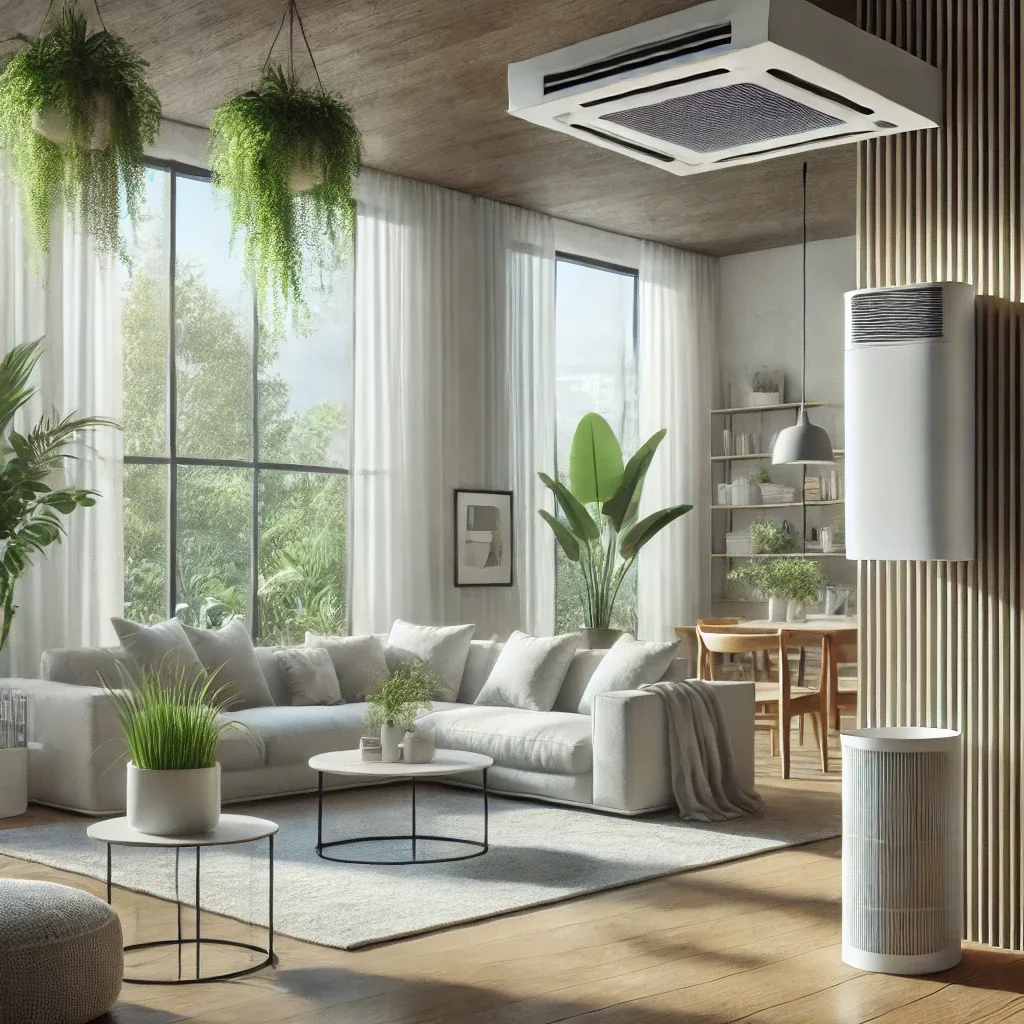
Having a good Fresh Air System at home is only half the work. The other half is making the system operate intelligently through Smart Home integration. This article compiles practical tips from real experience integrating Fresh Air Systems with Home Assistant.
Tip 1: Choose a Fresh Air System with an API
Not all Fresh Air Systems connect to Smart Home. Panasonic ERV/HRV models with Wi-Fi modules support Comfort Cloud API, which has an existing Home Assistant integration. Some Mitsubishi Lossnay ERV models support RS-485 Modbus connectable via ESPHome. Daikin Fresh Air Units include Wi-Fi adapters for Smart Home connectivity.
If an existing system lacks direct IoT support, a Smart Switch at 300-800 THB on the power line enables automatic on/off control, though without speed adjustment capability.
Tip 2: Design Smart Sensor Logic
Good trigger logic must consider both indoor and outdoor sensors simultaneously, not just indoor values alone. Recommended logic: if indoor CO2 exceeds 900 ppm AND outdoor PM2.5 is below 50 µg/m³, activate Fresh Air Medium Mode; if indoor CO2 exceeds 1,200 ppm, activate Fresh Air High Mode regardless of outdoor PM2.5; if outdoor PM2.5 exceeds 100 µg/m³, close fresh air intake and activate purifier Speed 3.
Outdoor PM2.5 data pulls from IQAir API (free for personal use) or OpenWeatherMap Air Pollution API via direct Home Assistant integration.
Tip 3: Use Voice Control
Voice control is particularly convenient for family members less comfortable with technology. Set up Alexa or Google Assistant to accept commands like 'turn on bedroom air system', 'increase ventilation', or 'what is the air quality'. Google Assistant can read sensor values from Home Assistant and respond verbally.
For elderly family members, voice control enables Smart Home operation without opening any app — significantly reducing resistance to technology adoption.
Tip 4: Schedule Around Daily Life Patterns
Beyond sensor-based automation, schedules should align with daily routines. Recommended timetable: 06:00-08:00 → Fresh Air High to clear overnight CO2; 12:00-14:00 → reduce Fresh Air speed during peak heat hours; 17:00-19:00 → close outdoor air intake if PM2.5 is elevated during traffic hours; 22:00-06:00 → Fresh Air Low Mode for quiet overnight operation.
Tip 5: LINE Notify Daily Air Quality Reports
Sending daily air quality summaries via LINE is the feature families appreciate most. Set automation to deliver a 07:00 morning summary covering: average overnight PM2.5, peak overnight CO2, today's outdoor PM2.5 from API data, and practical recommendations (whether to open windows or exercise outdoors).
These reports help families make informed decisions about their environment — more valuable than a system running silently with no one knowing how it is performing.