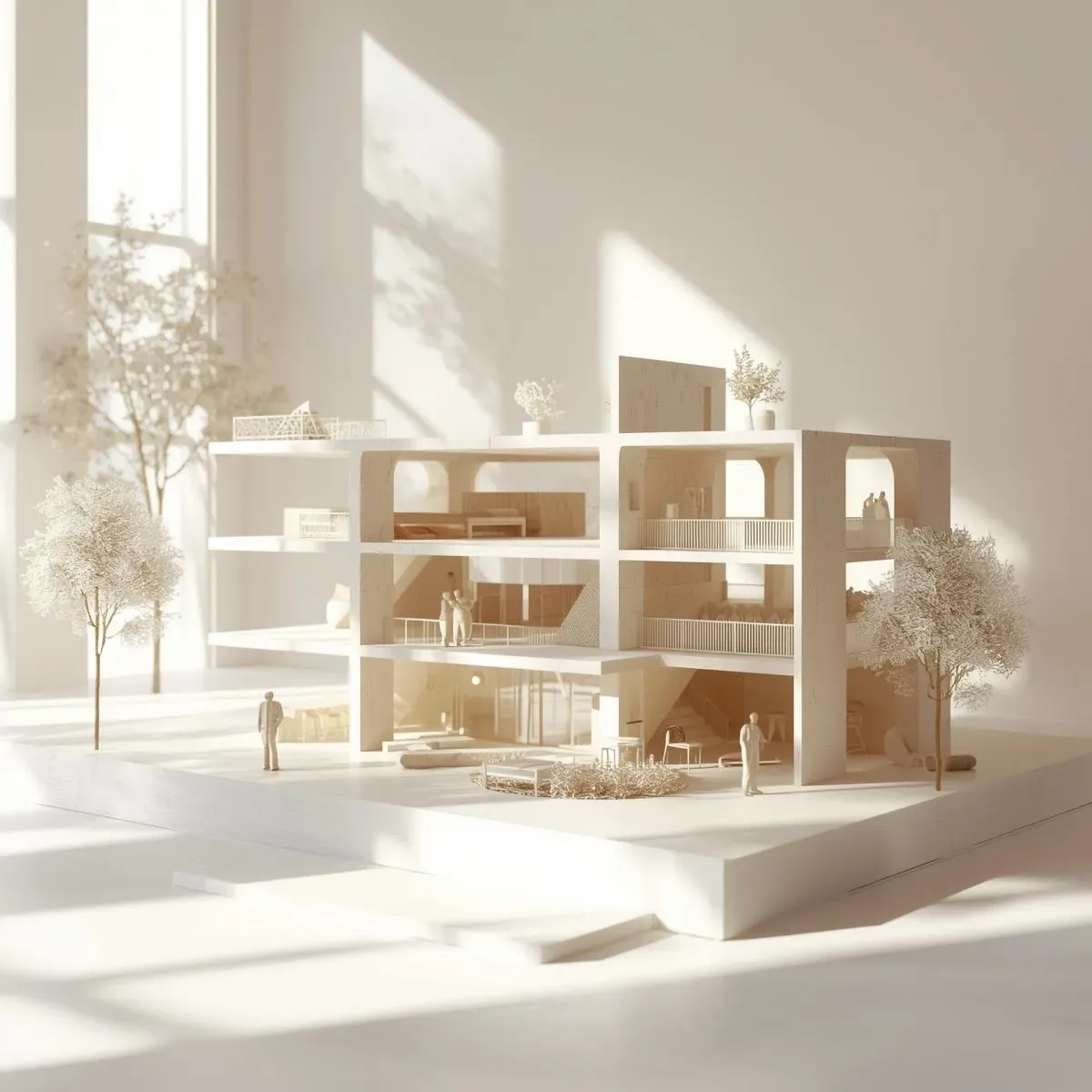
Most homes are designed for the lifestyle of the day they were built. But occupant needs change continuously — children arrive, parents move in, WFH culture permanently shifted how people use domestic space after 2020. Adaptive SmartInterior addresses this through two dimensions: Physical Adaptability and Digital Adaptability.
Physical Adaptability is the capacity of a space to genuinely change its configuration. Technologies deployed in modern homes include movable partition walls that divide rooms on demand, modular furniture that recombines for different functions, motorized Murphy beds that convert a bedroom into a home office, and height-adjustable desks that optimize ergonomics for different users. In the Thai context, where extended family arrangements are common, a guest suite that converts to a grandparent suite is a direct application of physical adaptability.
Digital Adaptability is the system learning occupant patterns and adjusting automations to match. Machine learning algorithms on platforms such as Home Assistant analyse 30–60 days of occupancy and energy data, then suggest automation rules that align with the real routine of that household — rather than requiring occupants to manually program every scenario. Over time, the system becomes more accurate as it accumulates more data about how the home is actually used.
Designing for adaptability in Thailand requires the right infrastructure from the start: floor-to-ceiling height of at least 2.7 metres to accommodate Murphy beds, non-load-bearing partitions wherever flexibility is desired, ring-circuit electrical wiring that allows outlets to be added without rewiring, and a Smart Hub platform with capacity to grow as device count increases. This adaptive infrastructure investment adds THB 50,000–150,000 to construction cost but avoids THB 300,000–1,000,000 in renovation costs a decade later when lifestyle needs change significantly.