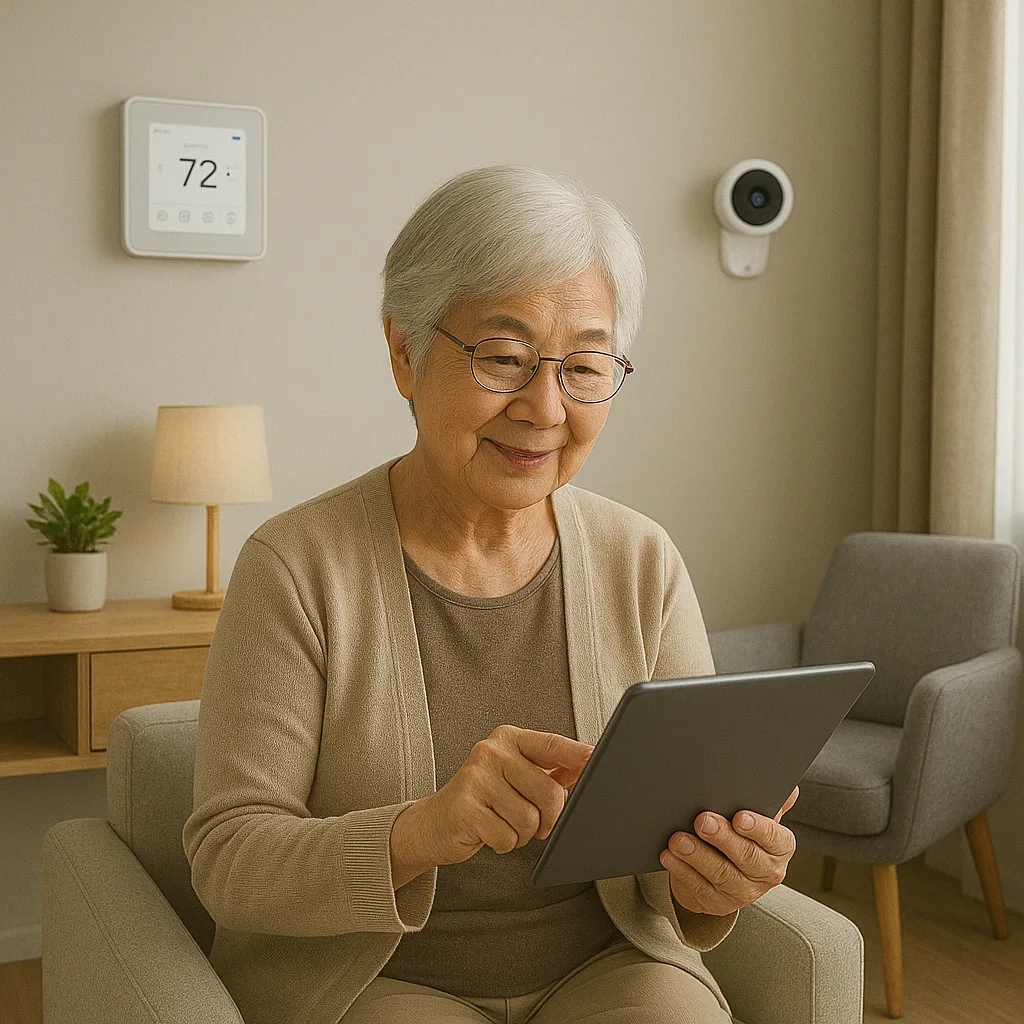
Choosing a SmartHome for elderly care is not simply a matter of finding the cheapest devices — it requires evaluating a sustainable ecosystem, a trustworthy service provider, and features that address real daily needs. HappySmart has developed a 5-Question Checklist to help families make principled decisions.
5 Questions before investing:
Does the system work during internet outages? Elderly residents require high reliability — HA with Zigbee operates 100% locally. Cloud-dependent systems fail when internet goes down.
How many years of after-sales support does the provider offer? Less than 2 years is risky. Smart home devices have 5-10 year lifespans and require firmware updates and troubleshooting.
Can the system be upgraded without full replacement? Check whether the hub supports Zigbee, Matter, and Wi-Fi. A good ecosystem allows adding devices one at a time.
Can elderly residents operate the system independently without complex apps? The UI must be simple with large buttons — no more than 4-6 functions on the home screen. Test by having the elderly resident actually use it.
Where is health data and camera footage stored? Local storage is safer than overseas cloud servers. Review the Privacy Policy of every device brand used.
Feature Matrix comparing 3 tiers: Basic (25,000-50,000 THB): 1 mmWave sensor, Smart Lock, LINE alerts, Raspberry Pi hub — fundamental safety only. Standard (80,000-150,000 THB): 3 mmWave sensors, 3 AI cameras, Shelly EM, 3 humidity sensors, smart dehumidifier plug, medication reminder — comprehensive coverage. Premium (200,000-350,000 THB): everything in Standard plus ERV ventilation, Frigate NVR, wearable integration, custom Family Dashboard UI, Shelly 3EM with solar readiness — elite tier.
Red Flags to watch for: providers who will not show a real project portfolio; pricing below 30,000 THB for packages claimed to be complete; systems 100% dependent on a single manufacturer’s cloud app; no written contract specifying scope of work; and providers who cannot explain Zigbee pairing or Home Assistant automations.