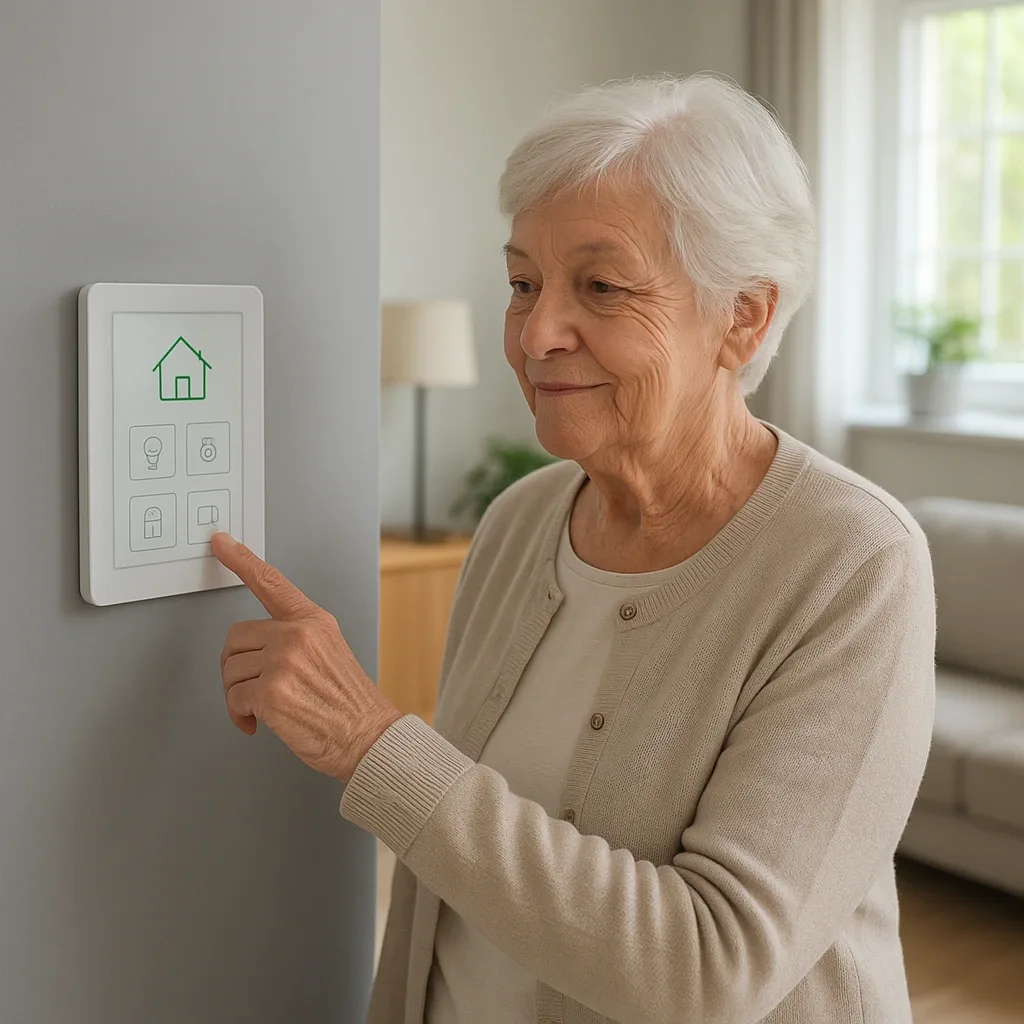
Why Older Thai Homes Need Smart Renovation
Most Thai homes built before 1997 were designed for able-bodied young adults: no bathroom grab bars, polished-tile floors, light switches positioned for tall users, and zero emergency notification capability. When homeowners age or need to accommodate elderly parents, these same design choices become hazards. HappySmart’s Phased Retrofit methodology addresses this systematically, dividing the renovation into three priority-ordered phases that families can budget and implement incrementally.
Phase 1: Core Safety (50,000–80,000 THB)
Phase 1 eliminates the most statistically dangerous conditions. SmartInterior work includes stainless steel Grade 304 grab bars in the bathroom (2,000–4,000 THB), replacement of slippery bathroom flooring with COF ≥ 0.6 ceramic tiles (8,000–15,000 THB), removal of door thresholds and level changes (3,000–8,000 THB), and whole-house LED lighting replacement (5,000–10,000 THB).
SmartHome components include a smart door lock at the main entry (5,000–8,000 THB), two Aqara FP2 mmWave sensors in the bedroom and bathroom for fall detection (7,000–10,000 THB), smart switches on corridor and bathroom lights (2,000–4,000 THB), a Home Assistant server on Raspberry Pi 4 (3,500–5,000 THB), and LINE emergency notification configuration. Installation takes three to five business days. Primary ROI: immediate reduction in fall and accident risk.
Phase 2: Monitoring and Convenience (60,000–80,000 THB)
Phase 2 enables remote monitoring and voice control. Four Reolink cameras cover entry points, the living room, and kitchen (12,000–20,000 THB). Zigbee smart switches across all rooms (15,000–25,000 THB) allow lights to respond to automation rules. Google Nest Mini speakers in the bedroom and living room (4,000–6,000 THB) provide Thai-language voice control. A custom oversized mobile dashboard with high-contrast design gives the elderly resident simple app-based control. Installation takes two to three days. Primary ROI: family members can verify home status from anywhere via LINE, reducing anxiety and caregiver burden.
Phase 3: Health and Energy (50,000–60,000 THB)
Phase 3 adds environmental health monitoring and energy management. Aqara humidity sensors in every room, a smart dehumidifier on a smart plug, and a smart air purifier with PM2.5 sensor combine to maintain respiratory-healthy air quality. A Shelly EM energy monitor tracks whole-home electricity consumption, enabling Time-of-Use rate optimization automations. Installation takes one to two days. Primary ROI: 15–25% electricity savings and reduced respiratory medication costs.
Case Study: 25-Year-Old Townhouse in Nonthaburi
A 74-year-old woman living alone in Bangkok while her son worked in Chiang Mai commissioned a Phase 1 and Phase 2 installation costing 115,000 THB. After six months: zero fall incidents compared with two falls the previous year, the son receives daily LINE status notifications reducing his anxiety, electricity bills dropped 18% from auto-off routines, and the elderly resident reports feeling "much safer and more confident" living independently.