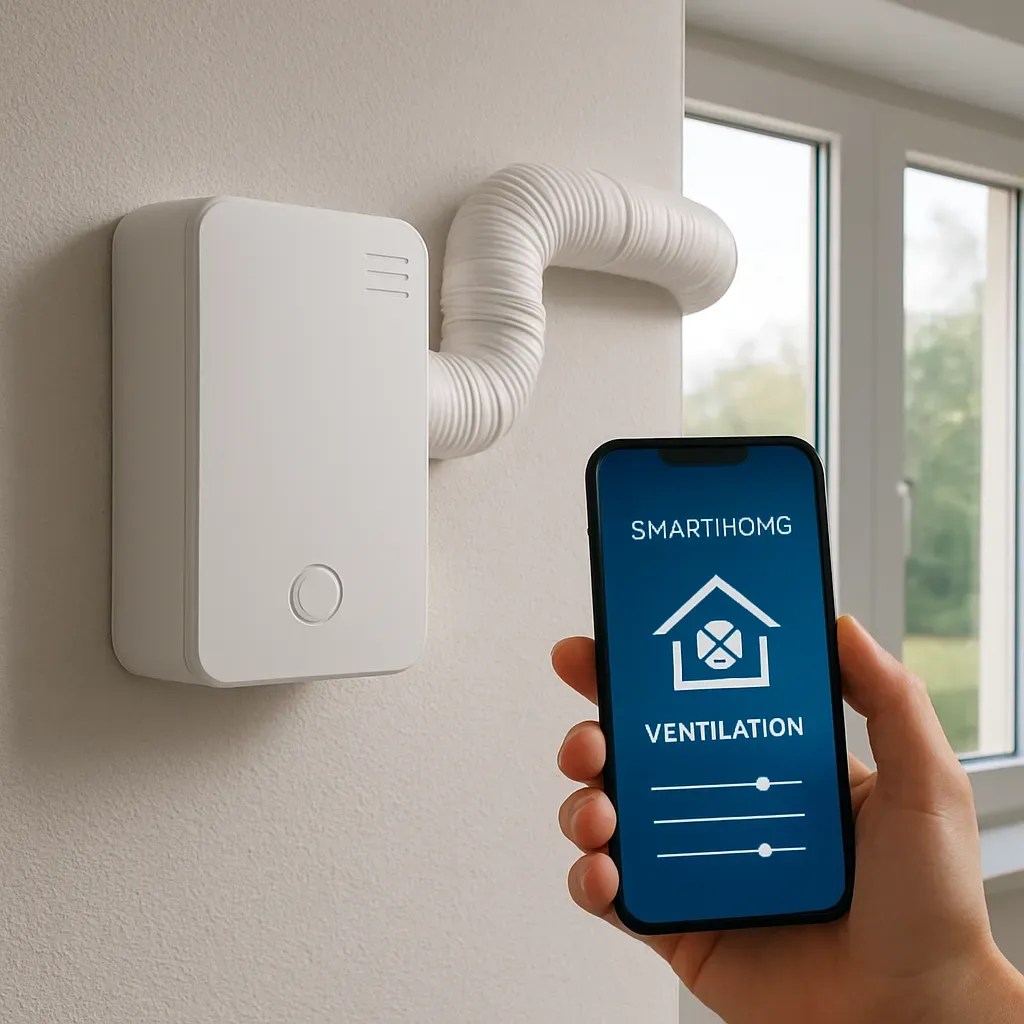
Positive vs Negative Pressure: Why Balance Matters
Ventilation systems create both positive and negative pressure. Imbalance causes problems:
Positive Pressure (more air in than out):
- ✅ Prevents outdoor pollutants from infiltrating through gaps
- ✅ Better for urban homes near busy roads
- ❌ Kitchen smells and moisture accumulate inside
- ❌ Bathroom odors don’t exhaust properly
Negative Pressure (more air out than in):
- ✅ Effectively exhausts kitchen fumes and moisture
- ✅ Good bathroom air exchange
- ❌ Outdoor air infiltrates through cracks and gaps
- ❌ Unsuitable near busy roads or industrial areas
Balanced Pressure — the optimal target: ERV and MVHR systems are designed for balance: air in = air out within ±5%. This is the goal for smart ventilation design.
CFM Calculation by Space
CFM (Cubic Feet per Minute) measures airflow rate — essential for selecting the right fan or range hood.
Basic formula: CFM = (Room volume m³ × ACH × 35.3) ÷ 60
Recommended ACH (Air Changes per Hour) by room type:
| Space | Recommended ACH | Reason |
|---|---|---|
| Bedroom | 4-6 ACH | Health and CO₂ control |
| Living room | 6-8 ACH | Multiple occupants |
| Thai kitchen | 15-25 ACH | High heat, fumes, steam |
| Bathroom | 8-12 ACH | Humidity and odor |
| Exercise room | 15-20 ACH | High CO₂, perspiration |
Example — Thai kitchen, 12 sq.m., 2.8m ceiling:
- Volume = 12 × 2.8 = 33.6 m³
- ACH = 20 (high-heat Thai cooking)
- CFM = (33.6 × 20 × 35.3) ÷ 60 = 395 CFM
- Minimum range hood selection: 400 CFM (round up)
Example — Bathroom, 4 sq.m., 2.6m ceiling:
- Volume = 4 × 2.6 = 10.4 m³
- ACH = 10
- CFM = (10.4 × 10 × 35.3) ÷ 60 = 61 CFM
- Minimum exhaust fan: 80 CFM
Kitchen Range Hood: Exhaust vs Recirculate
Thai kitchens cook at high heat with intense fumes and steam. The choice is critical:
Exhaust Mode (recommended):
- Physically removes foul air, smoke, steam, and CO outside
- Requires a duct connecting to the building exterior
- Minimum CFM for Thai kitchen cooking: 400-600 CFM
Recirculate Mode (not recommended for Thai kitchens):
- Filters odors but leaves humidity and CO inside
- Designed for European kitchens with low-heat cooking only
- Inappropriate for stir-frying, deep-frying, and boiling at Thai intensities
Airflow Hierarchy: The Flow Direction Rule
Design air to flow from clean zones to dirty zones:
Clean fresh air → Bedrooms → Living room → Bathrooms → Kitchen → Exhaust outside
Air from bathrooms or kitchens should never flow toward bedrooms.
Smart automation for cooking boost:
yaml
alias: "Kitchen Cooking Boost Mode"
trigger:
  - platform: state
    entity_id: binary_sensor.kitchen_stove_power
    to: "on"
action:
  - service: fan.set_percentage
    target:
      entity_id: fan.kitchen_range_hood
    data:
      percentage: 100
  - service: fan.set_percentage
    target:
      entity_id: fan.kitchen_exhaust_fan
    data:
      percentage: 80
  - service: switch.turn_on
    target:
      entity_id: switch.kitchen_makeup_air_damper
Seasonal Ventilation Modes for Thailand
Dry/PM2.5 Season (November-April):
- Close fresh air damper when AQI > 100
- Increase recirculation with HEPA H13
- Reduce outdoor ACH to minimize pollution infiltration
Monsoon Season (May-October):
- Run dehumidifier alongside ERV
- Increase ACH in rooms above 65% RH
- Inspect drain pans monthly
Hot Season (March-April):
- Night cooling: open fresh air between 22:00-06:00 when outdoor temperature drops below 28°C
- Increase fan speed for evaporative cooling effect during shoulder hours