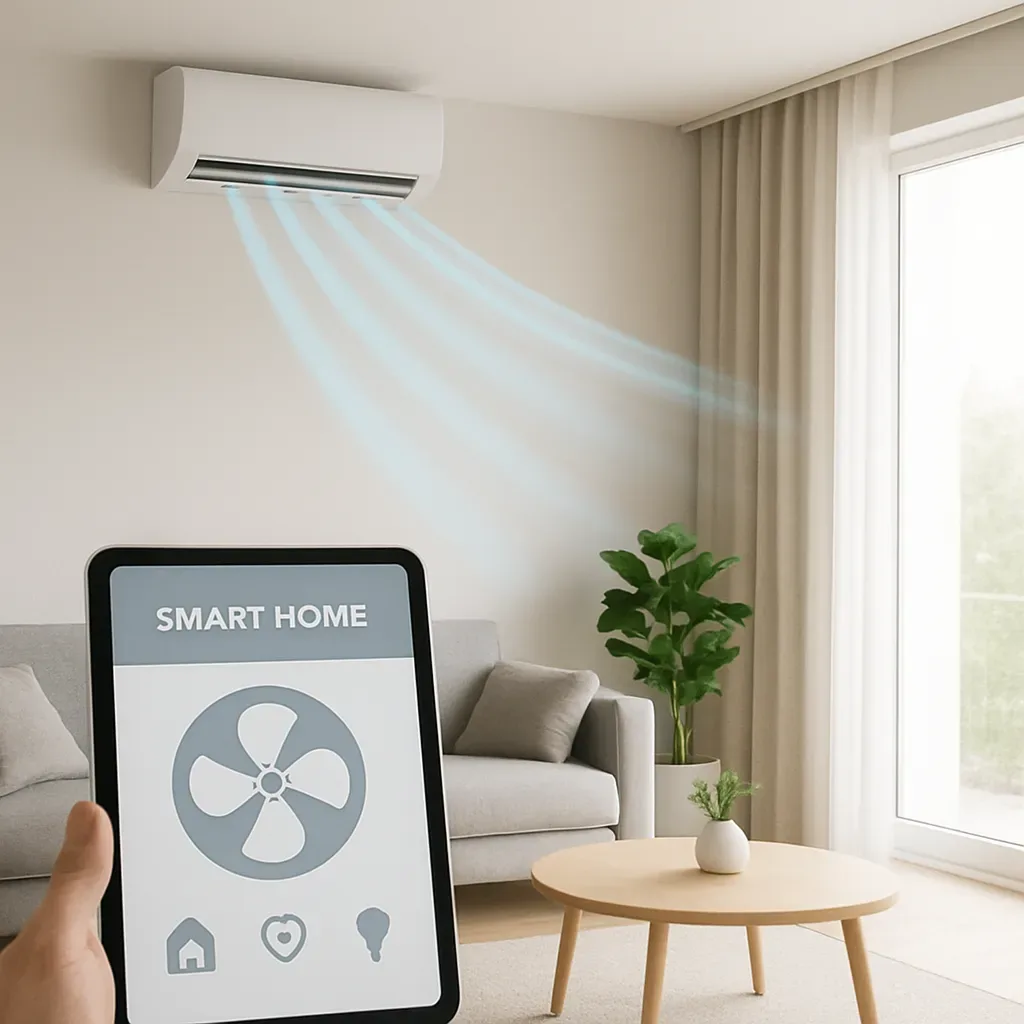
Why the Right Choice Matters: Wrong System in a Thai Home = Wasted Money
Thai homes present specific challenges that make direct application of European or Japanese systems inappropriate:
- Outdoor temperatures of 28-38°C year-round
- Relative humidity 70-90%
- PM2.5 season (November-April) with AQI reaching 150-200
- Most homes are not airtight in the way cold-climate homes are
HEPA Filter: H13 vs H14 Explained
| Standard | Filtration Efficiency | Particle Size | Filter Cost | Best For |
|---|---|---|---|---|
| HEPA H11 | 95% | 0.3 μm | 500-800 THB | General rooms |
| HEPA H13 | 99.95% | 0.3 μm | 800-1,500 THB | Bedrooms, elderly |
| HEPA H14 | 99.995% | 0.3 μm | 1,500-3,000 THB | Clean rooms, infants |
| ULPA U15 | 99.9995% | 0.12 μm | 3,000+ THB | Medical grade |
Recommendations for Thai homes:
- General rooms: H13 — best balance of performance and maintenance cost
- Children and elderly bedrooms: H13 minimum; H14 for respiratory conditions
- During severe PM2.5 season: H14, or H13 with an outer pre-filter stage
Thai filter replacement schedule:
- Dry season/PM2.5 (November-April): every 3-4 months
- Rainy season (May-October): every 5-6 months
MVHR vs ERV: Which Is Right for Thailand?
MVHR (Mechanical Ventilation with Heat Recovery) Extracts stale air and transfers its temperature (but not moisture) to incoming fresh air. Prevents cold loss in cold climates.
Suitable for Thailand: Partially — helps retain cool air, but does not manage humidity, which is Thailand’s primary problem.
ERV (Energy Recovery Ventilator) Like MVHR, but also transfers moisture — extracting humidity from incoming hot humid air before it enters the home.
Suitable for Thailand: Much better — handles both heat and humidity. Reduces air conditioning load significantly.
Conclusion: Thai homes should choose ERV.
- ERV is designed for hot-humid climates
- MVHR suits cold-dry climates (Europe, Japan winters)
- Recommended ERV brands for Thailand: Zehnder ComfoAir Q, Mitsubishi Lossnay, Panasonic FV-10VE1
CO₂ and Sleep Quality: The Numbers That Matter
Bedroom CO₂ directly impacts sleep quality:
| CO₂ (ppm) | Effect on Sleep |
|---|---|
| < 700 ppm | Refreshing sleep, high energy on waking |
| 700-1,000 ppm | Mild drowsiness beginning |
| 1,000-2,000 ppm | Sleep quality reduced 10-15% |
| > 2,000 ppm | Wake up fatigued, headache |
A sealed 20 sq.m. bedroom with 2 people reaches 1,200-1,500 ppm CO₂ within 3 hours.
CO₂-based ventilation automation:
yaml
alias: "Bedroom CO2 Auto Ventilation"
trigger:
  - platform: numeric_state
    entity_id: sensor.bedroom_co2
    above: 900
action:
  - service: fan.set_percentage
    target:
      entity_id: fan.bedroom_erv
    data:
      percentage: 60
  - service: notify.mobile_app_tony_iphone
    data:
      message: "Bedroom CO2: {{ states('sensor.bedroom_co2') }} ppm — ventilation activated."
Room Priority for Thai Homes
- Children and elderly bedrooms: IAQ Priority 1 → H13/H14 + CO₂ sensor + ERV
- Master bedroom: H13 + CO₂ sensor
- Living room: H13 + PM2.5 sensor (critical during PM2.5 season)
- Kitchen: Range hood 600+ CFM + exhaust mode (not recirculate)
- Bathrooms: Exhaust fan at 10 ACH (air changes per hour)
IAQ System Budget for Thai Homes
- Starter (1 room): H13 air purifier + PM2.5+CO₂ sensor = 6,000-10,000 THB
- Family (3 rooms): Air purifier x2 + ERV + sensor network = 35,000-60,000 THB
- Premium (whole home): Ducted ERV + H14 filtration + full sensor network + HA automation = 80,000-150,000 THB