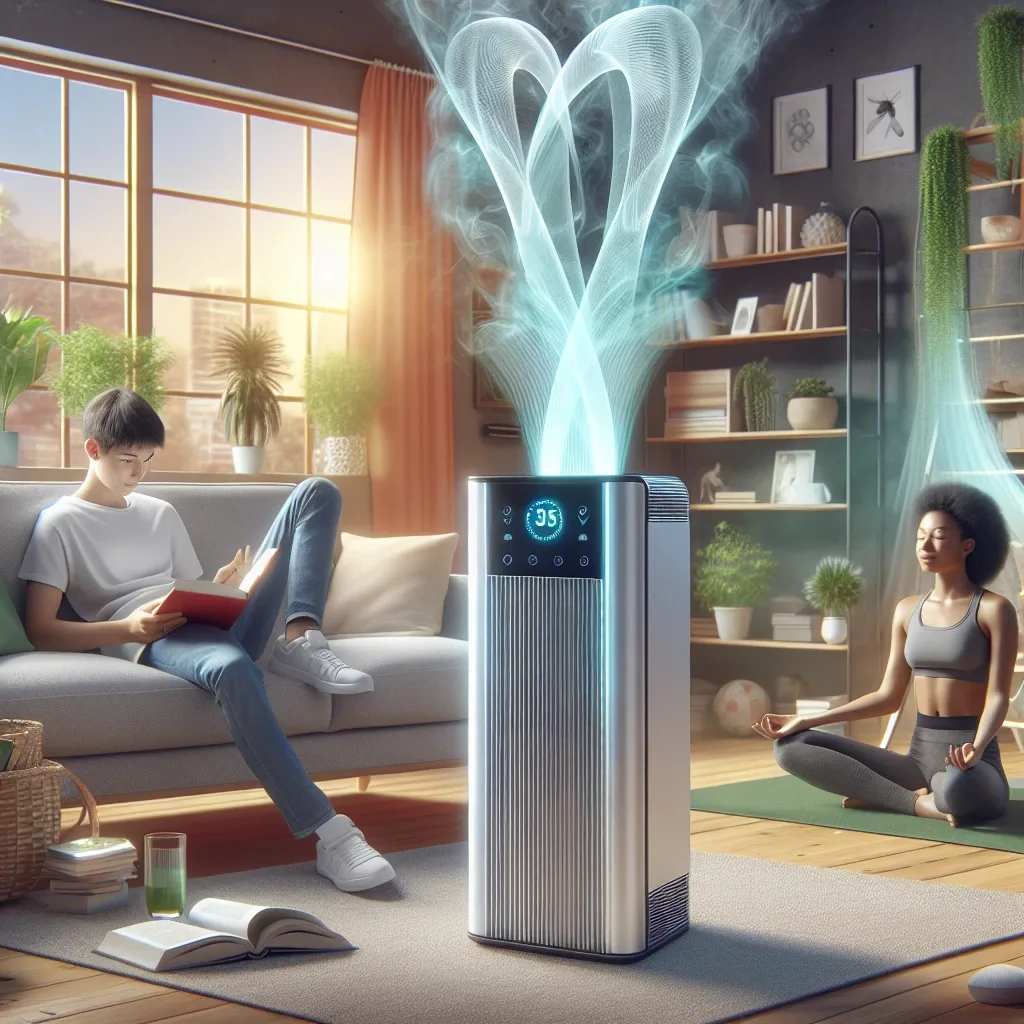
What Is a Clean Air System?
A Clean Air System differs significantly from standard HVAC (Heating, Ventilation, and Air Conditioning). HVAC focuses on temperature control and internal air circulation. A Clean Air System focuses on eliminating pollutants from the air — PM2.5, VOC, formaldehyde, pathogens, and harmful gases.
A Fresh Air System is a component of the Clean Air System that brings purified outdoor air in to replace stale indoor air, filtering out pollutants before outdoor air enters the living space. Together they form a comprehensive indoor air quality management approach.
The 5 Core Components of a Clean Air System
Component 1 is the Air Filter, divided into HEPA and Activated Carbon types. HEPA H13 captures 99.97% of particles ≥0.3 microns — covering PM2.5, pathogens, and mold spores. HEPA H14 achieves 99.995%, suitable for medical rooms or environments requiring maximum cleanliness.
Activated Carbon adsorbs VOC, formaldehyde, benzene, toluene, and odors — complementing HEPA, which cannot remove gaseous pollutants. Using both together delivers maximum effectiveness.
Types of Fresh Air Systems
ERV (Energy Recovery Ventilator) exchanges both heat and moisture between incoming and outgoing air — ideal for high-humidity Bangkok, reducing AC load while bringing in fresh air. HRV (Heat Recovery Ventilator) exchanges heat only, better suited for cold climates where preserving indoor warmth is the priority.
A Ventilation Controller receives signals from CO2 and PM2.5 sensors and commands ERV/HRV fans automatically. Advanced systems use Modbus RS-485 for control through Home Assistant, enabling fully automated air quality management.
Managing VOC and Formaldehyde in New Homes
New or recently renovated homes are the highest sources of formaldehyde and VOC. Materials like plywood, MDF, carpeting, and wall paint release VOCs continuously for years after installation.
Management strategy: maximize ventilation during the first 3-6 months after renovation, install VOC sensors for ongoing monitoring, use an air purifier with Activated Carbon for continuous VOC removal, and consider E0 or E1 certified materials for future renovations.
Integrating Clean Air Systems with Home Assistant
Home Assistant supports Clean Air System control through multiple integration types: MQTT for custom-built sensors, Modbus TCP/RTU for industrial-grade ERV controllers, and Zigbee ZHA for Aqara and IKEA air quality sensors.
Example automations: when CO2 exceeds 1,000 ppm and outdoor PM2.5 is below 35 µg/m³, activate ERV at high speed and send a LINE Notify alert. When formaldehyde exceeds 0.08 ppm, trigger emergency ventilation fans and alert immediately.
Conclusion
An effective clean air system must include air filtration (HEPA + Activated Carbon), ventilation (ERV/HRV), measurement (CO2/PM2.5/VOC sensors), and automated control (Home Assistant). Investing in this system is investing in the long-term health of everyone in the home.