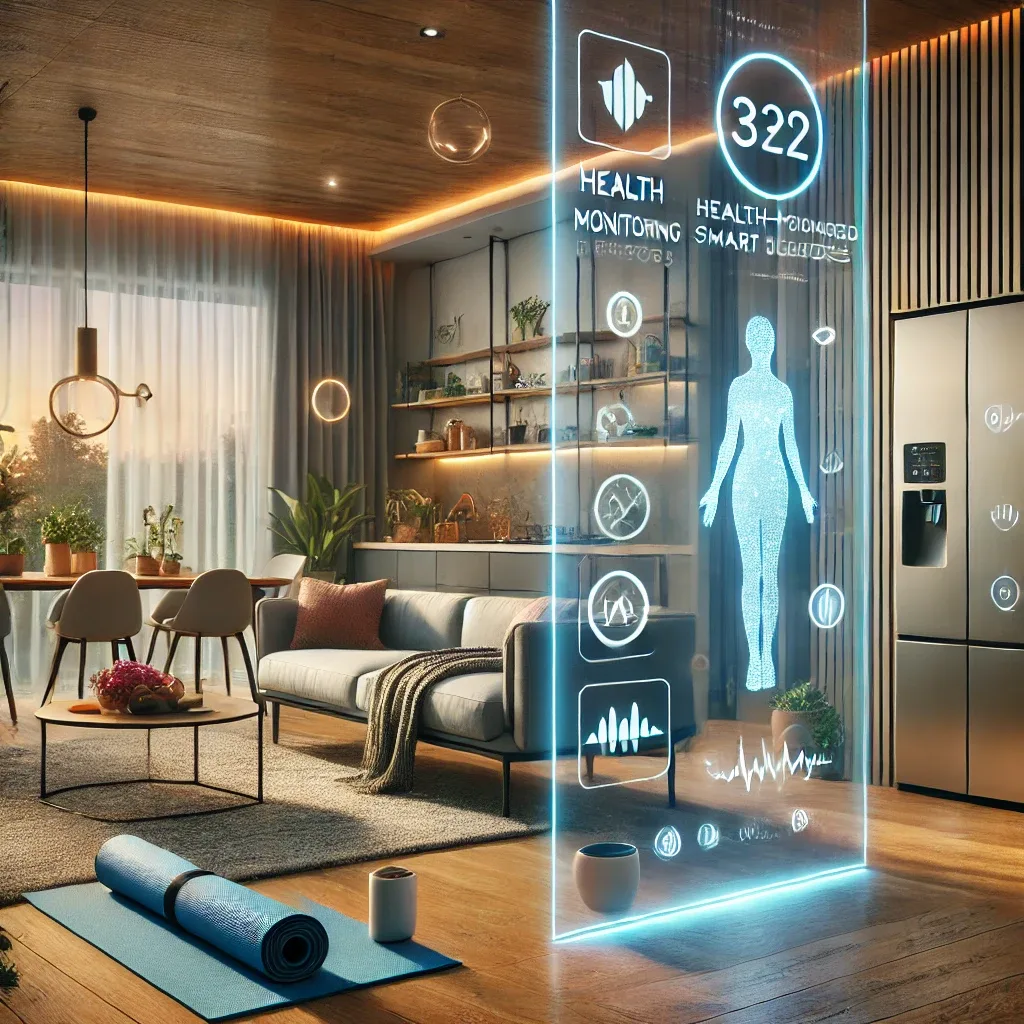
Design Principles for Health-Focused Smart Homes
A health-focused smart home differs from a convenience-focused one in that every component serves a purpose: optimizing the environment for physical and mental well-being rather than just automating routine tasks.
The five core systems are: air quality management, wellness lighting, temperature control, IoT health devices, and cybersecurity infrastructure. Each layer supports the others in creating a genuinely health-promoting environment.
Smart Air Quality System
A smart air purifier handling both PM2.5 and VOC is the first system to install. The Dyson Purifier Cool Formaldehyde detects formaldehyde (a VOC commonly found in new furniture) and PM2.5, reporting data in real time through the Dyson Link app.
For Home Assistant integration, the Xiaomi Mi Air Purifier 4 Pro supports connection via the Xiaomi MiIO Protocol and can be controlled directly through HA. Configure automation so the purifier adjusts its mode based on outdoor PM2.5 data from the IQAir API, preemptively filtering before pollution enters.
Wellness Lighting (Circadian Lighting)
Light directly influences Circadian Rhythm — the biological clock controlling sleep, alertness, and hormone secretion. Cool white 6500K light in the morning promotes wakefulness; warm amber 2700K light in the evening encourages relaxation and melatonin production.
IKEA TRADFRI or Philips Hue bulbs using Zigbee can be programmed for complete Circadian Lighting through Home Assistant and AppDaemon, automatically shifting color temperature and brightness throughout the day.
IoT Health Devices and Integration
Smart scales measuring BMI transmit data wirelessly to health platforms. Smart bands or watches track Heart Rate Variability (HRV) — a key indicator of stress levels and recovery capacity that goes beyond simple step counting.
Data from all health devices can be aggregated into Home Assistant through integrations supporting Withings, Garmin, Apple Health, or Google Fit — providing a comprehensive health overview in a single dashboard.
IoT Security: Never an Afterthought
IoT health devices contain highly sensitive personal data. Protection requires multiple layers: WPA3 for the Wi-Fi network, a separate IoT VLAN for smart home devices, and VPN for remote system access from outside the home network.
Verify that device manufacturers use AES-256 encryption for data transmission. Update firmware regularly and consider using a local-only Home Assistant instance to reduce dependency on manufacturer cloud servers that may be outside your control.
Conclusion
Integrating smart home technology with health goals requires systematic planning. Start with air quality and lighting — which impact health most significantly — then expand to IoT health devices, maintaining rigorous attention to data security at every step.