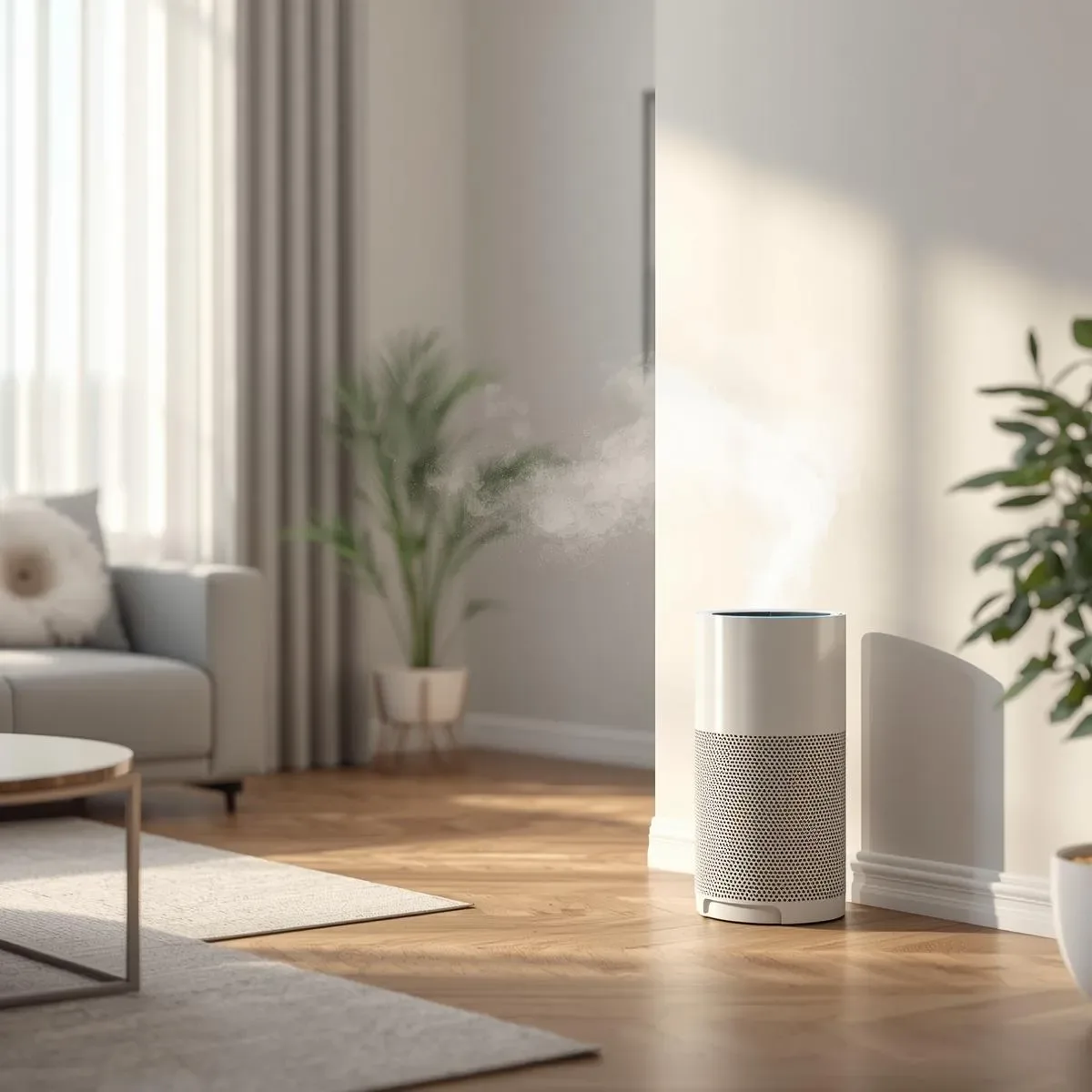
Bangkok PM2.5 and Modern Condos
Bangkok regularly exceeds the WHO annual PM2.5 standard (15 μg/m³), particularly from November to March when AQI routinely surpasses 150 (Unhealthy). Modern condos with sealed facades are efficient for AC but have no fresh air — CO2 accumulates above 1,000 ppm in bedrooms and TVOC off-gasses from new furniture.
HRV vs ERV: Which for Bangkok?
HRV (Heat Recovery Ventilator): transfers sensible heat only — bringing in fresh air and exhausting stale air simultaneously while transferring the cool from exhaust air to supply air. Efficiency 70–85%.
ERV (Energy Recovery Ventilator): transfers both heat and moisture (sensible + latent heat) — better suited to Bangkok’s year-round 70–90% RH. ERV also reduces latent load on the AC.
Recommendation: use ERV for Bangkok — it reduces both energy cost and humidity load in condos.
ERV System Design for 45–65 sqm Condos
Air flow rate: ASHRAE 62.1 specifies minimum 7.5 CFM/person + 0.06 CFM/sqft. For 2 occupants in 65 sqm: 7.5×2 + 0.06×700 = 57 CFM ≈ 97 m³/h. Select an ERV unit at 100–150 m³/h.
Duct layout: supply air into bedrooms and living room; exhaust air from kitchen and bathroom. Insulate ducts against condensation in the hot-humid environment; use 100–150mm duct diameter at velocity <4 m/s to minimise noise.
HEPA H13 vs H14 Comparison
HEPA H13: filters ≥99.95% of particles ≥0.3 μm (MPPS) — effective against PM2.5. Moderate filter resistance (~100–150 Pa), 6–12 month lifespan, replacement cost 800–1,500 THB.
HEPA H14: filters ≥99.995% of particles ≥0.3 μm — better than H13 but higher resistance (~200–300 Pa), requiring a stronger fan, consuming more power, and needing more frequent changes in Bangkok’s high-AQI conditions.
Recommendation: HEPA H13 is sufficient for residential use. H14 is for medical-grade or lab clean-room applications. Add a G4 pre-filter in front of the HEPA to extend its life.
Carbon Filter for VOC and Formaldehyde
New furniture and laminate floors off-gas formaldehyde (HCHO) for the first 2–3 years. Install an activated carbon filter (400–600g carbon bed) before the HEPA to absorb VOCs, formaldehyde, and odours. Lifespan 3–6 months depending on concentration.
AQI Integration and Automation
Connect the ERV to Home Assistant via sensors: if SCD40 CO2 exceeds 900 ppm, increase flow to maximum; if outdoor AQI (IQAir API/AirVisual Pro) falls below 50, open ERV to full flow; if AQI exceeds 100, reduce flow and switch to recirculation mode. If SPS30 indoor PM2.5 exceeds 25 μg/m³, send a LINE alert and check the filter.
Installation in Space-Constrained Condos
Condos rarely have attic space for ductwork. Use a slimline wall-mounted ERV unit (e.g., Mitsubishi Lossnay VL-100EU5). Core-drill two 150mm holes through the exterior wall for supply and exhaust — no wall demolition required. Power: 220V 1A is sufficient.
ROI: ERV unit + installation 25,000–45,000 THB. Saves ~10–15% on AC load, reduces PM2.5-related healthcare costs, and improves sleep quality.