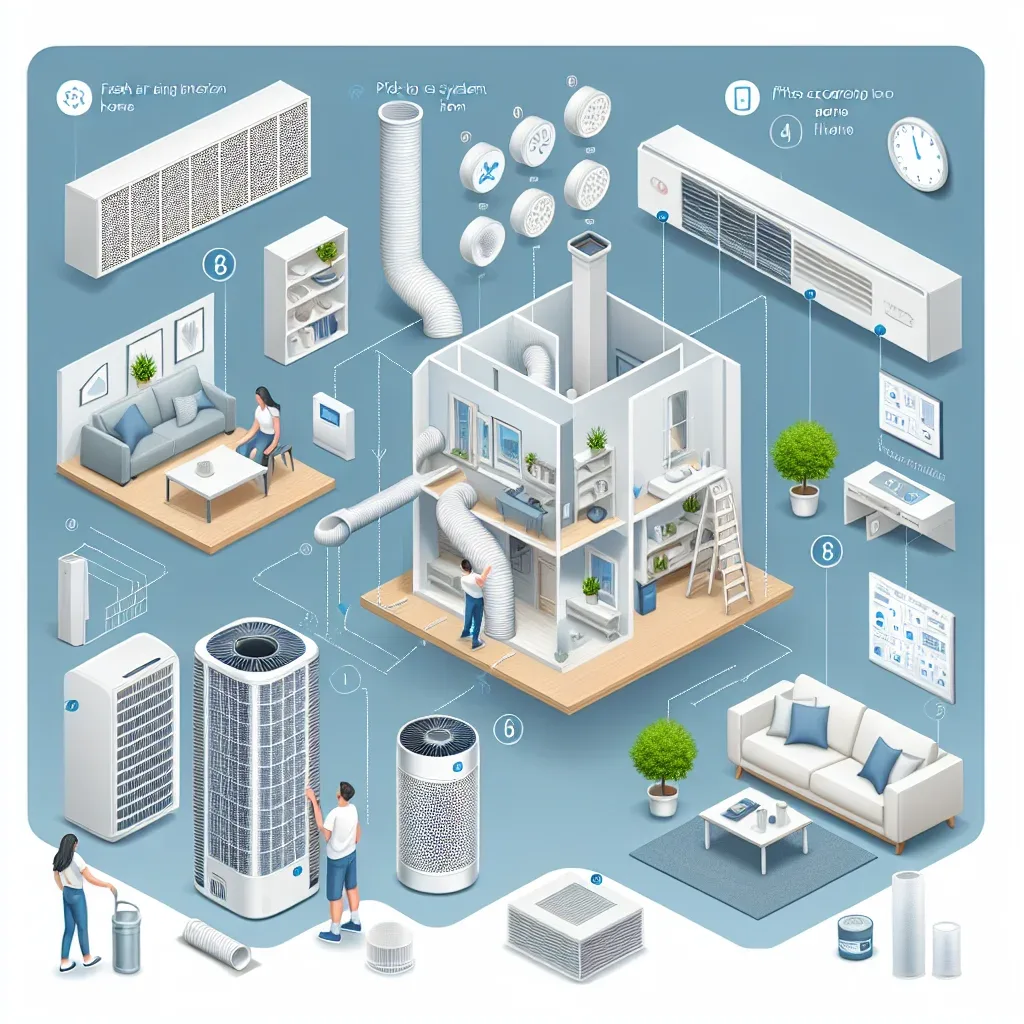
What Is a Fresh Air System and Why Do Thai Homes Need One?
Most Bangkok homes run air conditioning 24 hours a day with windows and doors closed. This creates a sealed environment where air recirculates endlessly without fresh outdoor air, accumulating CO2 from breathing, VOCs from furniture and wall paint, and moisture that promotes mold growth over time.
A Fresh Air System solves this by drawing outdoor air inside, filtering it through HEPA and Activated Carbon before releasing it into the home, while simultaneously expelling CO2 and excess moisture. Your home breathes fresh air without opening windows to PM2.5 pollution.
Comparing the Four Fresh Air System Types
Type 1, PIV (Positive Input Ventilation), pushes purified outdoor air directly into the home. Price range: 150-450 USD. Pros: easy installation, affordable, suitable for small homes. Cons: no heat or moisture transfer, may increase AC load in hot weather.
Type 2, Exhaust Ventilation, extracts stale indoor air to draw fresh outdoor air in passively. Price range: 90-300 USD. Lowest cost option but has no air filtration, making it unsuitable for urban Bangkok with high PM2.5 levels.
Type 3, HRV (Heat Recovery Ventilation), exchanges heat between incoming and outgoing air streams so fresh air enters without being excessively hot. Price range: 600-1,500 USD. Suited for cool-to-temperate climates. In Bangkok's year-round high humidity, HRV may still allow outdoor moisture to enter.
Type 4, ERV (Energy Recovery Ventilation), works like HRV but also transfers moisture, delivering drier and cooler incoming air. Price range: 900-2,500 USD. Best suited for Bangkok's hot-humid climate as it simultaneously reduces PM2.5 and humidity while cutting AC load by 15-25%.
Bangkok recommendation: ERV for medium-to-large homes seeking maximum performance; PIV for small homes or limited budgets.
Fresh Air System Installation Steps
Step 1, Planning the position: Choose a central ceiling location from which ductwork can reach all rooms. Position the outdoor intake away from pollution sources like busy roads; add extra filtration stages if unavoidable.
Step 2, Running ducts: Use insulated aluminum or PVC ducts. A 100-150 sq.m. home typically needs 150-200 CFM airflow. Ducts should have a slight slope to drain condensate.
Step 3, Installing filters: ERV and HRV units include built-in filters, but adding a G4 Pre-filter to capture large dust particles before the primary HEPA H13 filter is strongly recommended, along with an Activated Carbon layer for VOC and odor absorption.
Step 4, Connecting to smart controls: Most ERV/HRV units include a built-in controller. For Home Assistant integration, connect via Modbus or install a Smart Relay. Mount CO2 and PM2.5 sensors in main living areas to enable automatic operation.
Annual Maintenance Schedule
Clean the Pre-filter every 1-2 months; replace the HEPA filter every 6-12 months depending on local AQI; inspect ductwork and junction boxes annually; clean the Heat/Energy Exchanger core 1-2 times per year per manufacturer guidance. Annual maintenance cost runs approximately 45-90 USD.