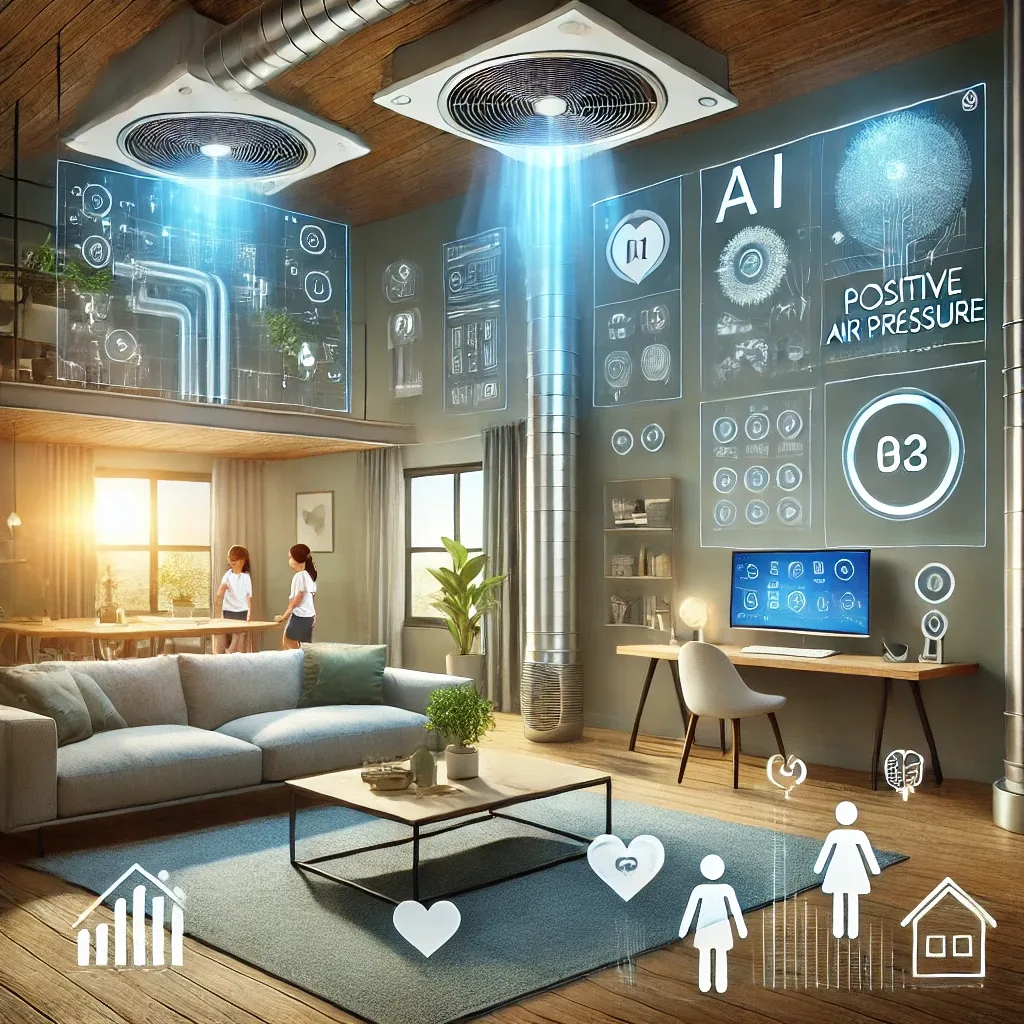
What Is Positive Air Pressure?
Positive Air Pressure (PAP) technology controls airflow within an enclosed space by maintaining indoor air pressure slightly higher than the outside. This pressure differential causes indoor air to flow outward, preventing polluted outdoor air from infiltrating through gaps, cracks, and ventilation points.
Originally developed for hospital operating rooms and cleanrooms, PAP technology is now being adapted for residential use — particularly in cities like Bangkok where chronic PM2.5 pollution makes indoor air quality a genuine health concern for families.
Benefits of Positive Air Pressure in Smart Homes
Installing a PAP system delivers several measurable benefits. First is air quality control: the system creates an invisible barrier preventing PM2.5 particles, dust, allergens, and other pollutants from seeping through your home's gaps and joints, complementing your existing filtration systems.
Second is pathogen and virus reduction. Continuous outward airflow dilutes airborne pathogen concentrations inside your living spaces, especially important during respiratory illness seasons. Third is IoT remote control: integrated sensors and smart controls let you adjust pressure levels and filtration rates from your smartphone from anywhere. Fourth is comfort for sensitive individuals — those with dust allergies or respiratory conditions like asthma notice a significant improvement in how they feel at home, especially during high-AQI periods.
Integration with Raspberry Pi 5 and Home Assistant
The true strength of PAP systems emerges when integrated with Home Assistant running on Raspberry Pi 5 — the platform HappySmart uses as the core of every smart home installation.
External PM2.5 and CO2 sensors feed real-time data to Home Assistant continuously. When outdoor air quality readings exceed your configured thresholds, the system automatically increases indoor pressure and boosts filtration fan speed. When outdoor conditions improve, pressure reduces to save energy.
This automation layer works in coordination with Smart Thermostats to reduce cooling load as well. When indoor air is clean and properly pressurized, your AC system operates more efficiently, partially offsetting the energy cost of running the PAP system.
Considerations Before Installation
Despite its benefits, there are practical factors to evaluate before investing in a PAP system for your home.
On cost: full system installation is significantly more expensive than purchasing standalone air purifiers, and requires physical space for ducting and mechanical components. On maintenance: filters must be replaced on schedule — neglecting replacement rapidly degrades performance and can negate the health benefits entirely. Improper pressure settings can also cause condensation issues or unwanted noise.
On energy use: during high-AQI periods when the system runs at higher capacity, electricity consumption increases measurably. Home Assistant automation helps optimize this by running the system at full capacity only when sensor data confirms it is genuinely needed — a smart approach that balances health protection with energy efficiency.
HappySmart's Approach to Indoor Air Quality
HappySmart specializes in designing and installing indoor air quality solutions that integrate seamlessly with Home Assistant. Our team assesses your home's size, layout, lifestyle patterns, and budget to design the most cost-effective solution — whether that's a full Positive Air Pressure installation, a sensor-and-purifier automation system, or a hybrid approach that delivers clean air where it matters most.