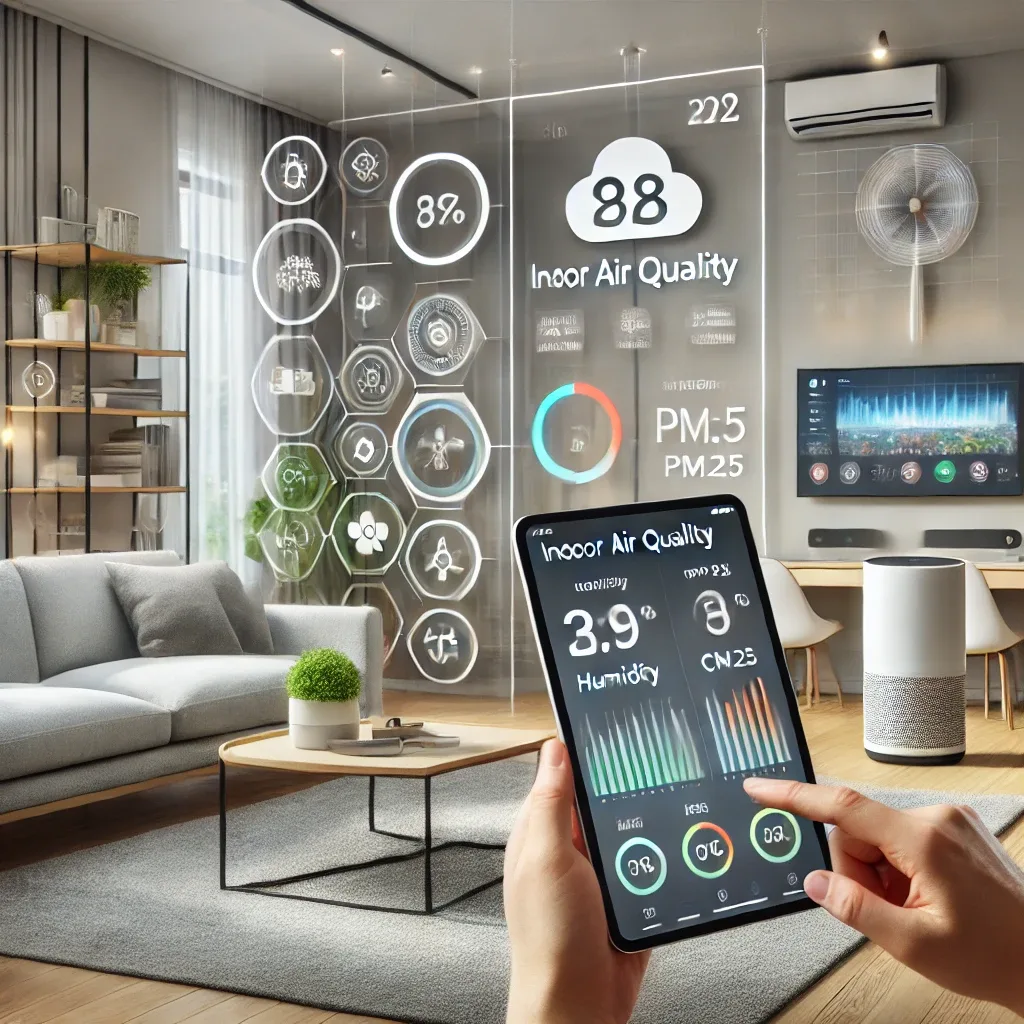
PM2.5 and Health: Why Indoor Air Quality Control Matters
PM2.5 impacts multiple body systems simultaneously. The respiratory system is directly affected as these tiny particles reach deep into the alveoli, increasing the risk of asthma, pneumonia, and long-term lung cancer. The cardiovascular system suffers as PM2.5 enters the bloodstream directly, raising the risk of heart attack and vascular disease. PM2.5 also suppresses immunity, affects children's development, and is linked to neurological disorders over time.
Home risk reduction methods include closing windows when outdoor PM2.5 is high, using HEPA air purifiers, ventilating with filtered fans, growing air-purifying plants, and maintaining 40-60% humidity to reduce mold and dust mites.
What Is Home Assistant and Why It's Ideal for Air Quality Control
Home Assistant is an open-source Smart Home controller that runs on a Raspberry Pi or small server, supporting over 3,000 device types from diverse manufacturers. Its key advantage is that all data stays in your home — it does not pass through third-party cloud servers — making it more secure and private.
For air quality control, Home Assistant acts as the central hub, collecting data from every PM2.5 sensor, processing it, and commanding air purifiers, air conditioners, and smart windows simultaneously based on custom Automation rules you define.
Recommended Devices and How to Connect Them
For air quality sensors, the Xiaomi Air Quality Monitor connects via Wi-Fi using the Miio Integration in Home Assistant, providing PM2.5, CO2, and humidity readings. The Aqara Air Quality Monitor connects via Zigbee through a Zigbee Hub for more stable real-time data.
For air purifiers, the Xiaomi Mi Air Purifier connects via Wi-Fi using the Miio Integration for full control. Dyson Pure Cool connects via Wi-Fi with a community Integration available in Home Assistant. Smart air conditioners with Wi-Fi or Smart Thermostats connect through brand-specific Integrations. For smart windows, motorized openers connect via Zigbee or Z-Wave for high reliability.
Setting Up Automation for Air Quality Control
Start by installing Home Assistant OS on a Raspberry Pi 4, adding necessary Integrations, and creating a Dashboard displaying sensor readings for every room. Then configure Automation by PM2.5 level:
When PM2.5 exceeds 35 μg/m3: activate all air purifiers at maximum mode, automatically close windows, and send a smartphone notification. When PM2.5 drops below 12 μg/m3: reduce air purifiers to quiet mode and switch the AC to energy-saving. When you leave home: shut off unnecessary air purifiers using Presence Detection via smartphone GPS.
Set a CO2 alert at 1000 ppm to automatically activate ventilation, preventing drowsiness and reduced productivity.
Benefits of Using Home Assistant
Using Home Assistant for air quality control delivers tangible benefits. Indoor air quality improves significantly because the system responds immediately when pollutants rise. Energy savings follow because purifiers run at full power only when needed. You control all devices through a single smartphone app and can command them by voice.
Most importantly, all your air health data stays in your hands — not on foreign company servers. HappySmart is ready to install and configure Home Assistant for your home from start to finish.