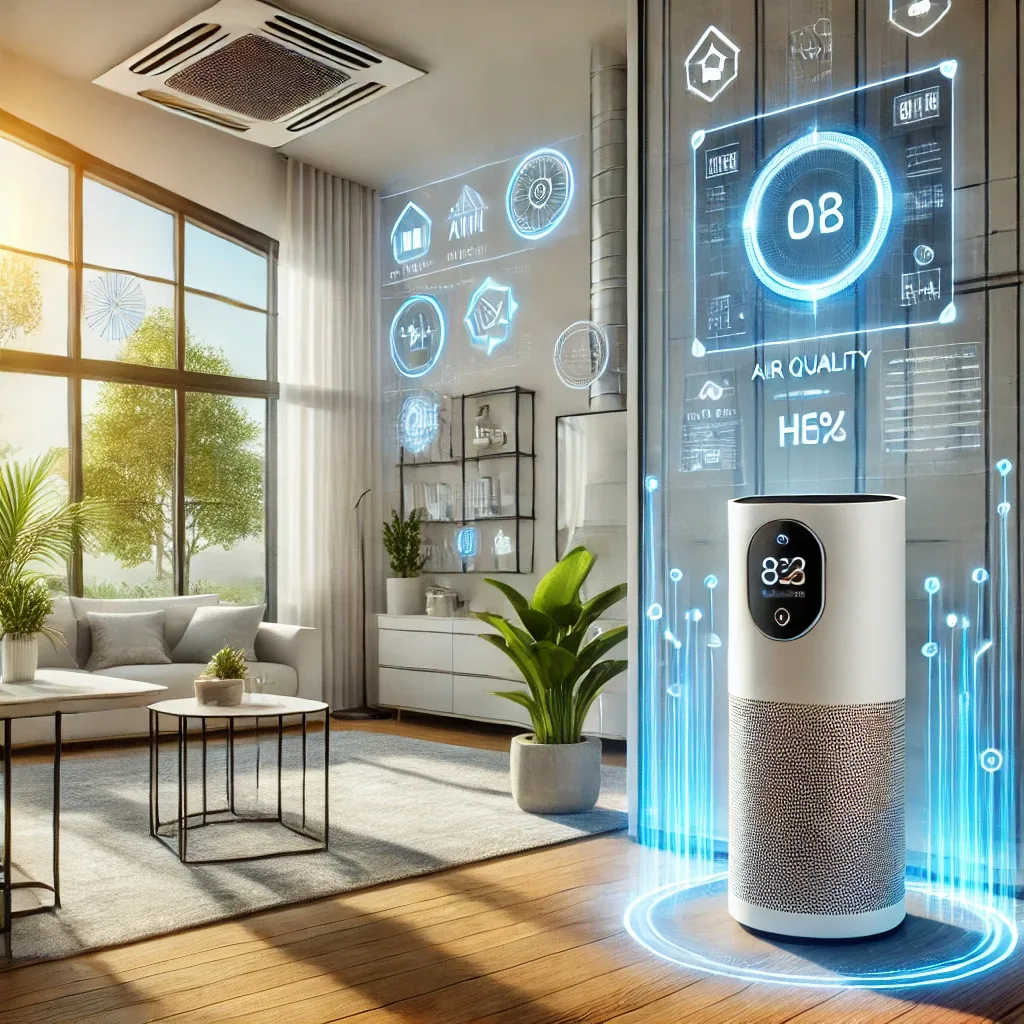
Why Use IoT to Control Air Quality?
IoT-based air quality control outperforms leaving a purifier running continuously because the system responds to real-time PM2.5 readings, saves energy, and coordinates multiple devices simultaneously.
Home Assistant and HomeBridge with Air Purifiers
Home Assistant (open-source) supports over 1,000 air purifier models including Xiaomi, Dyson, and Philips through Miio Integration or Matter. You can set automations to activate the purifier when PM2.5 exceeds 35 ug/m3 and control it via Google Assistant. HomeBridge bridges non-HomeKit devices into the Apple ecosystem, enabling Siri and iPhone Home App control.
Recommended PM2.5 Sensors
Xiaomi Smart Air Quality Monitor: measures PM2.5, CO2, temperature, humidity, connects to Home Assistant via Miio. PurpleAir PA-II: high accuracy, suitable for both indoor and outdoor use. IKEA VINDRIKTNING: affordable, with LED air quality indicator. Aqara Air Quality Monitor: measures PM2.5, TVOC, temperature, humidity, integrates well with HA. Place sensors at 1 to 1.5 meters height in frequently used rooms, away from direct pollution sources.
Complete Automation Setup
Example automations in Home Assistant: when PM2.5 > 35 ug/m3, activate purifier at High Speed and send notification; when outdoor PM2.5 > 50 ug/m3, close electric dust curtains and enable Positive Pressure ventilation; when PM2.5 < 15 ug/m3, switch purifier to Sleep Mode.
Benefits of Automated Air Management
Reduces respiratory disease risk, eliminates the need for manual control, uses energy only when necessary, and enables remote monitoring at any time. HappySmart is ready to design and install IoT air quality management systems for homes of every size.