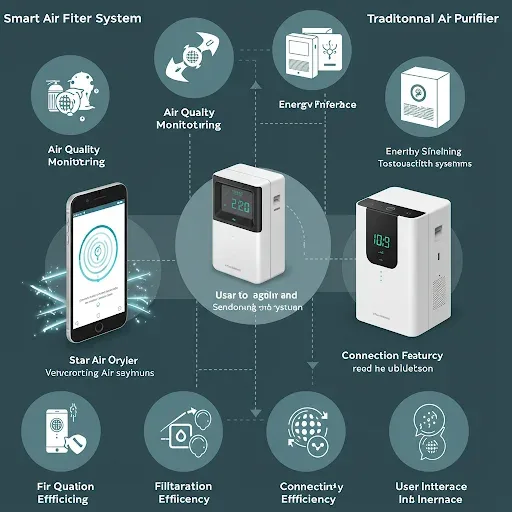
The Core Difference Between the Two Types
Air purifiers fall into two main categories: regular models that operate on manual settings, and smart systems that connect to Smart Home platforms and automatically adjust based on real-time air quality data.
Regular Air Purifier
Standard filtration includes HEPA + activated carbon + UV-C + Ionizer, controlled via remote or a basic app. Pros: effective at filtering dust and allergens, some models offer basic auto-control, more affordable, easier to maintain. Cons: no Smart Home integration, requires manual adjustment, no advanced automation support.
Smart Air Purifier System
Includes real-time air quality sensors and connects to Home Assistant, Google Home, Amazon Alexa, and Apple HomeKit via HomeBridge. Pros: automatically adjusts fan speed based on PM2.5 levels, sends filter replacement alerts, provides historical data via app, works in coordination with other Smart Home devices. Cons: higher cost, requires stable internet connection, more complex to set up.
Smart Home Integration Capabilities
A smart air purifier can be voice-controlled via Google Assistant or Siri, set to trigger automatically when PM2.5 exceeds 35 ug/m3, linked with a smart AC for combined temperature and air quality control, and monitored remotely from a smartphone in real time.
Example Home Assistant Automation
When the indoor PM2.5 sensor reads above 35 ug/m3, the system automatically turns on the air purifier at high fan speed. When levels drop below 15 ug/m3, it switches to Sleep Mode to save energy. Real-time smartphone notifications keep users informed at all times.
Which Should You Choose?
For users on a tighter budget or those who prefer simple maintenance, a quality regular air purifier with True HEPA and activated carbon is a solid choice. For those wanting full automation and real-time monitoring, a smart air purifier that supports Home Assistant and HomeBridge is the best investment. HappySmart provides expert consultation and full installation of the system that best fits your home and budget.