Where Does Indoor Dust Come From?
Indoor dust originates from multiple sources: outdoor pollution entering through gaps, pet hair, airborne pollen, and dust mites in mattresses and carpets. Fine PM2.5 particles can trigger allergies, asthma, and respiratory problems, especially in children and the elderly.
Smart Air Purifier
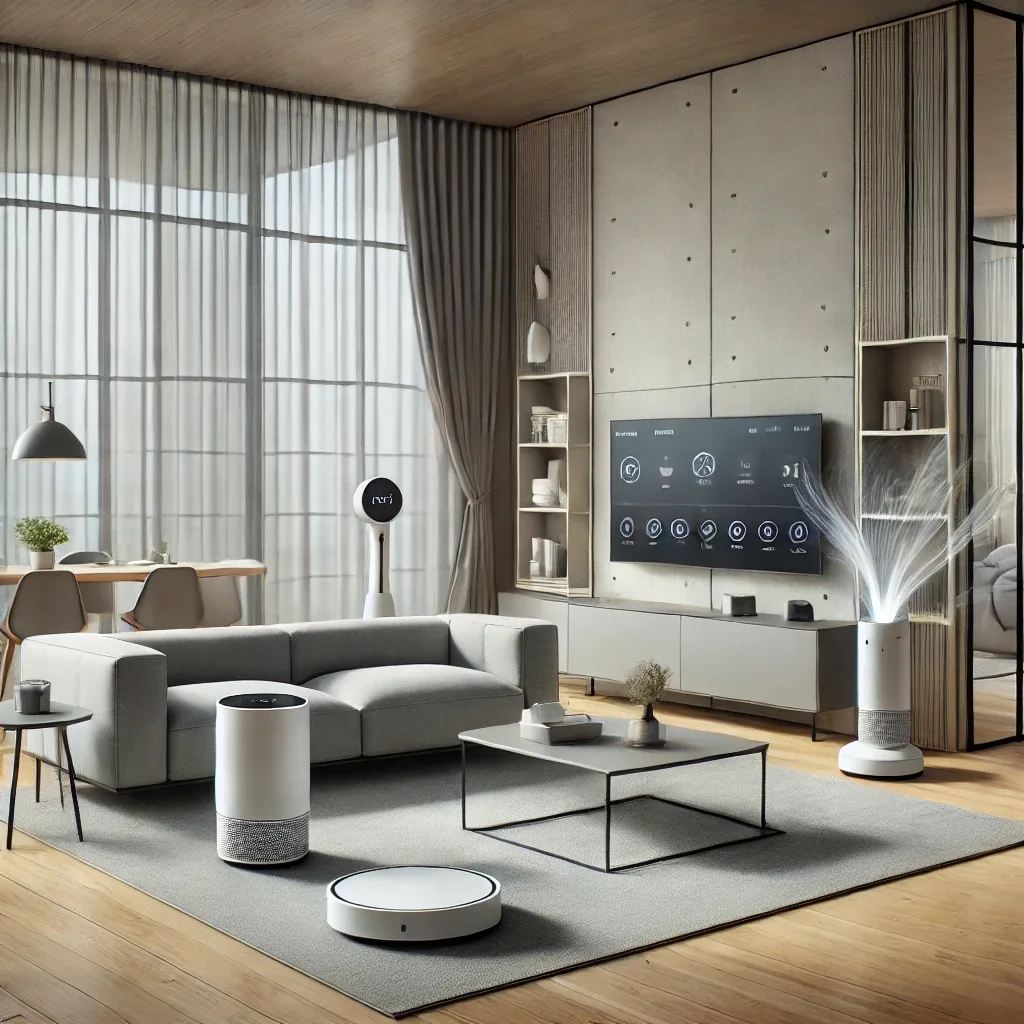
Air purifiers with HEPA plus activated carbon filters capture over 99.97% of PM2.5 and allergens. A real-time sensor displays air quality through the app, and Auto Mode adjusts fan speed based on dust readings. Compatible with Home Assistant and HomeBridge for Apple users.
Smart Robot Vacuum
Next-generation robot vacuums use Lidar navigation with HEPA filters. Schedule cleaning through the app and control with voice via Google Assistant or Siri. Auto-boost mode increases suction in high-dust areas. Connects to Home Assistant using the vacuum.start_pause entity.
Smart Air Conditioning
Smart AC with HEPA filters reduces airborne dust. An automatic humidity control system prevents mold growth and dust buildup. Connects to PM2.5 sensors to automatically activate purification mode when needed.
Home Assistant Automation Setup
When the sensor detects PM2.5 above 35 ug/m3, the system automatically activates the purifier, sends a smartphone notification, and starts the robot vacuum. When levels drop below 15 ug/m3, the purifier switches to Sleep Mode to save energy. HomeBridge lets iPhone users control all devices through Siri instantly. HappySmart designs and installs complete dust-free home systems connecting all devices for homes of every size across Thailand.