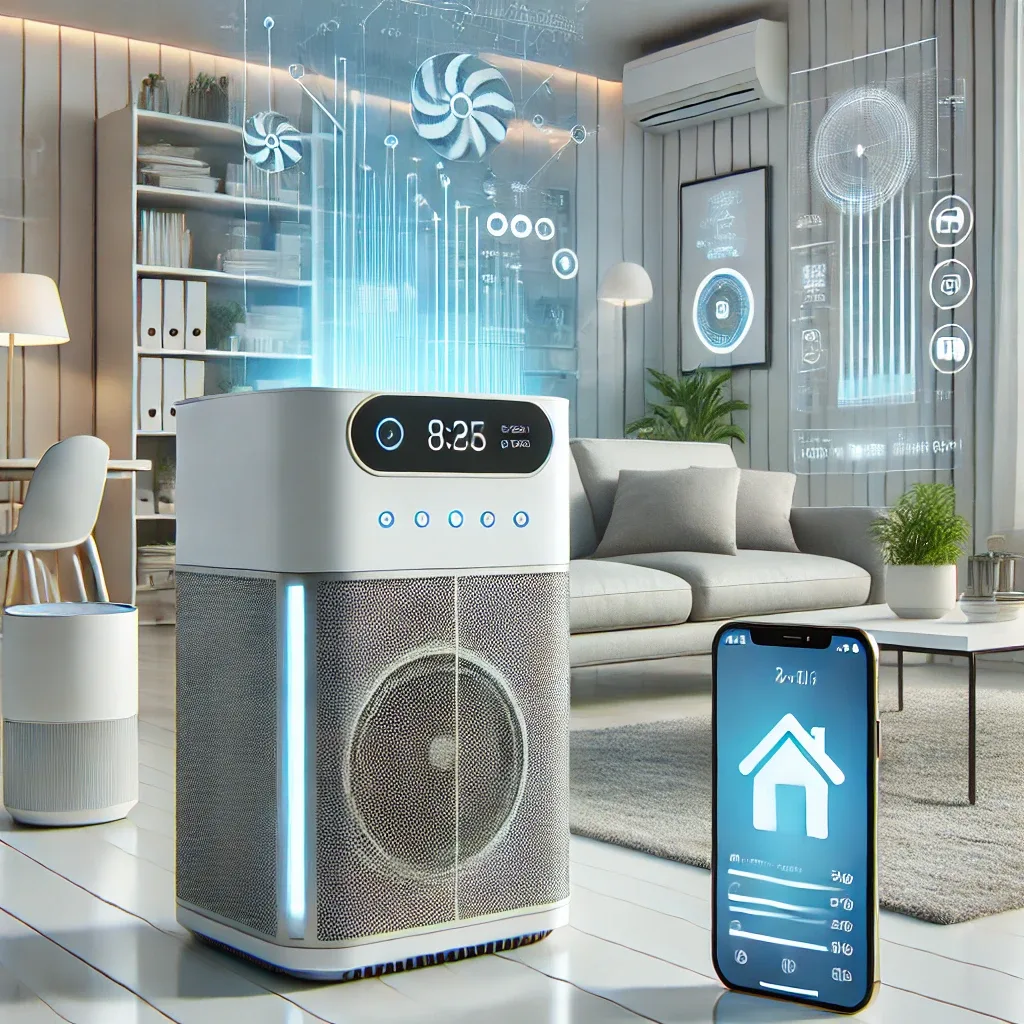
Why an Air Purifier Is a Worthwhile Health Investment
During PM2.5 season in Bangkok and northern Thai cities, the Air Quality Index frequently reaches Unhealthy levels for sensitive groups. Staying indoors without good air filtration may offer no meaningful health advantage over being outside, because dust accumulates and lingers in enclosed spaces.
A quality air purifier configured to work with a Smart Home system can maintain indoor air quality within safe levels continuously, reducing cumulative exposure that leads to long-term health consequences.
Essential Features in a Smart Home Era Air Purifier
Air purifiers suitable for Smart Home integration in 2025 should offer the following.
A True HEPA filter is the essential foundation, capturing 99.97% of PM2.5 particles. Multi-layer filtration combining HEPA with activated carbon for VOC and odor absorption addresses multiple pollutant types in a single unit.
A built-in air quality sensor measuring PM2.5 in real time with data displayed through an app or Home Assistant dashboard enables more precise automation decisions than fixed schedules alone.
Smart Home connectivity via Wi-Fi, Zigbee, or the Matter protocol supports integration with Home Assistant, Google Home, or Amazon Alexa without complex workarounds.
Choosing the Right Size for Your Room
CADR is the most important specification for sizing a purifier correctly. Rooms of 30 to 50 square meters need at least 250 to 350 cubic meters per hour CADR. Smaller bedrooms of 15 to 20 square meters can be adequately served by 100 to 150 CADR.
Beyond CADR, check noise levels in Sleep Mode, particularly for bedroom units. Select models that operate below 30 decibels in quiet mode. Verify filter replacement availability and cost before purchasing since this is a recurring expense.
Connecting to Home Assistant for Automation
Once an air purifier is connected to Home Assistant, powerful Automation rules become possible.
Automatic on and off based on PM2.5 readings from indoor or outdoor sensors, with fan speed adjusted automatically to match pollution levels, saves electricity during clean air periods and increases performance when it matters.
Filter replacement reminders sent as smartphone Notifications, calculated from actual runtime hours rather than a calendar date, ensure consistent filtration performance.
Coordinating with smart curtains so that when an outdoor sensor detects high AQI, the system simultaneously closes curtains and increases purifier power creates layered protection against external pollution events.
HomeBridge and Google Home for Everyday Users
For those who prefer not to manage the complexity of Home Assistant, HomeBridge connects non-HomeKit air purifiers into the Apple ecosystem, enabling immediate Siri voice control.
Google Home supports many major air purifier brands natively, allowing voice commands such as turning the purifier on or activating energy-saving mode without opening any app. Amazon Alexa works in the same way for homes using that ecosystem.