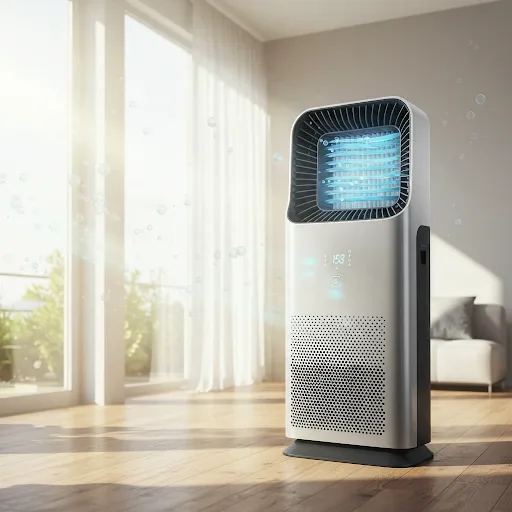
Why Air Purification Technology Matters in 2025
Indoor air quality directly impacts the health of everyone in the household, especially in large cities like Bangkok where PM2.5 levels frequently exceed safe standards during certain seasons. Modern air purification technology goes far beyond basic dust filtration. Today's systems can capture pathogens, eliminate odors, and integrate with Smart Home platforms to operate automatically based on real-time air quality data.
Choosing the right air purifier requires evaluating filter type, room coverage, and connectivity with other smart devices. This guide walks you through each purification technology in detail so you can make the best choice for your home.
Types of Air Purification Technology You Should Know
Current air purification technologies come in several forms, each with distinct strengths and limitations.
HEPA filters are the gold standard of air purification. True HEPA captures 99.97% of particles as small as 0.3 microns, including PM2.5 dust, mold spores, and common allergens. HEPA is the top choice for people with dust allergies or respiratory conditions.
Electrostatic precipitators generate an electrical charge to attract dust particles to metal collection plates. The advantage is no filter replacement cost, but the plates require regular cleaning and the system may produce trace amounts of ozone as a byproduct.
UV-C light systems use ultraviolet radiation to destroy the DNA of bacteria and viruses. They are typically combined with HEPA filters to maximize effectiveness against both particles and pathogens. This combination is ideal for homes with young children or elderly residents.
Activated carbon excels at absorbing odors and volatile organic compounds (VOCs) such as cigarette smoke, paint fumes, and off-gassing from new furniture. It is usually combined with HEPA to address both particulate matter and chemical pollutants simultaneously.
Hybrid systems combine HEPA, activated carbon, and UV-C in a single unit, offering the highest overall performance. These come at a higher price point but are worth considering for homes facing multiple air quality challenges at once.
Selecting the Right Size Using CADR and Room Area
CADR (Clean Air Delivery Rate) measures how much clean air a purifier delivers per hour. Choosing the correct capacity for your space is essential for effective purification.
For small rooms under 20 square meters, a CADR of 100 to 150 cubic meters per hour is sufficient, ideal for bedrooms or private offices. Medium rooms of 20 to 40 square meters require 150 to 300 CADR, suitable for living rooms or reception areas. For large spaces over 40 square meters, select a CADR above 300, or consider using multiple units to ensure thorough coverage.
Placement also matters. Position the purifier in an open area away from walls and furniture so air can circulate freely through the unit without obstruction.
Smart Home Integration for Automated Air Management
Modern air purifiers support app connectivity and Smart Home integration across multiple platforms.
Standard app features typically include real-time air quality monitoring, remote on and off control, speed adjustment, scheduling, and filter replacement reminders. These features prevent you from forgetting routine maintenance, which is critical to sustained performance.
With Home Assistant, you can create Automation rules that start the purifier automatically when PM2.5 readings from a connected sensor exceed a defined threshold, such as 35 micrograms per cubic meter, and shut it down once air quality returns to normal. This saves electricity while keeping the environment healthy.
HomeBridge lets you connect air purifiers that do not natively support Apple HomeKit, bringing them into the Home app on iPhone and enabling Siri voice commands along with shared Automation with other Apple devices.
Google Home and Amazon Alexa allow voice control of compatible purifiers, including turning units on, adjusting fan speed, or checking current air quality status without touching any screen.
Practical Automation Examples for Health and Energy Savings
Well-designed automations let your home manage itself intelligently. A common example is configuring the purifier to start automatically when PM2.5 rises above safe levels and stop when readings normalize, avoiding unnecessary runtime and extending filter lifespan.
You can also link smart curtains to close when outdoor sensors detect poor external air quality, preventing pollutants from entering through gaps around windows. Pairing this with the purifier creates a layered defense against seasonal pollution events.
Filter change reminders based on actual usage hours are another practical automation. Rather than relying on calendar reminders, the system tracks runtime and alerts you when filtration efficiency is likely to have declined, ensuring consistently clean air throughout the year.