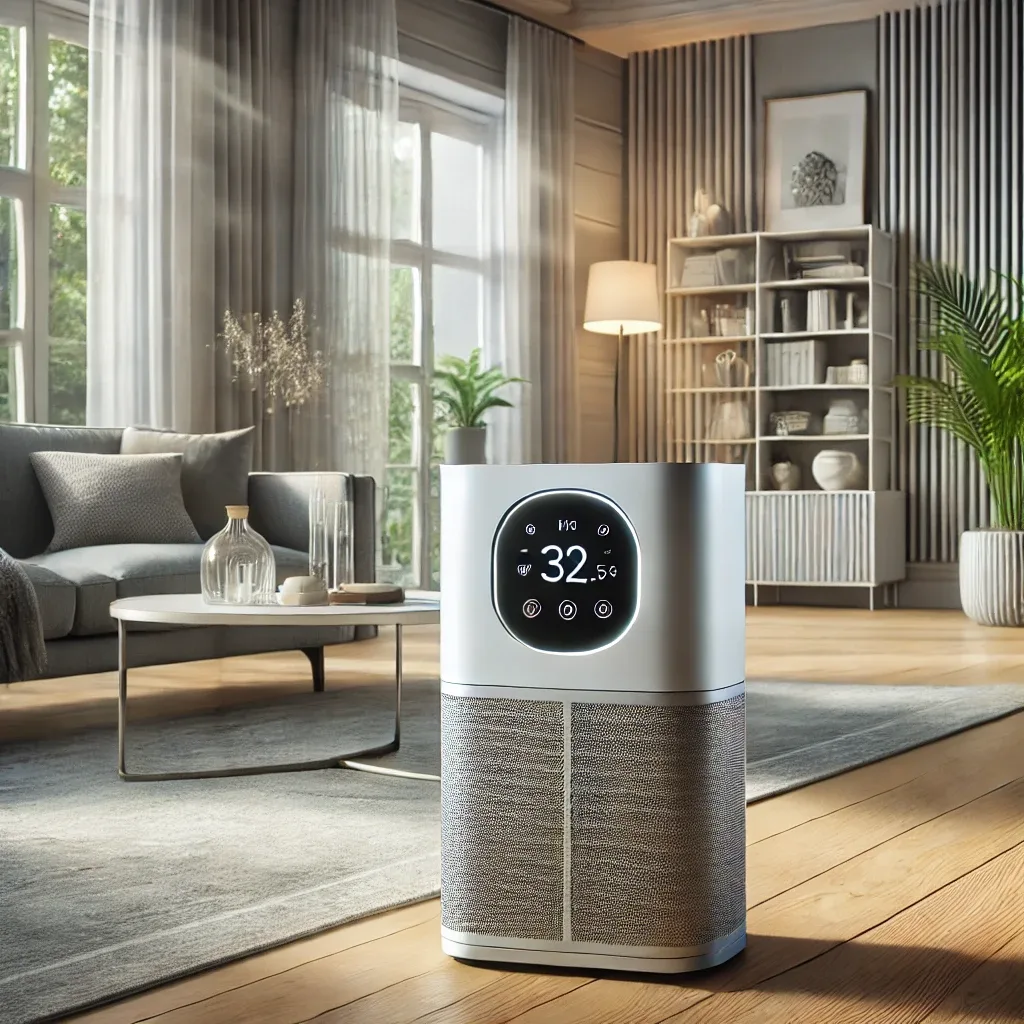
Why Choosing the Right Air Purifier Matters More Than Ever in 2025
As annual PM2.5 pollution events grow more severe across Thailand, having the right air purifier for your home is no longer a luxury but a meaningful health investment. However, the most heavily advertised model may not be the best choice for your specific space or pollution challenges.
The critical factors are the type of pollutants you need to address, the size of the room, and any Smart Home integration requirements. This guide covers everything you need to make a confident, informed decision.
Filter Types and Technologies You Need to Understand
Choosing the correct filter type is the most important first step.
HEPA filters are the standard for PM2.5 removal. True HEPA captures 99.97% of particles at 0.3 microns, including dust, allergens, mold, and spores. Filters must be replaced on schedule, typically every 6 to 12 months depending on usage and local air quality.
Activated carbon is not designed for PM2.5 particles but excels at absorbing odors and volatile organic compounds such as cigarette smoke, paint fumes, and cooking smells. It is almost always paired with a HEPA layer for comprehensive protection.
Electrostatic systems eliminate filter replacement costs but require regular cleaning of the collector plates and may produce trace ozone. Exercise caution in enclosed spaces or rooms with young children.
UV-C or UVGI technology uses ultraviolet light to destroy bacteria and viruses. Effectiveness is maximized when combined with a HEPA filter that captures particles while UV-C neutralizes biological threats.
Ozone generators effectively eliminate odors but are not recommended for occupied living spaces because ozone at elevated concentrations is harmful to the respiratory system.
Hybrid systems combine HEPA, activated carbon, and UV-C in a single unit for the broadest coverage, at a higher initial purchase price that many users find worthwhile given the comprehensive protection.
Selecting CADR Based on Room Size
CADR measures how much clean air the purifier delivers per hour. Matching capacity to room size is essential.
Small rooms under 15 square meters need at least 100 cubic meters per hour CADR. Medium rooms of 15 to 30 square meters require at least 200. Large rooms over 30 square meters need 300 or higher.
Also consider ceiling height. Rooms with ceilings above 3 meters contain more air volume than the floor area alone suggests, so a higher CADR is needed to achieve the same number of air changes per hour.
Matching Technology to Your Specific Pollution Type
Aligning your purifier choice with your actual pollution problem delivers the best results.
If PM2.5 and allergens are your primary concern, lead with HEPA. If odors are also an issue, add activated carbon. If pathogen reduction is important, include UV-C. For bedrooms, check noise levels carefully since Sleep Mode operation should stay below 30 decibels to avoid disrupting rest.
Always check the price and availability of replacement filters before purchasing. Some models have expensive proprietary filters that make total annual ownership cost higher than expected based on the initial purchase price alone.
Smart Home Features to Look for in a 2025 Air Purifier
Modern air purifiers should support Smart Home integration for more convenient and efficient operation.
A built-in air quality sensor displaying real-time PM2.5 readings and automatically adjusting fan speed based on actual pollution levels saves energy when air is clean and increases power when needed, without any manual intervention.
App control provides access to historical air quality data, scheduling, remote mode adjustment, and filter replacement reminders. Tracking usage history helps you understand patterns in your home's air quality and optimize purifier placement.
Voice control through Google Assistant or Amazon Alexa allows adjusting the purifier hands-free, which is especially practical when you are occupied in the kitchen or bedroom.
Home Assistant integration enables advanced automation scenarios, such as automatically closing smart windows and activating the purifier simultaneously when an outdoor air quality API reports AQI exceeding 150, creating a layered defense against external pollution events.