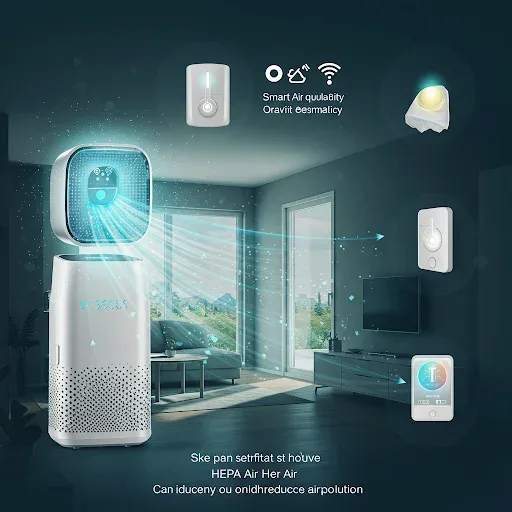
How Dangerous Is PM2.5 and Why Indoor Management Matters
PM2.5 refers to airborne particles with a diameter of 2.5 microns or smaller, roughly 30 times finer than a human hair. This tiny size allows the particles to bypass nasal hair and mucous membranes, penetrate deep into the lungs, and in some cases enter the bloodstream directly.
In Bangkok and other major Thai cities, PM2.5 concentrations frequently exceed the WHO guideline of 15 micrograms per cubic meter (24-hour average) during the dry season and harvest burning period. Simply closing windows and doors does not provide complete protection because PM2.5 particles can infiltrate through small gaps in building envelopes.
Continuous exposure to PM2.5 affects multiple body systems. The respiratory system faces increased risk of asthma and COPD. The cardiovascular system experiences elevated risk of heart disease and stroke. The immune system weakens over time. Research also suggests associations between PM2.5 exposure and cognitive decline, and long-term exposure significantly raises the risk of lung cancer.
Key IoT Devices That Reduce Indoor PM2.5
Building a PM2.5-free home requires IoT devices working together as an integrated system rather than isolated purchases.
A smart air purifier with a True HEPA filter is the foundation of any effective setup. It captures 99.97% of PM2.5 particles, contains a built-in air quality sensor that automatically adjusts fan speed to match actual pollution levels, and connects to Wi-Fi for app control or Smart Home integration.
Standalone air quality sensors such as the Xiaomi Mi Air Quality Monitor or Awair Element measure PM2.5, CO2, and VOC levels in real time and send data to the Smart Home system to trigger other devices automatically. These provide more detailed readings than the sensors built into most air purifiers and are ideal for rooms requiring precise monitoring.
IoT-connected ventilation systems pull fresh outdoor air through HEPA filters before introducing it indoors, creating positive pressure that prevents polluted outside air from entering. This is especially important in homes that remain sealed throughout the day.
Connecting to Home Assistant for Advanced Automation
Home Assistant is an open source platform that allows devices from different brands to work together without depending on any company's cloud service. Running on a Raspberry Pi 5, it supports more than 2,000 device integrations.
Basic setup involves installing Home Assistant OS on a Raspberry Pi or NAS, adding integrations for air quality sensors and purifiers via Wi-Fi, Zigbee, or Z-Wave, then creating Automation rules. A useful example: when indoor PM2.5 exceeds 35 micrograms per cubic meter, automatically switch the purifier to high speed, and return to standby when levels normalize.
HomeBridge offers an alternative path for Apple users by connecting non-HomeKit devices into the Home app on iPhone, enabling Siri voice control and combined Automations with other Apple devices.
Tips for Maximizing System Effectiveness
The right configuration transforms a basic setup into a system that genuinely manages your home's air quality.
Using Geofencing, set the purifier to activate 15 minutes before family members return home based on smartphone GPS location, and power down automatically when everyone leaves. This saves electricity without any manual effort.
Linking multiple devices so that when a sensor detects elevated PM2.5, the system simultaneously activates the air purifier, ventilation fan, and smart curtains creates a multi-layer response rather than relying on a single device.
Configuring intelligent alerts sends smartphone notifications when air quality deteriorates to a concerning level, with guidance on whether to start the purifier or close windows. Keeping all device firmware up to date ensures peak performance and security throughout the year.