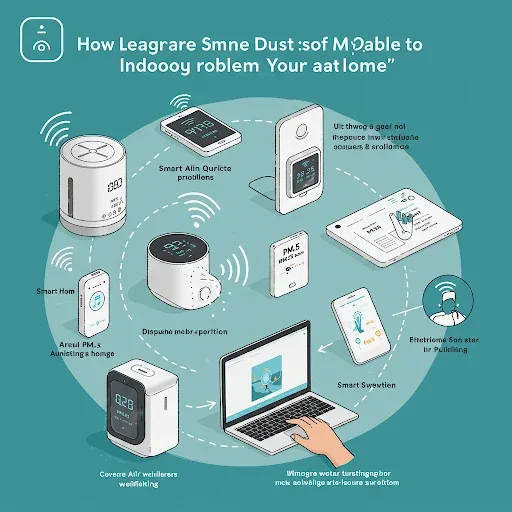
PM2.5 and the Need for Smart Home Solutions
PM2.5 dust is a silent threat that infiltrates homes even with windows tightly shut. Particles smaller than 2.5 microns can pass through door gaps, ventilation openings, and certain building materials. Relying on a basic air purifier alone is often insufficient because it cannot respond to changing conditions in real time. Smart Home systems have become the most complete answer for managing indoor air quality.
Method 1: Smart Air Purifiers
The core of any system is a smart air purifier with built-in air quality sensors. The unit automatically increases fan speed when PM2.5 rises and reduces it when air is clean. Users can control it via smartphone app or voice commands through Google Assistant and Amazon Alexa, schedule operation in advance, and review historical air quality reports.
When selecting a unit, look for CADR appropriate to room size, HEPA H13 or higher filtration, Carbon filtration for odors and VOCs, and compatibility with your Smart Home platform — Home Assistant, Google Home, or Apple HomeKit.
Method 2: Smart HVAC Systems
Smart HVAC (Heating, Ventilation, and Air Conditioning) works in coordination with air purifiers to manage both temperature and air quality simultaneously. When sensors detect elevated PM2.5, the HVAC system automatically adjusts ventilation mode, increases fresh air circulation, and signals air purifiers to run at full capacity.
The system can also monitor the condition of HEPA filters in the air handler and alert you when replacement is due, reducing energy waste from clogged filters.
Method 3: Window and Door Air Filtration
A growing innovation is installing custom-fit HEPA filter panels at window and door ventilation openings, allowing fresh air in while filtering out PM2.5. The smart system automatically closes ventilation openings when outdoor PM2.5 exceeds a set threshold and reopens them when outdoor air improves.
These can be controlled via smartphone app and configured in Automation alongside other home sensors seamlessly.
Method 4: Scheduling and Automation
Scheduling and Automation are the true power of Smart Home for PM2.5 management. Effective Automation examples include: automatically activating the air purifier 30 minutes before you arrive home, setting fan speed to maximum when PM2.5 exceeds 35 μg/m3, reducing to quiet mode when PM2.5 drops below 12 μg/m3, and automatically shutting off via Presence Detection when you leave.
Automation also saves energy because units run at full power only when needed, not continuously around the clock.
Method 5: Real-Time Air Quality Monitoring and Alerts
Real-time air quality sensors are the foundation of the entire system. With sensors installed in each room, you gain immediate awareness of air quality throughout the home. The app sends alerts when PM2.5 or CO2 exceeds thresholds and can instantly trigger other connected devices.
Insights from long-term monitoring help you understand which times of day or activities degrade indoor air quality, enabling precise prevention planning. HappySmart is ready to design and install a comprehensive Smart Home PM2.5 management system tailored to your home.