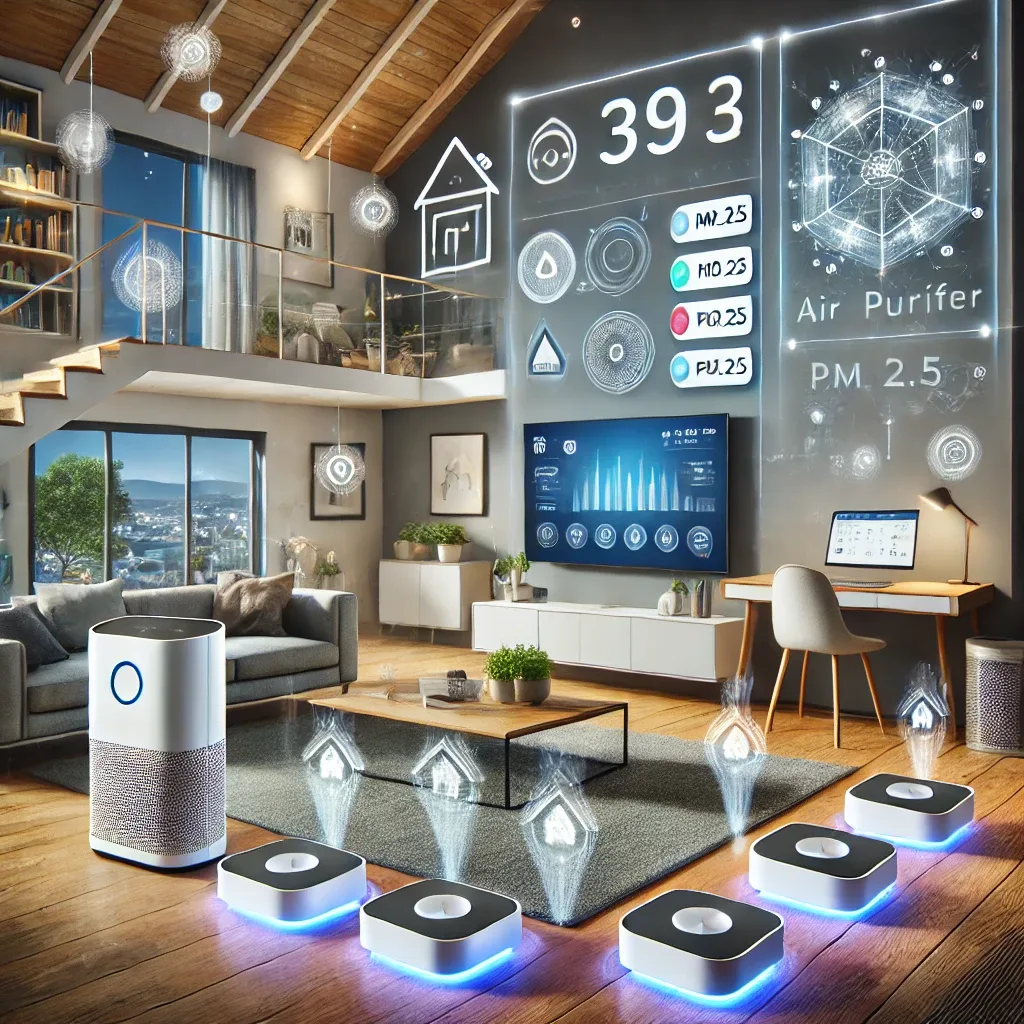
What Is IoT and How Does It Help Manage Dust?
IoT (Internet of Things) connects home devices through the internet, enabling real-time data collection and remote control. For PM2.5 dust management, IoT allows your home to respond automatically to changes in air quality without manual intervention.
Air Quality Sensors
Popular air quality sensors for Smart Home setups include the Xiaomi Mi Air Quality Monitor (PM2.5, CO2, temperature, humidity), Awair Element (PM2.5, CO2, VOC, temperature, humidity), and Laser Egg 2+ (PM2.5, CO2, temperature). All connect via Wi-Fi or Zigbee and are compatible with Home Assistant.
IoT Technologies for Dust Management
A complete IoT dust management system includes: a smart air purifier that adjusts fan speed based on PM2.5, a HEPA robot vacuum that runs automatically on schedule or trigger, electric dust curtains that close when outdoor PM2.5 spikes, an automatic ventilation system linked to air quality sensors, and a smart AC that adjusts temperature and activates purification mode automatically.
Setting Up Home Assistant
Home Assistant runs on a Raspberry Pi 4 or 5 and supports thousands of devices. Key steps: install PM2.5 sensors, connect devices via Wi-Fi or Zigbee, create an automation that triggers the air purifier and robot vacuum when PM2.5 exceeds 35 ug/m3, and configure smartphone push notifications for real-time alerts.
HomeBridge for Apple Users
HomeBridge acts as a bridge that makes non-HomeKit devices controllable via Siri and the Apple Home App. It supports air purifiers, sensors, and robot vacuums from multiple brands, giving Apple users full Smart Home control over their dust management system.
Benefits of an IoT Dust Management System
An IoT-based dust management system delivers five key benefits: real-time air quality monitoring, automatic response when PM2.5 rises, energy savings by running devices only when needed, lower long-term healthcare costs, and round-the-clock protection for everyone in the home. HappySmart designs and installs custom IoT dust management systems tailored to your home.