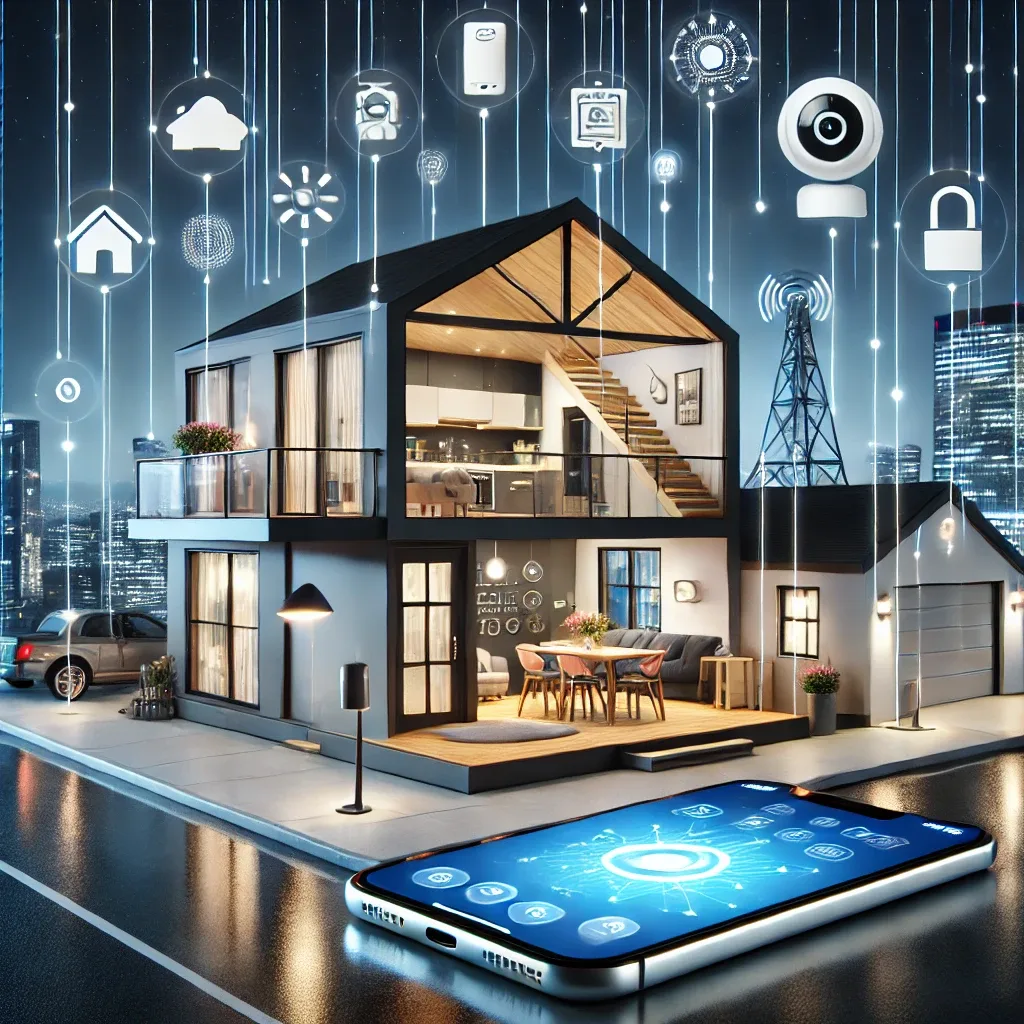
What Is IoT and Why Does It Matter for Smart Homes?
Internet of Things (IoT) refers to the network of interconnected devices that exchange data and operate autonomously. In a smart home context, IoT forms the backbone that links lighting, appliances, security systems, and environmental sensors into one cohesive ecosystem.
Where once every device required separate control, IoT allows you to manage everything through a single app or automate responses based on behavior and schedules. In Thailand's hot, humid climate with elevated PM2.5 levels, IoT plays a particularly meaningful role in maintaining healthy and comfortable indoor environments.
IoT Convenience: Control Everything From Anywhere
Smartphone control lets residents switch lights, adjust air conditioning, open curtains, or pre-cool a room before arriving home — from anywhere in the world. Automation routines go further by making the home react intelligently: the air conditioner starts when your GPS shows you're heading home, or all lights turn off the moment you leave.
Voice commands via Google Assistant or Amazon Alexa make smart home control accessible to elderly residents or those with physical limitations without requiring a phone. This convenience is not a luxury — it's a genuine upgrade to daily quality of life.
IoT Security: 24/7 Protection Without the Overhead
IoT-connected security covers smart CCTV cameras streaming live to your phone, digital door locks with PIN, fingerprint, or app access, and instant alerts from smoke and gas leak detectors. Motion sensors inside and outside the home can trigger automatic lighting or push notifications when an unfamiliar presence is detected.
Round-the-clock monitoring without relying on security staff reduces anxiety, especially during extended travel. The key advantage is real-time awareness and remote response capability — you can lock or unlock doors, view camera feeds, and receive alerts regardless of your location.
Home Assistant and Homebridge: The Brain of Your IoT Home
Home Assistant is the open-source platform that unifies IoT devices from dozens of brands — Philips Hue, Xiaomi, Sonos, and Zigbee or Z-Wave devices — onto one dashboard. Critically, all data stays local, never leaving your home network, making it one of the most privacy-respecting options available.
Homebridge bridges non-HomeKit devices into Apple's ecosystem, giving Apple users full control over hardware that wasn't originally designed for HomeKit. Both run beautifully on a Raspberry Pi 5, making this combination a cost-effective powerhouse for any home automation enthusiast.
IoT for Health: Air Quality Monitoring and Control
With Bangkok's PM2.5 frequently exceeding safe thresholds, IoT-connected air quality sensors are no longer optional for health-conscious households. The system can automatically activate air purifiers when particulate levels rise above a set threshold and power down when air is clean — optimizing both health outcomes and energy use simultaneously.
CO2 and humidity sensors prompt ventilation reminders, while Positive Air Pressure devices prevent outdoor pollutants from entering. HappySmart offers IoT air quality solutions designed specifically for Thailand's urban environment, integrating seamlessly with Home Assistant for automated, data-driven indoor air management.