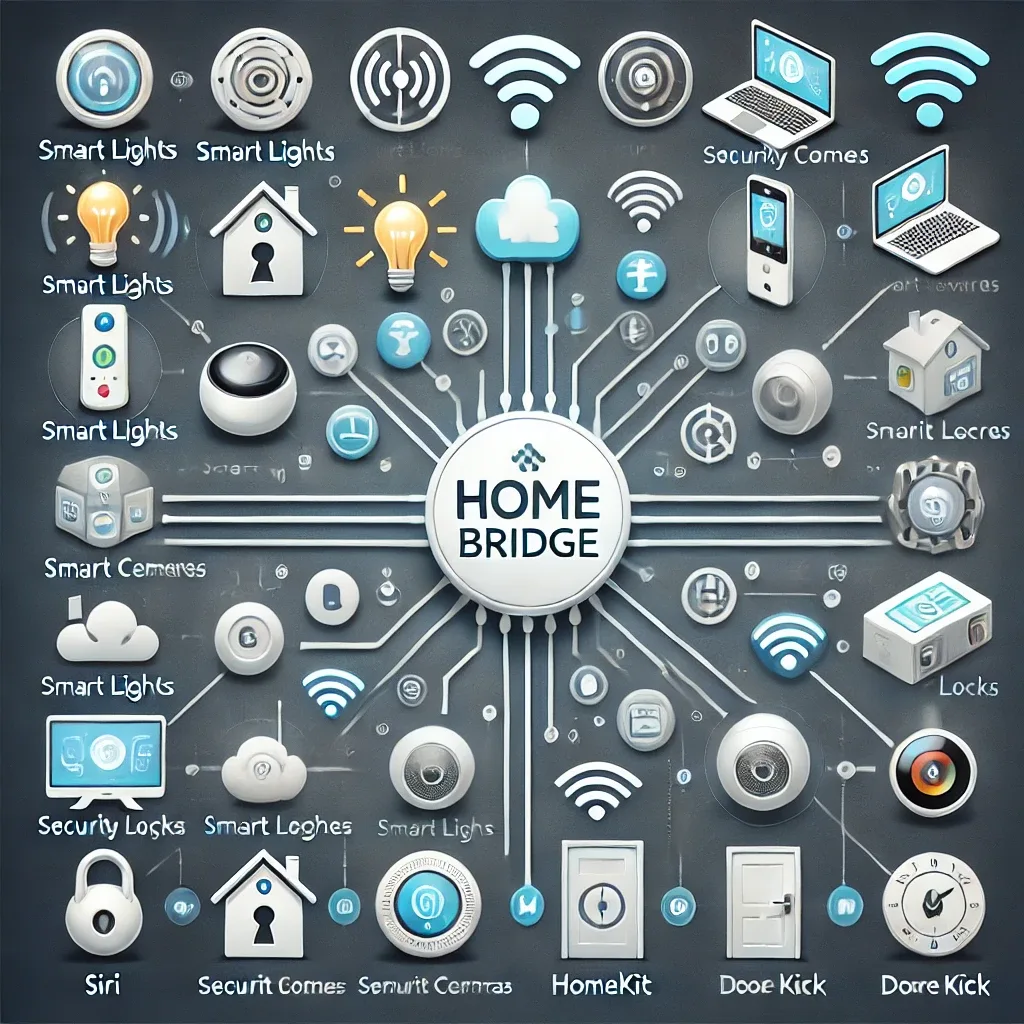
What Is Homebridge
Homebridge is an open-source software bridge that connects smart home devices not natively supported by Apple HomeKit into Apple's ecosystem. It makes devices using Zigbee, Z-Wave, Wi-Fi, and various other protocols appear in Apple's Home app and become controllable via Siri — dramatically expanding what Apple HomeKit users can do without replacing their existing devices.
Connect Any Brand to Apple HomeKit
Homebridge's greatest strength is its library of over 2,000 plugins, enabling virtually any brand's devices to connect to Apple HomeKit. Whether it's Xiaomi bulbs, TP-Link cameras, Sonoff smart plugs, or older devices manufacturers never updated for HomeKit compatibility, Homebridge handles the translation. The community continuously develops new plugins for specialized devices, meaning coverage only grows over time.
Siri Control: Scenes and Automations
Once devices connect to Apple HomeKit via Homebridge, users can command them through Siri immediately — "Hey Siri, turn on the bedroom light" or "Hey Siri, activate night mode." Scenes group multiple devices into single commands: a "Morning" scene opens curtains, turns on lights, and starts the coffee maker simultaneously. Automations trigger based on time or conditions — all lights turn off when everyone leaves home, or the AC pre-cools before arrival time.
Flexible Customization at Lower Cost
Rather than replacing existing devices with expensive HomeKit-certified equivalents, Homebridge extends the life of current equipment at minimal additional cost. Running on a budget-priced Raspberry Pi, the total system cost remains low. Advanced users can fine-tune each plugin's configuration to match their specific requirements, providing customization depth that proprietary HomeKit ecosystems don't offer.
Security Through Apple HomeKit Encryption
HomeKit connectivity comes with Apple's robust encryption framework. Communication between devices and iPhone/iPad is end-to-end encrypted, making interception extremely difficult. Apple also prevents third-party apps from directly accessing HomeKit data, adding an additional privacy layer. Running Homebridge within the home's local network means device data doesn't need to traverse external cloud servers — combining Apple's encryption strength with local processing privacy.
Homebridge vs Home Assistant
The two systems have distinct strengths. Homebridge is ideal for Apple users wanting to seamlessly integrate non-HomeKit devices into the Apple ecosystem. Home Assistant excels at managing large-scale IoT deployments across all platforms. Many homes run both systems together — Home Assistant as the primary backend with Homebridge bridging to Apple HomeKit for Siri and iPhone integration.