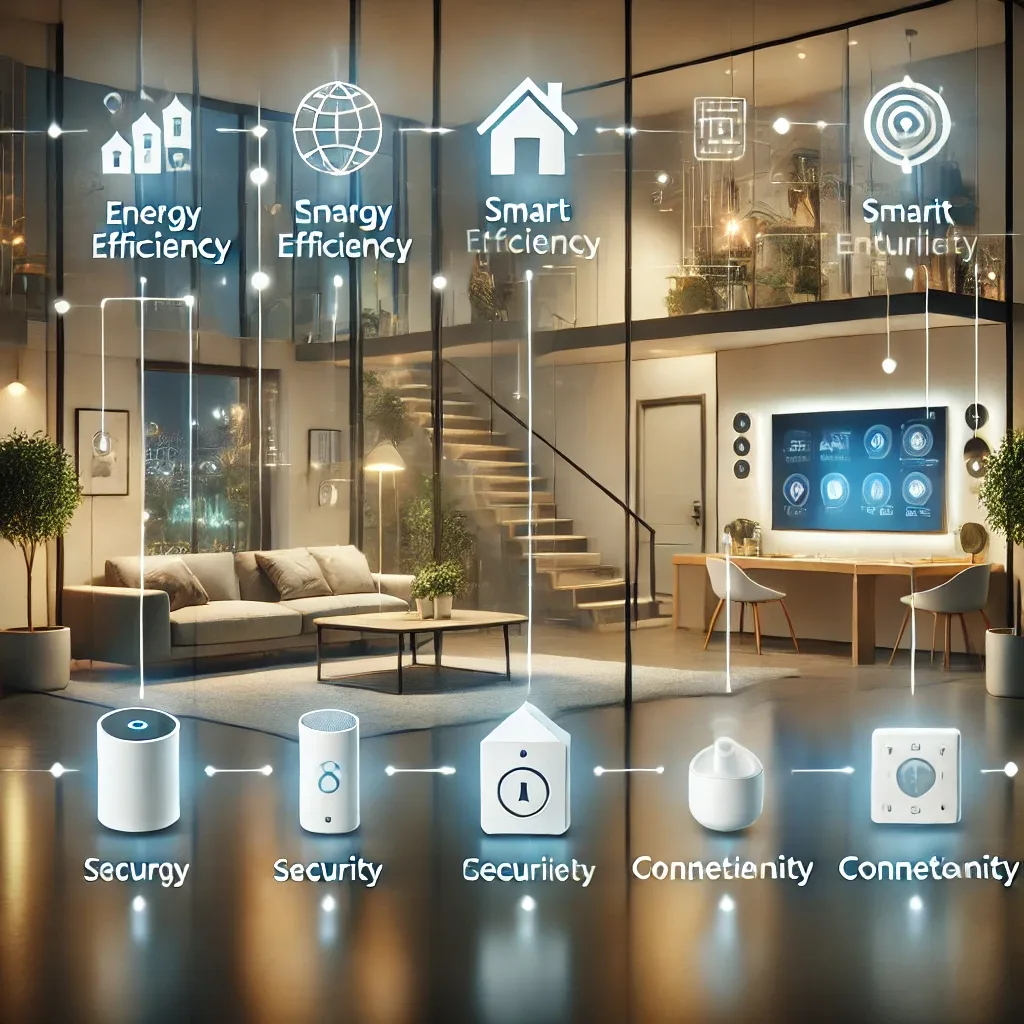
Why Smart Homes Are Perfect for Modern Life
Modern life demands speed, convenience, and safety simultaneously. Smart homes aren't just a trend — they're a comprehensive answer to these needs, addressing every dimension of contemporary living in a single integrated system.
Maximum Convenience Through App and Voice Control
From a single smartphone app or voice command, you can control everything in your home from anywhere — lights, air conditioning, doors, cameras, and appliances. Integration with Alexa, Google Assistant, or Siri makes hands-free control standard. Automations like "when leaving home, turn off all lights, switch AC to energy-saving mode, and lock the door" make daily routines smoother and more efficient. This level of control reduces cognitive load and eliminates the anxiety of wondering whether you left something on.
24/7 Security
IP cameras record and send alerts when unusual motion is detected. Smart locks allow remote access control and generate temporary PINs for guests or repair technicians. PIR sensors detect intrusion and alert immediately. Smoke and gas leak sensors protect the family from accidents. All of this operates around the clock, sending notifications to your smartphone wherever you are — providing genuine peace of mind rather than just the appearance of security.
Real Energy Savings
Presence detection sensors automatically turn off lights and AC when rooms are unoccupied. Intelligent temperature control adjusts air conditioning based on both indoor and outdoor conditions. Solar systems integrated with Home Assistant optimize energy allocation throughout the day. Standard homes can achieve 20–35% electricity savings from basic automation alone — a meaningful reduction in monthly operating costs.
Connect All Brands Through One App
One of Home Assistant's greatest strengths is supporting over 3,000 devices from virtually every brand — Xiaomi, Philips Hue, TP-Link, Sonoff, Tuya, and local Thai brands. The Matter standard makes cross-brand connectivity even simpler. Users can mix devices from multiple manufacturers according to their needs and budget, while maintaining unified control through a single interface. This flexibility eliminates the ecosystem lock-in problem that previously made multi-brand smart homes impractical.
Care for Elderly and Disabled Residents
Smart homes provide significant benefits for elderly residents and those with special needs. Fall detection systems immediately alert family members. Voice control allows people with limited mobility to operate devices without getting up. Smart locks enable door control without physical keys. Health sensors monitoring SpO2 and heart rate enable remote health monitoring by caregivers — extending independence for elderly residents while providing family members with real-time peace of mind.