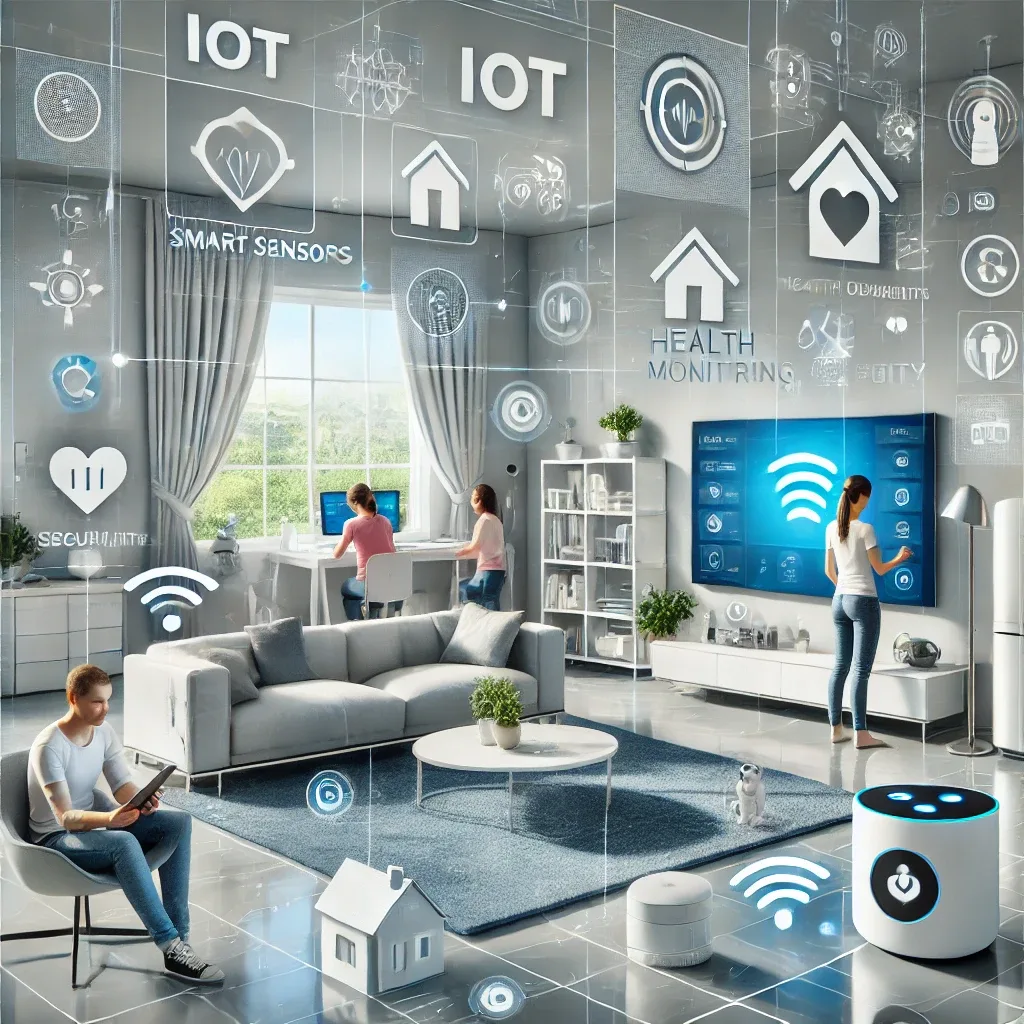
What Is IoT Home Care
IoT home care refers to using Internet of Things devices to comprehensively monitor health and ensure safety at home. These devices collaborate automatically — when a sensor detects PM2.5 levels exceeding safe thresholds, the system automatically commands the air purifier to increase output without waiting for manual intervention. This automatic cooperation is what distinguishes IoT home care from simply owning smart gadgets.
Home Safety with IoT
IP cameras monitor and record around the clock, sending real-time alerts when unusual motion is detected. Door and window sensors trigger notifications when opened without authorization during set time windows. Smoke and gas leak sensors provide immediate emergency alerts and may automatically shut off gas systems. For families with young children or elderly members, fall detection systems alert family members via smartphone instantly — reducing response time when it matters most.
Health Monitoring at Home with IoT
Air quality sensors measure PM2.5, CO2, temperature, and humidity in real time. When any reading exceeds set thresholds, the system automatically commands relevant devices. In Bangkok, where AQI spikes are seasonal realities, having PM2.5 sensors integrated with Home Assistant ensures indoor air quality stays within safe ranges continuously. Wearables like smart watches measure SpO2, heart rate, and sleep patterns. This data integrates with Home Assistant via API to create personalized health automations tailored to each household member's needs.
Energy Savings Through IoT
Smart plugs deployed throughout the home auto-power-off when devices aren't in use, eliminating standby consumption that typically accounts for 10–15% of total electricity bills. Intelligent lighting combined with presence detection automatically turns off lights in unoccupied rooms. Smart AC systems adjust temperature based on occupancy detection and outdoor weather conditions — maximizing comfort while minimizing waste.
Raspberry Pi: The Heart of IoT Home Care
Raspberry Pi is an affordable single-board computer that serves as an effective central IoT controller for the entire home. With Home Assistant installed, it connects devices across Zigbee, Z-Wave, Wi-Fi, and Bluetooth protocols simultaneously. All data processes within the home network, protecting against external data leakage and ensuring the system continues functioning even during internet outages — a critical reliability advantage.
The Future of IoT Home Care
In the near future, AI and Big Data will significantly enhance IoT home care capabilities. Systems will predict health issues before symptoms appear, or detect unusual patterns in elderly residents' daily routines and provide early warnings. This predictive layer will transform IoT home care from reactive monitoring to proactive health management.