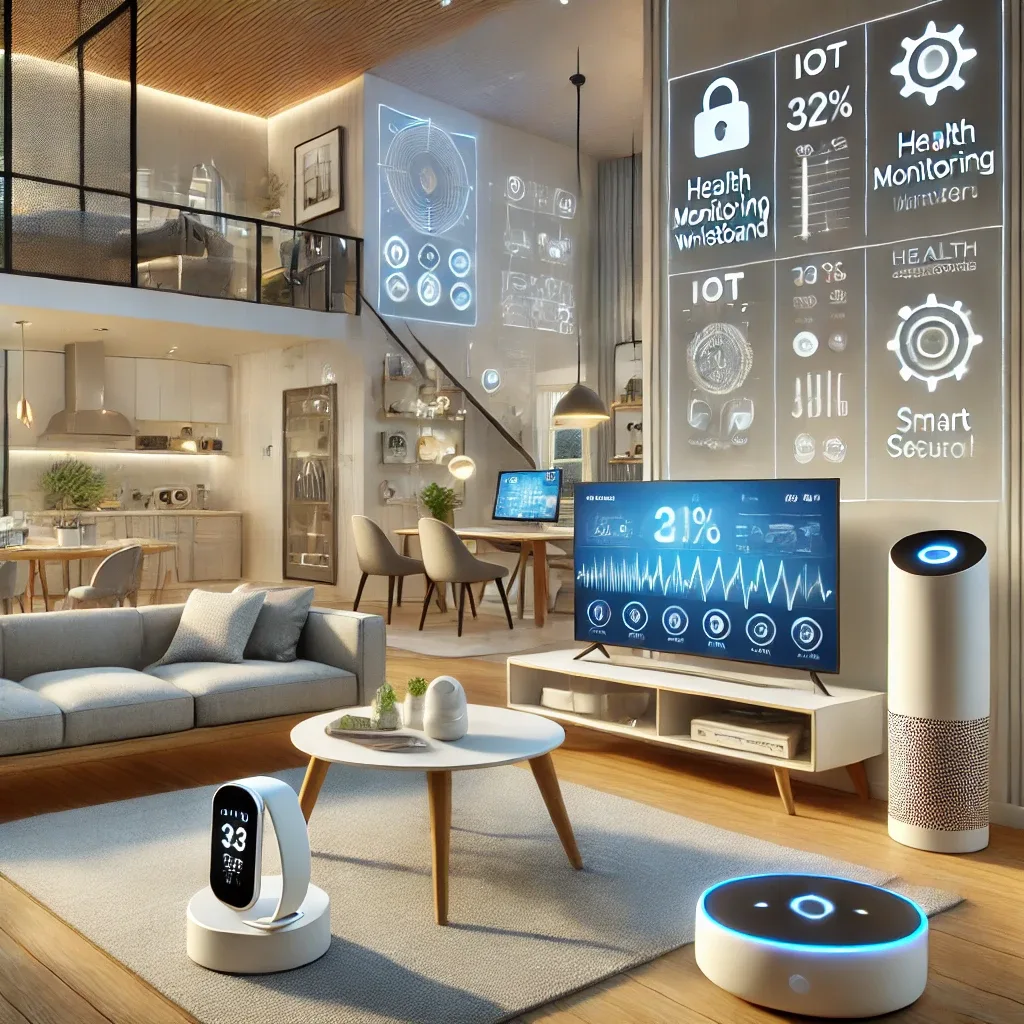
IoT and Home Health: Beyond Convenience
IoT (Internet of Things) technology has transformed smart homes from mere convenience systems into genuine health management platforms. Connected devices monitor both the environment and family members' wellbeing in real time, 24 hours a day, making preventive health care a practical daily reality rather than a reactive afterthought.
Personal Health Monitoring with Smartwatches and Sensors
Smartwatches and wearable devices integrated with your Smart Home system continuously track heart rate, blood oxygen levels (SpO2), and sleep patterns. When anomalies appear — an irregular heartbeat, low oxygen saturation, or disrupted sleep — the system instantly notifies family members or caregivers. Fall detection sensors for elderly residents connect directly to Home Assistant, triggering automatic alerts and unlocking doors for emergency responders, significantly reducing injury risk from household accidents.
Smart Lighting for Mental Health and Circadian Rhythm
Light profoundly affects the body's circadian rhythm. Smart lighting systems that adjust color temperature throughout the day — 6500K in the morning to promote alertness, 4000K during midday, and 2700K in the evening to prepare the body for sleep — naturally regulate melatonin production. This scientifically validated approach reduces insomnia, improves cognitive performance during working hours, and supports overall mental wellbeing without medication or lifestyle disruption.
Air Quality Monitoring and Filtration Control
In Thailand, where PM2.5 pollution spikes during dry season and wildfire events, indoor air quality monitoring is a genuine health priority. Air quality sensors connected to Home Assistant measure PM2.5, CO2, VOCs, and humidity in real time. When values exceed safe thresholds, the system automatically activates air purifiers, closes windows, and sends occupant alerts — protecting against respiratory disease and reducing long-term health risks. Smart water quality monitoring adds another layer, detecting contaminants before they reach your family.
Safety Sensors and Temperature Control
Smoke, carbon monoxide, and LPG gas sensors integrated with your IoT network can automatically close gas valves and trigger emergency alerts within milliseconds of detection. Paired with intelligent temperature control that maintains optimal indoor conditions regardless of Bangkok's heat, the system reduces physical stress on the body and promotes better sleep quality. HappySmart designs comprehensive health-focused IoT systems covering all these dimensions in a single package, fully installed within one day.