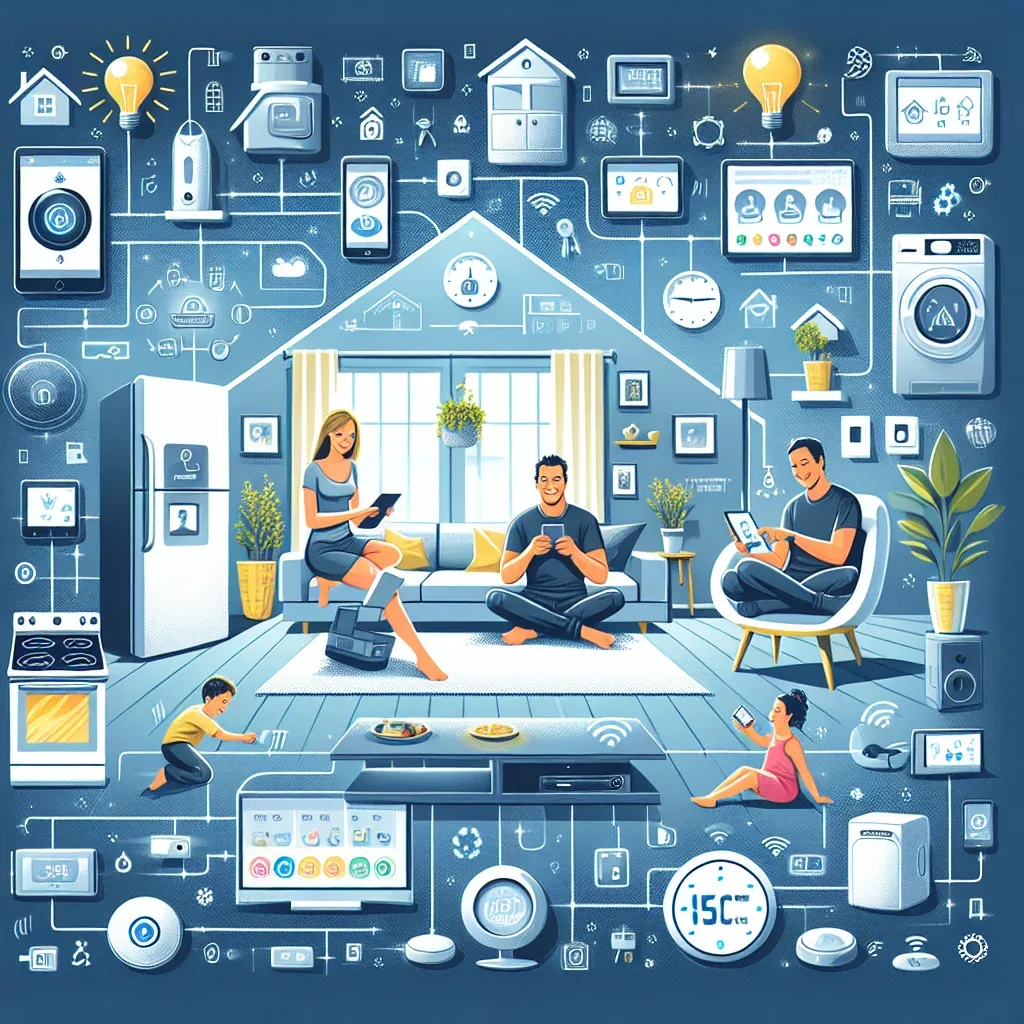
IoT and the Transformation of Home Life
Internet of Things (IoT) is technology that connects devices through internet networks, enabling them to communicate and exchange data automatically. Smart Home systems are the clearest example of IoT applied to daily life — every device from lighting and air conditioning to CCTV cameras and kitchen appliances can work together, sending and receiving real-time data through apps or voice commands without human intervention for each action.
Core Features of IoT Smart Home Systems
Smart Home systems in the IoT era have key features that genuinely transform daily living. Remote Control lets users turn lights on and off, adjust temperature, and check device status from anywhere via smartphone. Automation enables devices to operate according to user behavior — lights activating automatically when entering a room, AC following a schedule, blinds opening at sunrise. Centralized Control through Home Assistant manages devices across all brands from a single app without switching. Security and Surveillance through CCTV, motion sensors, and Smart Locks delivers real-time alerts. IoT connectivity allows devices to adapt to environment — adjusting light to outdoor brightness or temperature to weather conditions automatically.
Tangible Daily Life Impact
Smart homes deliver positive impact across daily life dimensions. For convenience, devices operate automatically according to needs, reducing the burden of manual control. For security, CCTV immediately alerts when abnormal movement is detected, Smart Locks log entry and exit, and smoke sensors send emergency signals before situations become critical. For energy savings, Smart Thermostats adjust to actual usage patterns, smart lights switch off automatically when rooms are empty, and Smart Plugs cut standby power that wastes electricity continuously. For health, air quality sensors measuring PM2.5, CO2, and chemicals connect to automatic air purifiers, keeping indoor environments safe for respiratory health around the clock.
IoT for Efficient Home Management
Beyond convenience, IoT helps manage home resources intelligently. Water management systems detect leaks and alert before damage occurs. Automatic irrigation systems adjust water quantity based on weather conditions. Real-time data connectivity through apps allows users to monitor all areas of the home from a single screen and make rapid decisions to address issues before they escalate into expensive problems.
Challenges to Consider
Despite smart home benefits, challenges merit consideration. Privacy and data security are significant concerns — IoT devices connected to the internet continuously may have security vulnerabilities. Choosing devices from reputable brands and updating software regularly is essential. Initial installation costs may be high, but long-term value from energy savings and convenience is significant. Network stability affects system performance — choosing systems capable of local operation even without internet connectivity is an important advantage for Thai homes where connection reliability varies.