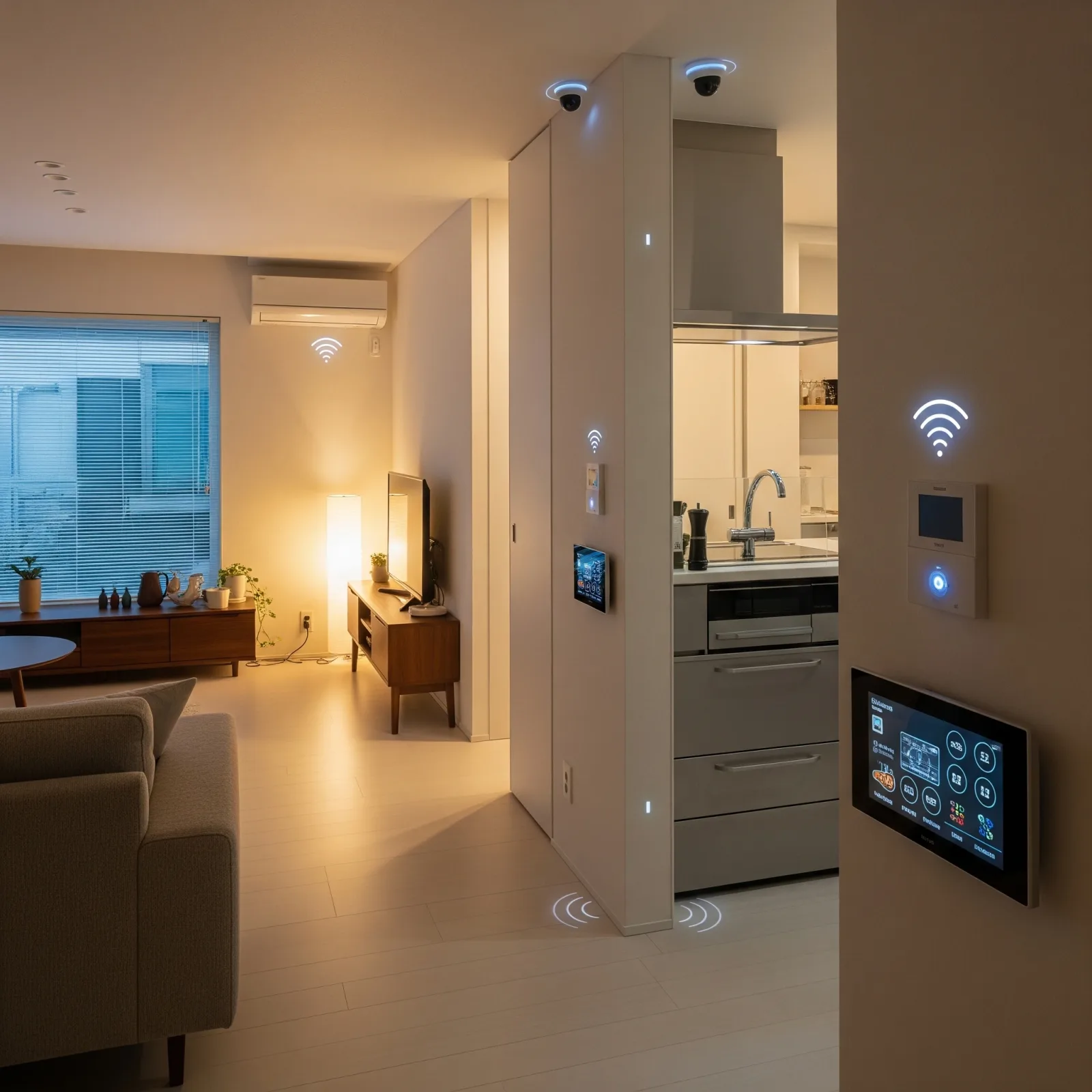
Smart Homes That Match Real Thai Family Life
With many household members leaving for work at dawn and returning after dark, and elderly parents at home alone through the afternoon, smart home technology has shifted from a luxury to a practical necessity. A well-configured system becomes a silent caregiver — monitoring, protecting, and alerting without requiring anyone to be physically present.
Smart Alert Systems
Modern alert systems go far beyond burglar detection. They track fall events among elderly residents, abnormal infant sounds, motion in restricted areas, and unexpected door openings at odd hours. The homeowner receives immediate notification on their smartphone regardless of where they are. This feature is particularly valuable for adult children who work in another city while elderly parents live alone.
AI Behavioral Analysis Cameras
AI cameras learn the normal behavioral patterns of household members over time. When something deviates — an elderly person remaining stationary longer than usual, a child approaching a dangerous area, or a door opening in the middle of the night — the system alerts immediately, records the event, and provides a timestamped clip for review. This proactive detection distinguishes smart cameras from conventional CCTV.
CO2 Sensors and Air Quality Monitoring
A bedroom CO2 sensor tells you objectively whether the air is good enough for restful sleep. When CO2 climbs past 1,000 ppm, Home Assistant can automatically activate an exhaust fan or push a LINE notification to open a window — no manual checking required. For Thai families where both parents work, this background intelligence ensures children and elderly relatives breathe properly throughout the night.
Automatic Night Lighting
For homes with elderly residents, motion-activated or mmWave-triggered lighting is essential. When movement is detected at night, pathway lights activate instantly, eliminating the risk that comes from navigating in the dark to find a light switch. The system uses minimal power and deactivates automatically when no further motion is detected.
Automation Rules That Work While You Sleep
The power of smart home automation lies in rules that run without human intervention: air purifier on when CO2 exceeds 1,000 ppm; guide lights on when motion is detected after midnight; LINE alert when a fall is detected; camera recording when the house is unoccupied. Home Assistant ties all these rules together in a single platform, giving any family member full visibility and control from anywhere in the world. A home that looks after itself is a home you can trust when you are not there.