When One Home Must Care for Two Generations
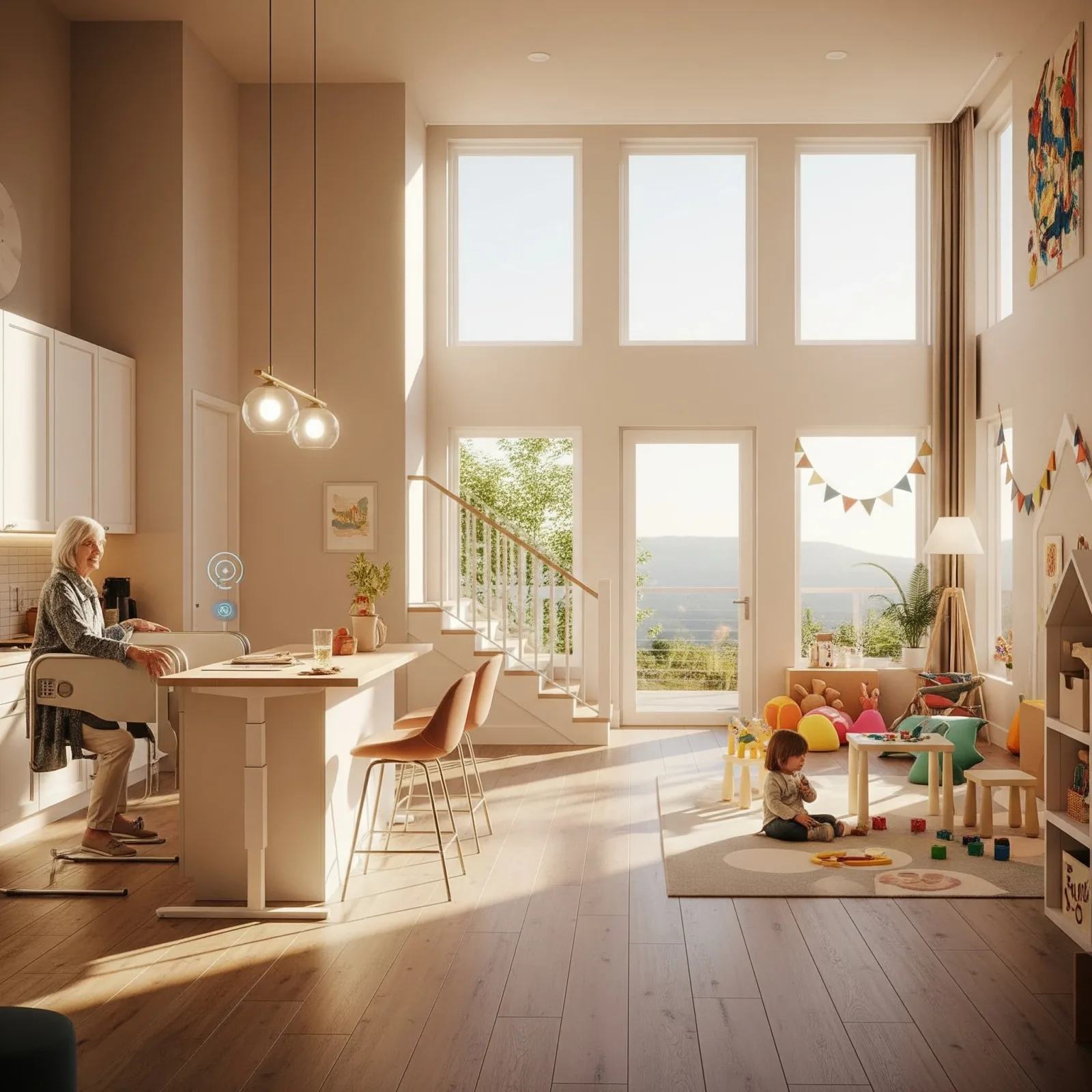
Multi-generational living is common across Thailand — a toddler learning to walk alongside a grandparent whose balance is no longer reliable. The challenge is that the safety risks for each group are completely different, yet a well-designed smart home system can address both simultaneously.
Common Risks in Multi-Generational Homes
Falls are the leading cause of serious injury for the elderly, particularly in bathrooms and during the night. A single fall causing a hip fracture can permanently alter an elderly person's independence. Meanwhile, curious toddlers have an uncanny ability to open doors, access dangerous areas, or touch chemicals before anyone notices. Both scenarios require proactive detection, not reactive response.
mmWave Fall Detection: No Camera, No Privacy Compromise
Millimeter-wave radar sensors detect motion and body positioning using high-frequency radio waves — working perfectly in complete darkness and through thin barriers, without capturing any images whatsoever. The elderly resident's privacy remains fully intact. When the sensor detects a fall pattern, an alert is pushed instantly to family members' smartphones, whether they are at the office or in another province. For คุณภาวนา, whose 78-year-old mother had fallen in the bathroom undetected before, the mmWave sensor made the difference between a delayed discovery and an immediate response.
AI Cameras for Children and Common Areas
In shared living spaces like the living room and kitchen, AI cameras analyze behavior continuously — detecting a baby's cry, recognizing abnormal movement, or flagging a door opening at an unexpected hour. Live and recorded footage is accessible through a smartphone app around the clock, so working parents can check in during lunch breaks.
Automatic Guide Lighting: Preventing Nighttime Falls
LED strip lights installed along the bedroom-to-bathroom corridor activate the moment a motion sensor detects movement. They draw very little power, provide just enough light to navigate safely without disrupting sleep, and switch off automatically when no further movement is detected. For families whose elderly parent makes multiple nighttime bathroom trips, this single feature eliminates one of the most common accident scenarios entirely.
Full Mobile Control
Lights, cameras, sensor status, and automation rules — everything is managed from one smartphone. Alerts through LINE and the Home Assistant app keep distant family members informed of any significant event in real time. Caring well does not require being physically present at all times; it simply requires staying connected.