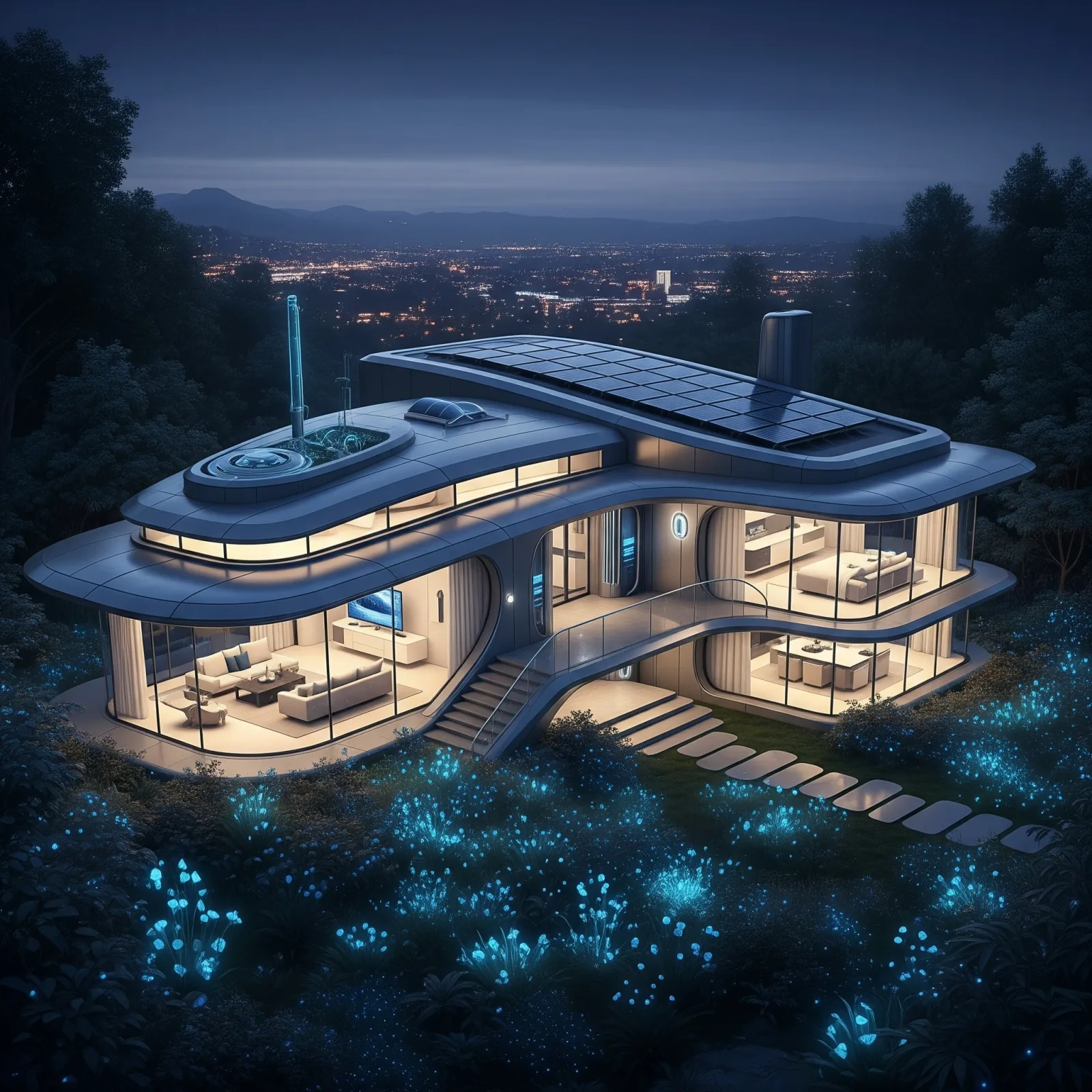
A Home That Cares Is a Home That Protects
When a family spans multiple generations, the safety needs inside the home span multiple dimensions. A grandmother who needs to walk to the bathroom at night, a three-year-old who has discovered how door handles work, and parents who leave for work at dawn — each scenario demands different technology, yet all of it must integrate seamlessly within a single home.
Common Risks in Homes With Elderly and Young Children Together
Falls are the leading cause of home accidents. Wet bathroom floors and stairs are the primary risk zones for the elderly, while young children's curiosity drives them toward open doors, kitchen cabinets, and electrical outlets. Without alert systems in place, an emergency indoors may go unnoticed for a dangerous amount of time.
Automatic Guide Lighting
LED strips installed at floor level along corridors and stair edges activate the moment a motion sensor detects movement — no fumbling for light switches in the dark. For an 82-year-old father who makes several nighttime bathroom trips, this eliminates the most common fall scenario. For a toddler who wakes and wanders, it removes the fear of darkness entirely. คุณวริษฐา reports that after installation, her father walks confidently at night and she no longer wakes to check on him repeatedly.
Fall Detection and Emergency Alerts
Sensors installed in bathrooms, bedrooms, and high-risk areas send instant alerts to family members' phones or LINE when a fall is detected. Some setups pair the sensor with an SOS button the elderly resident can press independently. คุณลุงสมชาย in Bangkok had fallen in the bathroom previously without anyone knowing. After installation, when a fall was detected, his son received an alert immediately and a neighbor was dispatched in time to help.
AI Behavioral Analysis Cameras
AI cameras detect anomalies — an elderly resident motionless longer than usual, a child approaching the front door, or an unfamiliar person in the yard. Privacy Mode automatically deactivates cameras when all family members are home and reactivates when the house is empty. ครอบครัวคุณศิริพร in Chiang Mai monitors both a three-year-old and a 75-year-old mother simultaneously through this system, giving the working generation genuine peace of mind.
mmWave Sensors and Smart Locks
mmWave sensors monitor private spaces like bathrooms and dark bedrooms through radio wave detection — no images are ever captured. Smart locks prevent toddlers from opening doors independently and ensure elderly residents never accidentally leave the house unlocked. Access permissions are managed entirely from a smartphone app.
Everything Controlled From Your Phone
Home Assistant brings every component — cameras, sensors, lights, locks — into a single mobile interface. Live camera feeds, sensor status, lighting schedules, and instant alerts are all accessible from anywhere. A home that manages itself is a home that can be trusted, whether you are at work, visiting another province, or traveling abroad.